


More news on this day
A widespread technology outage at American Airlines triggered delays and cancellations at Bradley International Airport in Windsor Locks, Connecticut, disrupting evening travel plans and stranding passengers on key domestic routes.
Get the latest news straight to your inbox!
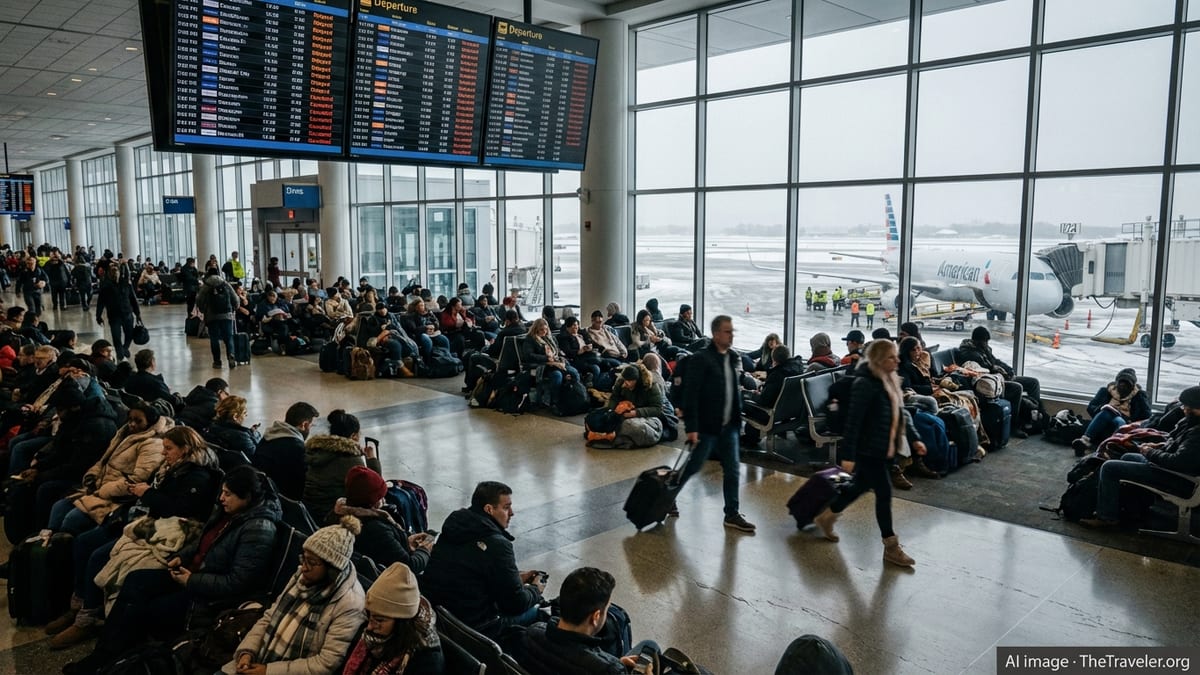
System outage cascades through Bradley operations
According to published coverage and live flight-tracking data, American Airlines experienced a system disruption that affected departures across its network, including operations at Bradley International Airport. The outage, described in multiple industry reports as a software or server issue, limited the airline’s ability to process departures, rebook passengers, and update gate information in real time.
Publicly available flight-status boards showed American-operated services from Bradley to major hubs such as Chicago and Charlotte experiencing extended ground delays and, in some cases, cancellations. Travelers reported being held on board aircraft or in crowded gate areas while crews awaited clearance to depart and new departure times remained uncertain.
The disruption came at a busy travel period for Bradley, which serves the greater Hartford and western Massachusetts region and relies heavily on connections to larger hubs to feed both business and leisure traffic. With American among the key legacy carriers at the airport, even a modest number of delayed flights produced noticeable congestion around the airline’s check-in counters and security queues.
While the core technical issue was resolved within hours at the network level, recovery at Bradley lagged as aircraft and crews fell out of position. Some evening departures turned into late-night operations, and a portion of passengers faced overnight rebooking onto later flights.
Impact on key hub connections and onward travel
American’s Bradley schedule is built around a limited number of daily departures to hub airports, meaning each disruption can have an outsized effect on connecting journeys. Reports from flight-tracking services indicated irregular operations on routes from Bradley to Chicago O’Hare and Charlotte Douglas, two of the airline’s primary connecting points.
For travelers bound for destinations beyond those hubs, missed connections became a significant concern. A delay of even one or two hours on a Bradley departure was enough to break tightly timed itineraries to the West Coast and the Southeast, particularly for passengers on evening flights with fewer same-day backup options.
Travel forums and social media posts from affected passengers described long lines at customer service desks as travelers sought new routings or overnight accommodation. Some travelers reported being automatically rebooked onto later American flights, while others were offered next-day departures or connections through alternate hubs, depending on seat availability.
The disruption also created knock-on effects for ground transportation plans around Bradley. Ride-share pickups and regional bus transfers were pushed back or missed entirely as arrival times shifted late into the night, adding another layer of inconvenience for visitors and returning residents alike.
Bradley’s growing traffic magnifies disruption
Bradley International Airport has been steadily rebuilding and expanding its schedule in recent years, and American has been part of that growth with increased frequencies to major hubs. Passenger statistics released by the airport operator for 2026 show that American handles tens of thousands of enplanements each month, placing it among Bradley’s largest carriers.
That growth means that a carrier-specific outage now affects more travelers than it might have a few years ago. With fuller flights and tighter schedules, there is less slack in the system to absorb prolonged ground stops or technology disruptions, and options for same-day reaccommodation can be limited on peak travel days.
The outage also arrives against a broader backdrop of operational challenges facing airlines, from weather volatility to air traffic control constraints and infrastructure work at major hubs. For travelers using Bradley as their starting point, a localized delay can quickly intersect with those national bottlenecks, turning a short disruption at the gate into a full-day itinerary overhaul.
Regional business travelers, in particular, depend on reliable early morning and late evening departures to complete same-day trips. Service interruptions on those time-sensitive flights can ripple beyond leisure plans and into meetings, conferences, and other professional commitments across the American network.
Guidance for travelers using American at Bradley
In the wake of the outage, consumer advocates and travel specialists are emphasizing several practical steps for passengers scheduled to fly American from Bradley in the coming days. Publicly available guidance highlights the importance of monitoring flight status through multiple channels, including the airline’s app and airport departure boards, since residual delays and minor schedule changes may persist as aircraft and crew rotations normalize.
Travelers are also encouraged to build additional buffer time into itineraries involving tight connections, especially when routing through busy hubs such as Chicago or Charlotte. For those with onward international segments, leaving extra time between flights can reduce the risk of misconnecting if departure banks at Bradley or the hub are still experiencing minor knock-on effects.
Recent federal rules and airline customer service commitments linked to controllable technology outages provide options that may include rebooking on later flights, meal vouchers for extended delays, or overnight accommodation when disruptions stretch into the following day. Passengers who experienced significant delays or cancellations during the American outage are being advised by travel-rights resources to review the airline’s published customer service plans and, where applicable, to submit documentation for compensation or refunds.
For upcoming trips, frequent travelers at Bradley suggest keeping digital copies of reservations, enabling text or app notifications, and considering earlier departures when travel plans hinge on time-sensitive events. While large-scale system outages of this type remain relatively rare, their impact is substantial when they occur, particularly at mid-sized but growing airports such as Bradley International.