


More news on this day
The Suez Canal Authority is moving to reposition Ismailia as a cultural and cruise tourism hub, combining new financial incentives for vessels with a broader effort to showcase the canal city’s historic legacy.
Get the latest news straight to your inbox!
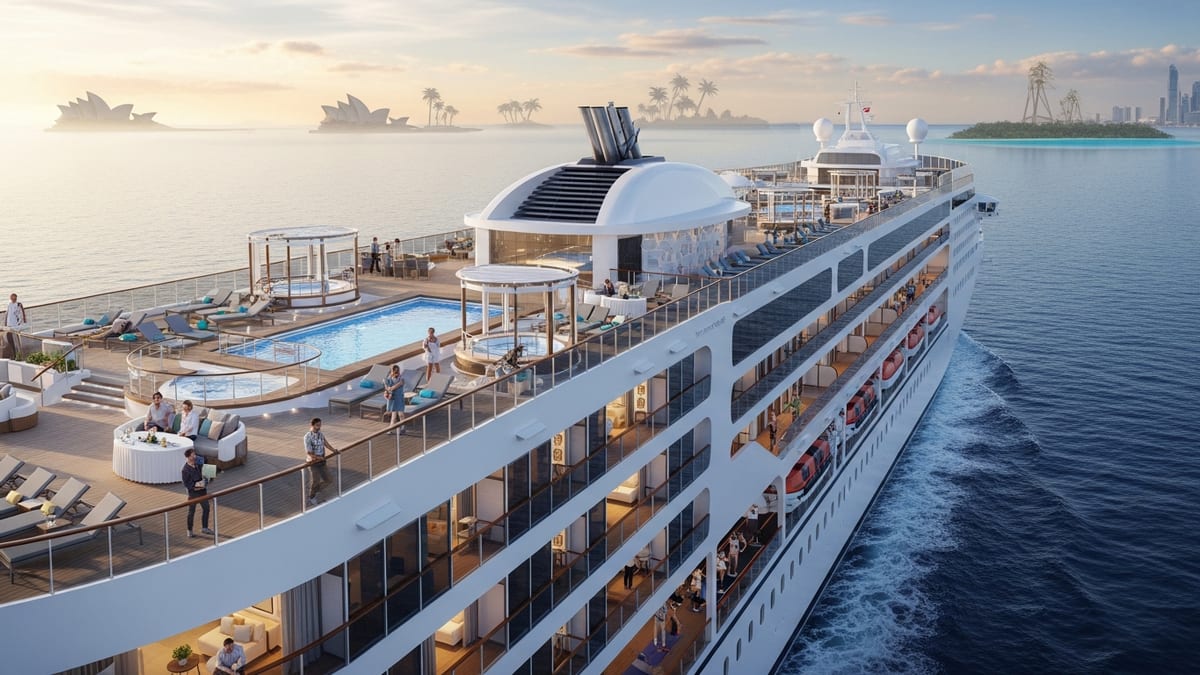
New Incentives Target Cruise and Yacht Traffic
Recent circulars and government announcements indicate that the Suez Canal Authority is expanding its menu of incentives for passenger ships, cruise vessels and tourist yachts. Transit reductions and tailored facilities are being promoted as tools to draw more high-spending maritime visitors back to the canal corridor at a time when global shipping patterns remain unsettled.
Publicly available information shows that the authority has introduced rebates on transit dues for selected ship categories over defined periods, alongside specific measures for yachts under 300 tons. These include reductions on canal tolls and supportive services that make routing via the Suez more attractive compared with longer alternatives around the Cape of Good Hope.
According to official navigation circulars, one strand of this policy focuses on encouraging yachts to use canal-linked marinas rather than bypassing Egypt. The incentives are framed as part of what the authority describes as a flexible pricing strategy, designed to sustain traffic volumes while opening new revenue streams linked to tourism.
These measures are being rolled out as part of a broader governmental push to grow yacht and cruise tourism in the Red Sea and eastern Mediterranean, with the Suez Canal positioned as a central corridor. The incentives are therefore presented not only as short-term marketing tools, but as building blocks in a longer-term reorientation toward high-value tourism.
Ismailia Reintroduced as a Heritage Destination
At the heart of this strategy is Ismailia, the canal-side city historically associated with the original Suez Canal Company. Publicly accessible material from the Suez Canal Authority highlights efforts to restore and reuse key colonial-era buildings, which are being promoted as anchors for a renewed cultural offering.
A flagship project is the Suez Canal Museum in Ismailia, housed in the former administrative headquarters of the company that built the waterway in the nineteenth century. The restored complex, which covers several thousand square meters, has been repurposed as a museum space showcasing artefacts, archival material and multimedia content on the canal’s construction and evolution.
The museum project, opened to visitors after a phased soft launch, is positioned as a way to “immortalize and revive” the canal’s history by turning a landmark building into a public cultural institution. Exhibition halls trace episodes ranging from early engineering surveys to nationalization and modern expansion, giving Ismailia a defined narrative beyond its role as a transit city.
Local authorities and national agencies are increasingly presenting Ismailia as a stopover point that can offer visitors heritage walks, access to lakefront landscapes and curated experiences tied to the canal’s story. The renewed focus on the city’s architectural fabric and cultural assets is closely interlinked with the drive to attract more cruise and yacht calls.
Cruise Tourism and High-Profile Events Along the Canal
The new incentives are being accompanied by a push to host more high-profile cruise movements through the canal. Recent voyages by major international cruise ships have been used as platforms for tourism and investment events that spotlight Egypt’s coastal destinations and cultural heritage.
One notable example, documented in open media reports, involved a global travel and tourism gathering staged on board a cruise ship during its Suez Canal transit in 2026. The event was framed as a demonstration of the canal’s continued importance to world cruise itineraries and as an opportunity to emphasize Egypt’s broader tourism appeal.
Such initiatives are designed to send a signal to cruise operators that the canal remains a desirable and secure corridor capable of supporting complex itineraries. They also provide a showcase for Ismailia’s evolving role, as visiting delegations are often received at the authority’s headquarters in the city before or after transits.
By pairing promotional events with tangible financial incentives, policymakers are attempting to rebuild confidence in the route while tapping into a market segment less sensitive to short-term freight rate fluctuations. Cruise and yacht travelers, in turn, are being encouraged to spend more time in canal-adjacent cities such as Ismailia, Port Said and Suez.
Marinas, Services and Long-Stay Packages in Ismailia
Alongside transit rebates, new attention is being paid to shore-side infrastructure in and around Ismailia. National tourism promotion materials refer to an integrated plan to upgrade existing marinas and develop new ones along the canal and Red Sea, with Ismailia identified as a focal point for a so-called green marina concept.
In practice, this involves refurbishing berthing facilities, improving environmental performance standards and streamlining yacht clearance procedures. Digital services for crew changes and reservations, operated from the Ismailia yacht marina, have been highlighted as examples of how the canal zone is trying to offer a more predictable experience for operators.
Some circulars outline specific reductions for yachts that choose to berth at Ismailia for extended periods, including discounts on subsequent canal transits where conditions are met. These long-stay packages are aimed at positioning the city as a base for regional cruising in the eastern Mediterranean and northern Red Sea, rather than merely a technical stop on a longer passage.
The emphasis on marinas and services links the authority’s incentives directly to Egypt’s national yacht tourism strategy, which seeks to expand the number and quality of berths along the country’s coasts. If fully implemented, the Ismailia component of this strategy could give the city a new profile among international cruising communities.
Balancing Commercial Recovery With Cultural Revival
The shift toward cruise and yacht incentives comes against the backdrop of recent volatility in Suez Canal revenues, affected by security concerns in nearby waters and evolving shipping routes. Public statements by Egyptian authorities have acknowledged these pressures while underlining confidence in a gradual recovery in transit activity through 2026.
Within this context, the renewed focus on Ismailia’s history serves more than a commemorative purpose. By restoring heritage assets, opening museums and enhancing waterfront public spaces, the canal zone is being framed as a destination in its own right, with cultural tourism offering a partial counterweight to cyclical swings in commercial traffic.
Analysts following Egypt’s blue economy agenda note that the canal area development program links logistics, industry and tourism within a single planning framework. Ismailia’s transformation into a heritage and leisure hub, supported by targeted maritime incentives, aligns with this integrated approach.
How quickly cruise lines and private yacht owners respond to the new incentives will depend on broader geopolitical and market conditions. Nonetheless, the combination of financial measures and cultural investment signals a clear intent to reposition Ismailia at the center of a more diversified Suez Canal story, one that looks beyond freight alone to a wider tourism and heritage role.