


More news on this day
A recent account involving a pregnant American Airlines passenger who struggled to board her flight until a pilot personally intervened is drawing attention to how U.S. carriers handle expectant travelers during one of the most stressful parts of flying: the boarding process.
Get the latest news straight to your inbox!
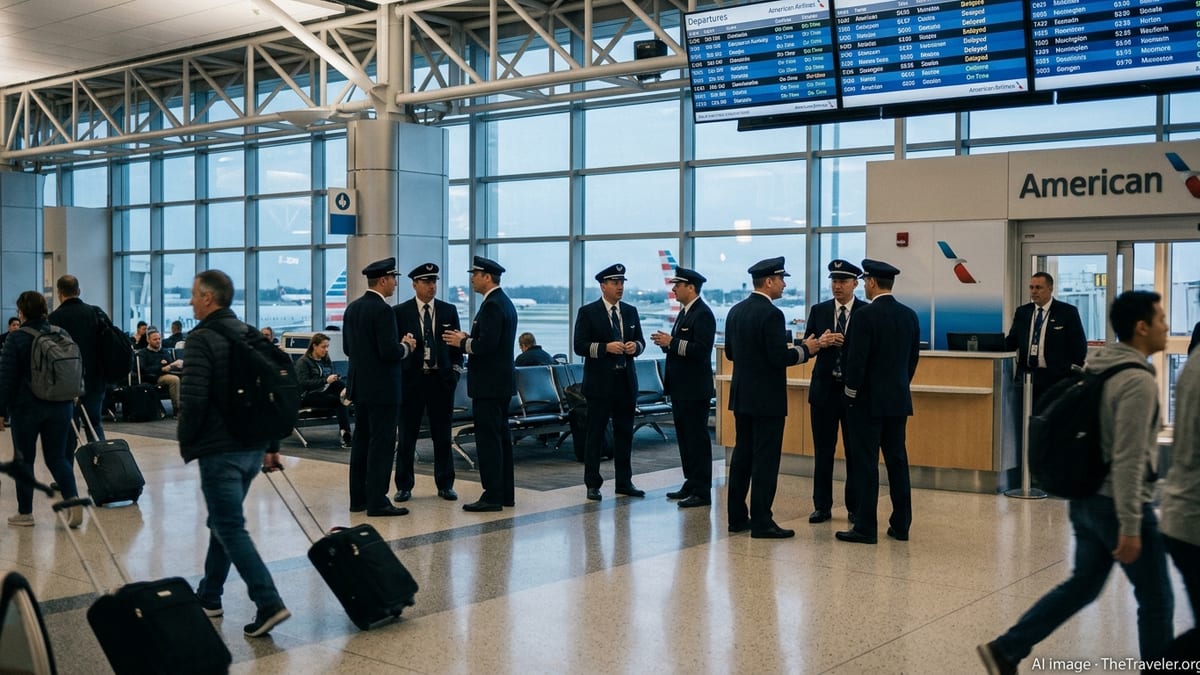
A personal moment of assistance in a tense boarding scene
According to published coverage and social media discussion, the incident unfolded at a busy U.S. airport as a visibly pregnant passenger appeared to be having difficulty during boarding. Reports indicate the traveler was contending with fatigue and discomfort while juggling luggage and navigating the jet bridge, and was not receiving immediate hands-on assistance from staff at the gate.
Witness descriptions suggest that as boarding continued, an American Airlines pilot who was scheduled to operate the flight stepped away from the podium area and moved toward the passenger. The pilot reportedly helped her manage her bags and escorted her down the jet bridge so she could board safely, an unusual sight in an environment where pilots are typically focused on preflight checks and communication with operations.
Publicly available information shows that other travelers at the gate noticed the interaction and shared it online, framing the pilot’s actions as a simple gesture of empathy that stood out in an otherwise routine boarding process. The moment contrasted with the often transactional tone of air travel, resonating with passengers who say that small acts of consideration can make a significant difference, particularly for those flying while pregnant.
While the episode was brief and non-disruptive to the flight, it has generated wider conversation about what support pregnant travelers can reasonably expect from airlines, and who is responsible for stepping in when a passenger is visibly struggling at the gate or on the jet bridge.
Airline policies and expectations for pregnant travelers
American Airlines publishes general guidance for expectant travelers that is similar to many large carriers. Publicly available information shows that pregnancy itself is not treated as a medical condition that automatically qualifies for special services, although passengers with pregnancy-related complications may be encouraged to consult a medical professional before flying.
In the United States, airlines typically do not require medical documentation for most pregnant passengers until late in the third trimester or in cases of high-risk pregnancies. Instead, carriers focus on general fitness-to-fly guidelines and may seek additional documentation only when they believe safety could be affected. This approach leaves considerable discretion to front-line employees, especially when passengers request help with boarding or ask to preboard to avoid standing in long lines.
Reports and passenger accounts across multiple airlines indicate that preboarding policies can be a particular point of friction. While travelers with certain disabilities and those needing extra time are often invited to board early, pregnant passengers are not always explicitly mentioned in airline rules. As a result, some gate agents readily allow expectant travelers to preboard or offer extra assistance, while others apply the policy more narrowly and direct them to board with their assigned group.
Consumer advocates note that this patchwork of interpretation can leave pregnant travelers uncertain about what to request and what they are likely to receive. The American Airlines incident involving the helpful pilot has therefore tapped into a broader discussion about how clearly carriers communicate preboarding eligibility and how consistently policies are applied across airports and crews.
The human factor: compassion versus consistency
The pilot’s decision to leave the gate area briefly to assist the passenger has been widely praised as an example of individual initiative in a rigidly structured environment. Pilots are responsible for ensuring the safe operation of the aircraft and coordinating with dispatch and maintenance, and they rarely become directly involved in passenger boarding beyond occasional greetings at the door.
Industry observers point out that airline operations rely on defined roles for safety and efficiency, particularly during boarding, which is one of the most time-sensitive phases on the ground. Gate agents manage boarding order and documentation, flight attendants handle cabin preparation, and pilots work in the cockpit and with ground personnel. When a pilot steps out to help a struggling passenger, it is seen as a choice to prioritize a visible human need, even if only momentarily.
At the same time, the story underscores the tension between compassionate exceptions and the need for consistent service standards. If a pregnant traveler’s experience depends largely on who happens to be working the gate or cockpit that day, passengers may perceive the system as unpredictable. Some commentators argue that relying on individual kindness, rather than clear and uniformly applied policies, risks leaving many travelers without the support they need.
The American Airlines situation has also sparked discussion among frequent flyers about how they respond when they see another passenger in distress. Many online reactions describe the pilot’s actions as a reminder that fellow travelers, not only staff, can offer to adjust in small ways, whether by assisting with bags, stepping aside in the jet bridge, or giving extra space during boarding.
A broader pattern of scrutiny on customer care
The episode comes at a time when major U.S. airlines face heightened scrutiny over customer service, accessibility and the treatment of passengers with medical needs and disabilities. Public records and news coverage over the past several years have highlighted disputes over wheelchair assistance, service animals, preboarding rights and the handling of passengers with invisible conditions.
In that context, a story focused on a quiet act of help from a pilot stands out as a counterpoint to more contentious headlines. Passenger advocates note that positive examples can be important in shaping expectations and reinforcing the idea that safety and empathy are compatible priorities in commercial aviation.
The American Airlines incident has also prompted some travelers to revisit their own preparations when flying during pregnancy, including carrying medical documentation when appropriate, building extra time into connections and researching each airline’s published guidance. Travel experts suggest that while no policy can account for every situation, better awareness can help passengers articulate what they need and give staff a clearer basis for offering assistance.
For airlines, the attention around this case may reinforce ongoing internal conversations about training and support for front-line employees. As carriers refine procedures and invest in service programs, episodes like the pilot who walked off the gate area to help a struggling pregnant passenger show how individual actions can shape public perception as much as formal policies.
What the story signals about the future of air travel
The reaction to the American Airlines boarding incident highlights how travelers increasingly judge airlines not only on schedules and fares but also on how staff respond in unscripted moments. For many passengers, a brief gesture of help can become the most memorable part of a journey, especially when they are traveling while pregnant, recovering from illness or managing unseen health issues.
As air travel continues to rebound and cabins fill, pressure on gate areas and jet bridges is likely to intensify. That raises practical questions about how airlines will balance operational demands with the needs of passengers who require a little more time or assistance, even if they do not fall neatly into existing preboarding categories.
Observers suggest that stories like this one could encourage carriers to revisit training programs, clarify language around preboarding and strengthen expectations that all front-line staff share responsibility for noticing when someone is clearly struggling. In that environment, a pilot’s decision to help a pregnant traveler board may be seen less as an extraordinary gesture and more as part of a wider culture of care.
For the traveler at the center of this episode, the interaction appears to have transformed a stressful moment into one where she felt seen and supported. For the broader flying public, it serves as another reminder that behind the procedures and policies governing aviation, individual choices still play a powerful role in shaping the passenger experience.