


More news on this day
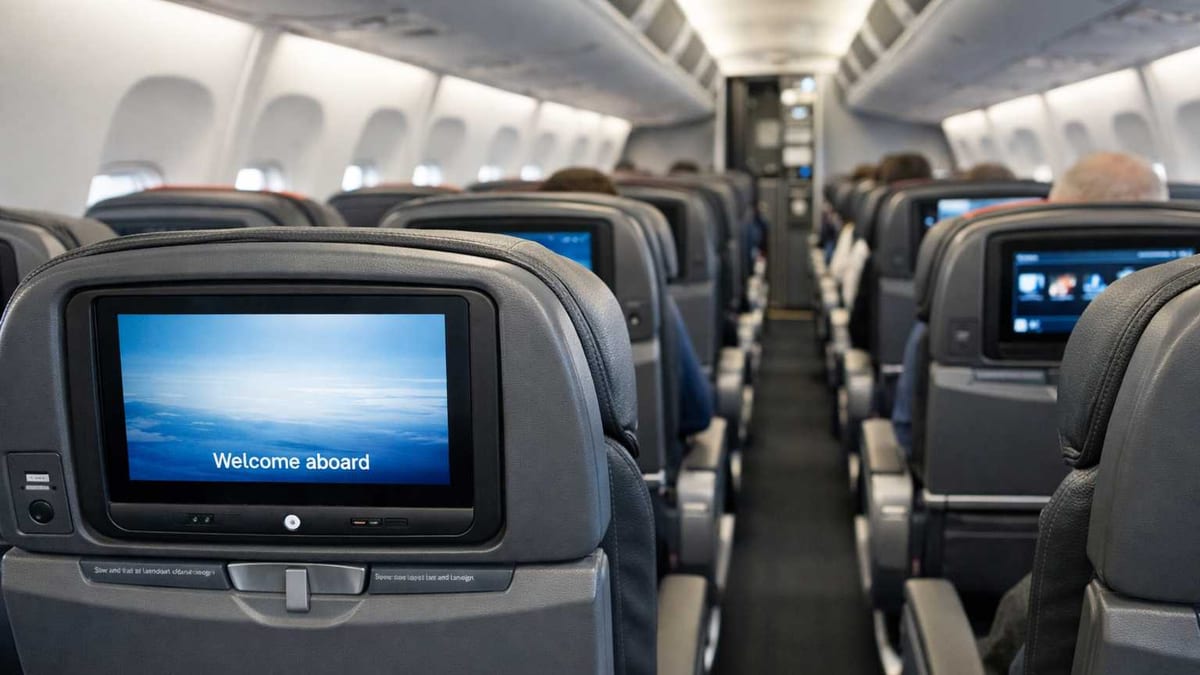
American Airlines is preparing a major shift in its in-flight product, unveiling plans to install next-generation seat-back entertainment screens across more than 800 mainline aircraft from 2028, in a move that edges the carrier closer to rivals Delta and United on onboard amenities.
Get the latest news straight to your inbox!
Reversal of a Device-Only Strategy
The decision marks a notable change for the Fort Worth-based carrier, which spent much of the past decade removing embedded screens from narrowbody cabins in favor of streaming entertainment to passengers’ own phones, tablets and laptops. Published coverage and airline materials indicate that almost all of American’s single-aisle jets currently rely on bring-your-own-device access, with only a limited number of older aircraft still offering built-in displays.
Recent communications shared with customers and investors outline a new plan to reintroduce seat-back systems on a wide scale. The rollout will focus on American’s mainline Airbus and Boeing fleets, which together account for the majority of the airline’s more than 1,000 aircraft. Regional jets operated under the American Eagle brand are not included in the program, according to information circulating in industry reports.
The shift aligns American more closely with its largest domestic competitors. Delta has long promoted its fleetwide screen coverage on most mainline aircraft, while United has been refitting cabins to add monitors back after earlier experiments with streaming-only service. Analysts note that American had increasingly stood apart in the U.S. market by relying so heavily on personal devices at a time when customers were voicing preferences for larger, dedicated displays.
What Passengers Can Expect Onboard
American plans to introduce what it describes in public-facing materials as a next-generation platform, pairing large-format 4K-resolution screens with modern connectivity. The new units are expected to include Bluetooth support to connect personal headphones, as well as USB-C power to keep devices charged throughout the flight. These features are designed to modernize an inflight entertainment footprint that, on many aircraft, has been limited to overhead bins, power outlets and device holders.
Reports indicate that the system will provide a more personalized experience, with tailored recommendations for films and television, interactive moving maps and real-time flight information. This mirrors broader trends across the industry, in which airlines are turning seat-back screens into digital hubs for entertainment, onboard shopping and destination content, sometimes supported by targeted advertising.
The upgrade will be paired with cabin layouts that continue American’s emphasis on connectivity. The airline has been expanding fast Wi-Fi across its network and has promoted plans for high-speed service on a growing share of its mainline and regional fleet. Industry observers note that combining reliable broadband with intuitive seat-back interfaces could allow American to support streaming content, messaging and other services in a more consistent way than its current device-only model.
Scope of the Retrofit Across the Fleet
According to fleet data and airline disclosures, the project will touch a substantial portion of American’s narrowbody operation, including Boeing 737 variants and Airbus A319, A320 and A321 aircraft. With the mainline fleet numbering just over a thousand jets, outfitting more than 800 planes would effectively cover the vast majority of the carrier’s domestic and short-haul international flying.
New deliveries scheduled from 2028 are due to arrive with the screens already installed, while existing aircraft will be modified during regular maintenance cycles. Industry commentary suggests this kind of retrofit program typically stretches over several years, indicating that many customers will begin to see the new systems progressively in the early 2030s as work cascades through the fleet.
Widebody aircraft used for long-haul routes, such as the Boeing 777 and 787 families, already feature seat-back entertainment, and American has previously highlighted enhanced screens and connectivity on forthcoming Boeing 787-9 and Airbus A321XLR jets. The latest announcement extends that focus on premium interiors to the high-frequency domestic network, where customers had sometimes faced cabins with limited cushioning, tight legroom and no built-in entertainment following earlier densification projects.
Competitive Pressures and Changing Passenger Expectations
The decision comes at a time when customer feedback and competitive dynamics are exerting pressure on full-service carriers to differentiate the onboard experience. In online forums and passenger reviews, travelers have frequently contrasted American’s cabins with those of Delta and United, pointing to the absence of seat-back screens as a key factor when choosing flights, particularly for families and infrequent flyers who value simple, built-in options.
Industry analysts note that while many passengers carry smartphones, not everyone brings a tablet or laptop, and some prefer larger displays that do not drain personal batteries. Seat-back maps, children’s programming and an always-available interface can be especially appealing on longer domestic sectors, where relying solely on personal devices can feel limiting. The new program appears aimed at addressing these concerns while still supporting streaming for those who prefer to watch on their own screens.
At the same time, airlines have been reexamining assumptions about cost and weight. Modern systems are lighter and more power-efficient than earlier generations, and some carriers have reported that they can offset installation costs through advertising, e-commerce and partnerships promoted on the screens. Observers suggest American’s move indicates that the balance of cost, customer satisfaction and competitive positioning now favors a renewed investment in embedded entertainment.
More Premium Seats Alongside New Screens
The entertainment overhaul is tied to broader cabin changes that will see American adding more premium and extra-legroom seating on many narrowbody aircraft. Information shared in recent communications describes an expansion of First Class and Main Cabin Extra rows on both new deliveries and retrofitted jets. For travelers, this could mean more opportunities to book or upgrade into higher-comfort seats on busy routes.
On forthcoming Boeing 737 MAX and Airbus A321neo aircraft, for example, published layouts point to increased numbers of premium seats compared with earlier configurations. Combined with upgraded entertainment and connectivity, these changes are intended to create a more consistent product for business travelers and high-value leisure customers who are sensitive to differences between competitors’ cabins.
American has already been signaling a shift toward a more premium positioning with the introduction of new long-haul cabins and enhanced onboard amenities. Extending those upgrades to the domestic narrowbody fleet through seat-back screens and revised seating plans suggests the carrier is looking to close perceived gaps with rivals and respond to evolving passenger expectations on both short and medium-haul flights.