


More news on this day
American Airlines has resumed flight operations across the United States after a widespread information-technology outage on July 28 led to a temporary nationwide ground stop, stranding travelers at major hubs and regional airports and triggering hours of rolling delays and cancellations.
Get the latest news straight to your inbox!
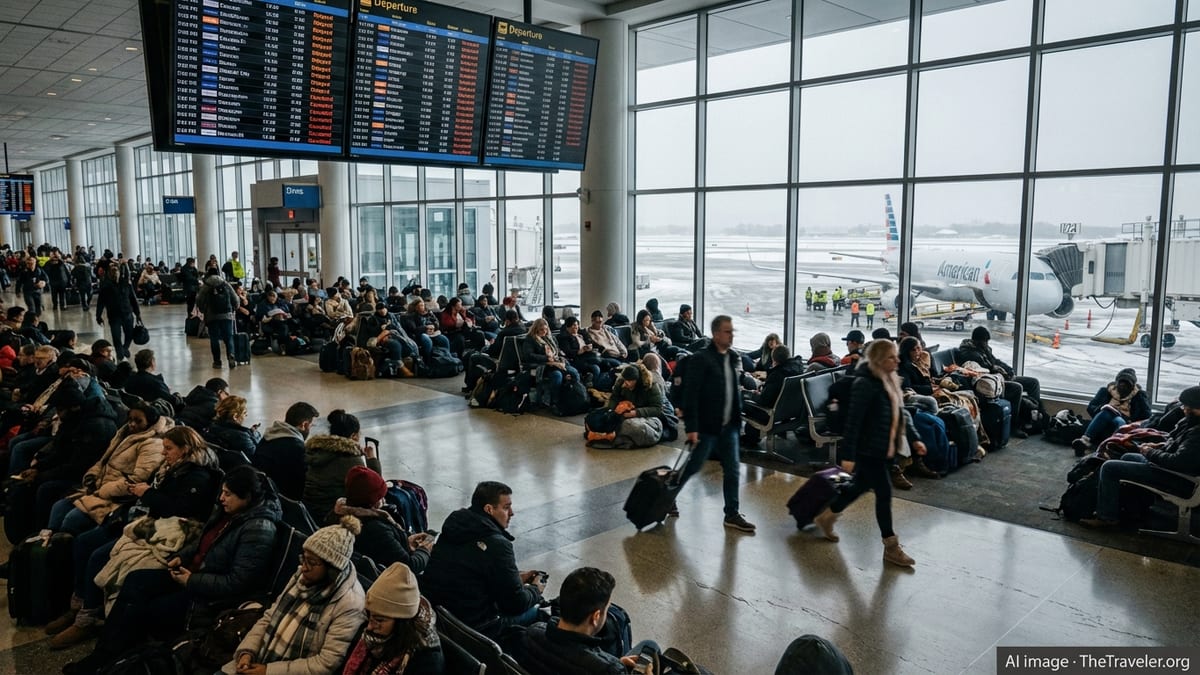
Ground Stop Follows Widespread System Outage
Publicly available flight-tracking data and airport status boards indicate that American Airlines flights were briefly halted nationwide on July 28 after a systems outage affected the carrier’s core operational tools. Reports from multiple airports described agents unable to check in passengers, print boarding passes, tag baggage or process changes, effectively freezing departures for aircraft that had not yet left the gate.
According to published coverage and real-time accounts shared by travelers, the halt applied to American and its regional affiliates, while aircraft already in the air were allowed to continue to their destinations. The interruption was described as a ground stop, a control measure used when an airline or regulator temporarily pauses departures so that operations do not exceed available system capacity.
The disruption unfolded during the busy summer travel period, compounding congestion at hubs such as Dallas Fort Worth, Charlotte, Chicago O’Hare and Phoenix. Social media posts and traveler forums described long lines at customer service desks as passengers attempted to rebook and obtain updated information about their flights.
Operations Restart, But Delays Ripple Into Next Day
By the evening of July 28, publicly shared status updates from airports and travelers indicated that American’s systems were in the process of being brought back online and that the formal ground stop had been lifted. Aircraft began departing again, but with residual delays as crews, aircraft and airport staff worked through the backlog created during the outage window.
Travelers posting from major hubs reported that some flights managed to depart only 20 to 30 minutes later than scheduled once the stop was lifted, while others were held for significantly longer as airlines repositioned aircraft and reassembled flight crews. Overnight, a number of services were cancelled or retimed as American adjusted its schedule to reflect aircraft and crews that had ended up in the wrong locations.
On July 29, travelers continued to report knock-on effects, including early morning cancellations and rebookings onto later flights. Schedules gradually stabilized during the day, but some passengers described disrupted connections and extended journey times as they navigated the aftershocks of the system failure.
Preliminary Focus on Internal IT Glitch
Early indications point to a problem within American’s own information-technology environment as the trigger for the outage, rather than a broader air traffic control failure or a sector-wide incident. Traveler reports referenced issues with internal servers and connectivity at the airline’s operations center, suggesting that key applications used for dispatch, crew management and gate operations became unavailable.
The situation differs from previous nationwide disruptions in which external technology providers or government systems were at the center of the event. In this case, publicly available accounts emphasize that other carriers continued operating normally while American and its regional partners faced a near-total pause in ground operations.
Full technical details of the root cause have not yet been published. However, the pattern of a sudden halt in functions such as check in, boarding and flight planning, followed by a staged restoration of services, is consistent with a critical internal system or network segment going offline and then being rebooted and validated before full operations could safely resume.
Passenger Experience Highlights Vulnerability of Airline IT
Firsthand accounts from airports across the United States describe passengers waiting onboard aircraft at the gate, sitting in long queues at check in and customer service counters, and monitoring departure boards that shifted from scheduled to delayed or cancelled as the outage unfolded. Travelers reported that crews were often present and aircraft were ready to fly, but departures were held because the necessary digital clearances, manifests and dispatch paperwork could not be produced.
The episode underscores how central complex, interconnected IT systems have become to modern airline operations. Even when aircraft, runways and weather conditions are favorable, a failure in core systems can bring a large carrier’s schedule to a standstill in a matter of minutes. Once those systems are restored, the process of matching aircraft, crews and passengers back to the planned timetable can take many hours, particularly when flights cross multiple time zones and crew duty limits are involved.
For travelers, the event serves as another reminder of the value of monitoring flight status frequently, allowing extra time in transit during busy travel periods and keeping flexible options in mind for rebooking when large-scale disruptions occur.
Broader Context of Recent Tech-Related Disruptions
The American Airlines outage follows several high-profile technology-related disruptions in recent years that have affected airlines and aviation infrastructure, ranging from software vendor problems to government system failures. In each case, digital tools that were designed to streamline and automate complex operations instead became single points of failure when they malfunctioned.
Aviation analysts note that large carriers are investing heavily in redundancy, backup systems and modernization efforts to reduce the risk of similar incidents. Even so, industry observers point out that the sheer scale and interconnected nature of airline IT makes it challenging to fully insulate operations from sporadic outages.
As American works through the aftermath of the July 28 ground stop, attention is likely to focus on the steps the carrier takes to harden its systems against future failures, as well as on how quickly schedules return to normal for travelers whose summer itineraries were interrupted.