


More news on this day
Around 200 residents who bought long-term “cruise for life” packages on the residential ship Villa Vie Odyssey have been left unexpectedly stranded in Cambodia, after the vessel’s operator halted its global voyage in the port of Sihanoukville citing soaring fuel costs and financial strain.
Get the latest news straight to your inbox!
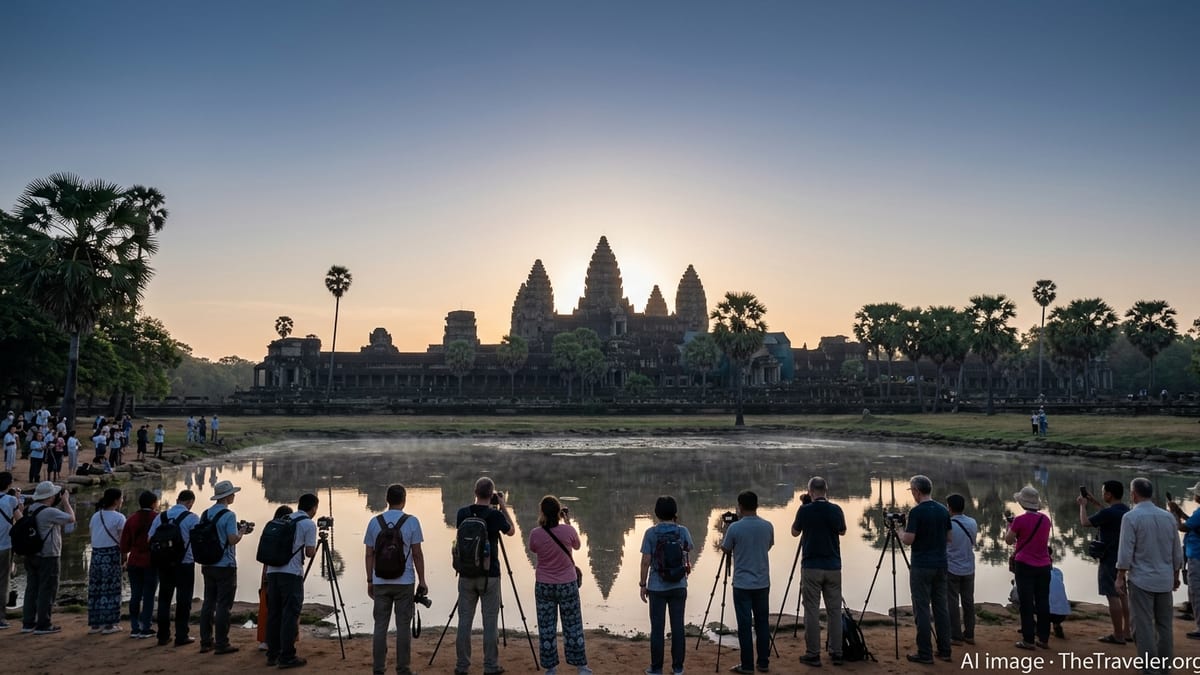
Residential world cruise stalls in Sihanoukville
According to published coverage from multiple outlets, the Bahamas flagged Villa Vie Odyssey arrived at Sihanoukville Autonomous Port on October 23, 2026, after sailing from Thailand. Port statements cited in news reports indicate that 203 guests and 156 crew were on board, with an original plan to remain in Cambodia for five days before continuing to Vietnam.
Instead of continuing its 3½ year residential itinerary, the ship’s operator, US based Villa Vie Residences, informed guests in late October that operations were being suspended and that they would need to disembark in Cambodia. Reports describe the announcement as abrupt for residents, some of whom had sold homes and other assets in order to finance life at sea.
The Odyssey, a roughly 196 to 200 metre long vessel retrofitted in Belfast for full time living, had marketed itself as an answer to conventional retirement and remote work, offering privately owned or long leased cabins, a 24 hour medical centre, spa facilities and “worry free” global travel built around slow paced circumnavigations.
Information compiled from marine tracking data and local port authorities shows the ship is now laid up in Sihanoukville with no confirmed onward sailing date, effectively turning the Cambodian coastal city into an unplanned terminus for what had been promoted as an almost continuous voyage.
Fuel price shock and a business model under pressure
In public statements quoted by international media and industry publications, Villa Vie Residences attributed the suspension to a sharp rise in the cost of low sulphur marine fuel, which it said had undermined the economic viability of its current business model. Reports referencing company communications describe “extraordinary increases” in fuel costs in recent weeks, adding hundreds of thousands of dollars to operating expenses on a relatively small residential ship.
The Odyssey’s multi year voyage, which began in October 2024 after an extensive refit, depended on a steady stream of payments from residents who had signed contracts for long term stays. Coverage in travel and business media indicates that some cabins were marketed at purchase prices upwards of six figures, with ongoing monthly fees intended to cover fuel, crew salaries, port charges and hotel style services.
As fuel prices rose, publicly available information suggests that the company struggled to bridge the gap between fixed income from existing contracts and rapidly escalating operating costs. Some passengers quoted in previous reporting have said the operator had already adjusted itineraries and schedules in an effort to conserve fuel and reduce costs before the decision was taken to halt the voyage entirely.
Reports from specialist cruise and maritime outlets also note that residential ships such as the Odyssey lack the economies of scale enjoyed by the largest mainstream cruise brands, leaving them more exposed when core costs like fuel spike over a short period.
Stranded residents scramble for flights and housing
The immediate impact of the shutdown has been most acute for the roughly 200 “cruise for life” passengers now ashore in Sihanoukville. Published coverage describes many of them urgently searching for hotel rooms in the city’s beach districts and in Phnom Penh, while simultaneously trying to secure onward flights to home countries in North America, Europe and elsewhere.
Several reports highlight the practical complications: some residents had no fixed address on land, having sold properties to join the ship, and must now arrange medium term accommodation while they wait to see whether the operator can recover or arrange alternative housing at sea. For older passengers and those with mobility issues, quickly adapting from a fully serviced residential vessel to independent travel in a foreign country presents particular challenges.
Travel industry analysis circulating since the halt notes that travel insurance coverage for long term residential cruising is often complex, with some policies treating such arrangements differently from traditional time limited holidays. Passengers are reported to be reviewing their contracts and insurance documents to determine what, if any, compensation or assistance they can claim for disrupted travel and unexpected repatriation costs.
Local Cambodian media report that tourism and port officials in Sihanoukville have been coordinating with hotels and ground transport providers to manage the sudden influx of passengers seeking short notice accommodation and transfers, although specific assistance packages or subsidies have not been detailed in public sources.
Cambodia’s role and echoes of past cruise disruptions
This is not the first time Sihanoukville has become an unscheduled refuge for an international cruise vessel. In early 2020, the port accepted the Westerdam after it had been turned away from several countries during the initial stages of the COVID 19 pandemic, a decision that drew international attention to Cambodia’s willingness to receive stranded ships.
The Villa Vie Odyssey situation is different in cause, linked to commercial and fuel cost pressures rather than public health restrictions, but it similarly places Cambodia at the centre of a complex repatriation effort. Passengers must navigate exit requirements, visa rules and limited long haul flight options compared with major regional hubs such as Bangkok or Singapore.
Analysts quoted in regional outlets suggest that the episode may prompt Cambodian authorities and port operators to review contingency planning for residential and long duration cruise calls, including clearer protocols for assisting large numbers of foreign travellers if a commercial operator suddenly halts operations while in port.
The case also underlines how secondary ports that seek more cruise business can unexpectedly find themselves handling the fallout from global shocks, whether related to health, geopolitics or fuel markets, even when those shocks originate far from their own waters.
Questions for the future of residential cruising
The grounding of the Villa Vie Odyssey in Cambodia raises broader questions about the resilience of the residential cruise concept. Marketed as an alternative to land based retirement communities or traditional condominiums, such projects depend on a delicate balance of predictable costs, sustained demand and consumer trust in relatively new operators.
Industry commentators observing the Odyssey’s predicament note that any long term sea based residence model must account for volatile inputs such as fuel, port fees and regulatory compliance, all of which can move quickly in response to geopolitical tensions and environmental rules. If operators cannot hedge or pass on those costs in a transparent way, they risk sudden financial shortfalls similar to those now reported in the Villa Vie case.
Potential future residents of similar ventures are likely to scrutinise contractual protections more closely, looking for clearer provisions on what happens if an operator suspends operations partway through a promised multi year voyage. Legal experts quoted in business media have pointed to issues such as refund rights, title to fitted out cabins and responsibilities for repatriation as key areas of concern.
For now, publicly available information indicates that the Villa Vie Odyssey remains in lay up at Sihanoukville while the company explores options. Whether that results in a rescue plan, a change of ownership or a complete wind down, the abrupt halt in Cambodia has already become a cautionary tale for travellers considering making the sea their permanent address.