


More news on this day
American Airlines plans a sweeping interior overhaul across its narrowbody fleet, adding seatback entertainment screens and more first class seats in a bid to match rivals Delta Air Lines and United Airlines on in flight amenities.
Get the latest news straight to your inbox!
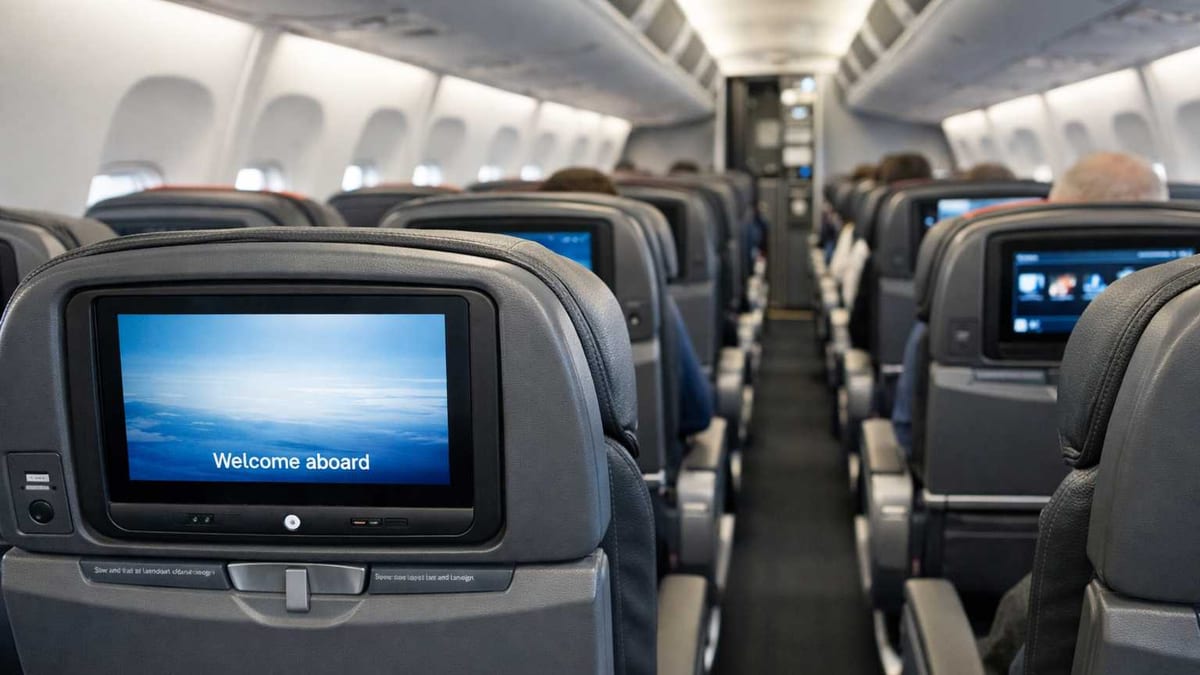
Reversing course on seatback entertainment
The move marks a sharp reversal from American’s earlier strategy of removing most built in entertainment systems from domestic cabins and steering passengers toward streaming content on personal devices. Industry coverage and company materials indicate that beginning in 2028, the carrier intends to equip every seat on its narrowbody aircraft with new 4K seatback screens, Bluetooth connectivity for personal headphones, and USB C power for charging.
Reports describe the screens as part of a broader effort to modernize the onboard experience after years in which American leaned on phone and tablet holders in place of embedded monitors, even as competitors invested heavily in upgraded in seat entertainment. Delta has promoted its goal of offering seatback screens on nearly all mainline aircraft, while United has been rolling out new cabins with larger high definition displays and enhanced personal device pairing.
Analysts note that American’s change of direction reflects shifting expectations among frequent flyers, especially on longer domestic routes where looking down at a phone or tablet can feel less comfortable than watching a larger screen at eye level. The return of seatback systems is being framed in public documents as part of a multi year investment program that also includes faster onboard connectivity and refreshed soft products such as food, beverages, and cabin amenities.
The airline’s decision comes as many global carriers move toward a hybrid model that combines both personal device streaming and upgraded in seat systems, giving travelers multiple options rather than prioritizing one technology over the other.
Bigger first class cabins and more premium seating
Alongside the new screens, American is committing to expand premium seating across its narrowbody fleet, a step aimed at better monetizing business travel demand and matching the premium heavy layouts favored by Delta and United. Publicly available information describes plans to increase the number of first class and extra legroom Main Cabin Extra seats on new deliveries and on aircraft slated for retrofit.
Details circulating in industry summaries indicate that Airbus A319 and A320 jets are being reconfigured to include additional first class rows, while forthcoming Boeing 737 MAX 10 and Airbus A321neo aircraft are scheduled to arrive with larger forward cabins compared with earlier configurations. The result will be more opportunities for paid premium bookings and for frequent flyers to receive upgrades on key domestic business routes.
Travel data providers and fleet guides show that American’s existing domestic first class product typically offers wider recliner seats, increased legroom and priority services on the ground. By increasing the number of these seats and pairing them with refreshed cabin finishes and updated seatback designs, the airline is seeking to narrow the perceived comfort gap with competitors that have marketed their premium cabins as a differentiator.
Industry observers suggest that the strategy aligns with a broader trend among U.S. carriers to tilt capacity toward higher yielding cabins after the rapid recovery of corporate and high end leisure travel, especially on transcontinental and major hub to hub routes.
Keeping pace with Delta and United
For several years, Delta and United have set the pace in the U.S. market for cabin technology and premium seating density, especially on narrowbody aircraft that handle the bulk of domestic flying. Delta has invested in new interior designs that emphasize personal space, seatback screens and mood lighting, while United’s ongoing cabin refurbishment program has highlighted larger screens, Bluetooth pairing and enhanced power options at nearly every seat.
Comparative fleet data shows that many of Delta’s and United’s newer narrowbodies already feature high definition monitors throughout the cabin, even in standard economy. By contrast, American became known for removing seatback systems from single aisle jets and relying on streaming over Wi Fi, a decision that sometimes drew criticism from travelers who preferred not to juggle their own devices throughout a flight.
By committing to add embedded screens and expand first class seating, American is signaling that it intends to compete more directly on the in flight experience rather than focusing primarily on cost efficiency. Industry commentary notes that the airline’s move effectively narrows a key product gap with its two largest domestic rivals, particularly for travelers choosing between carriers based on cabin comfort and onboard amenities rather than solely on schedule or loyalty program ties.
The shift is also expected to influence corporate travel policies and preferred carrier agreements, as businesses often weigh the overall comfort and productivity potential of a cabin when deciding where to concentrate their travel spend.
Timeline, retrofits and passenger impact
The installation of new seatback systems and expanded premium cabins will unfold over several years, reflecting the scale and complexity of reconfiguring hundreds of aircraft. American’s communications to employees and customers suggest that deliveries of new aircraft with the updated interiors will be combined with retrofit programs for existing A319, A320 and 737 families, gradually standardizing the onboard experience across the narrowbody fleet.
Travelers are unlikely to see immediate, system wide changes, but industry tracking of fleet modifications indicates that aircraft typically rotate through refurbishment lines in phases, with certain hubs and routes receiving updated jets sooner based on demand and operational needs. As more aircraft emerge with the new layout, passengers can expect a more consistent presence of seatback screens, expanded power options and a higher probability of securing or upgrading into first class on busy domestic routes.
Experts point out that adding hardware such as screens and new seating can influence aircraft weight and maintenance complexity, but also provides opportunities for airlines to generate ancillary revenue through premium content, branded entertainment and differentiated fare products tied to cabin features. In American’s case, the company is positioning the investment as part of a larger modernization of the end to end journey, from upgraded lounges and check in areas to improved onboard connectivity.
For travelers, the most immediate impact over time is likely to be a cabin experience that looks and feels closer to what Delta and United already offer on many mainline flights, with a particular focus on those willing to pay more for extra comfort at the front of the aircraft.
Competitive pressure in a changing market
The decision to restore seatback screens and grow the number of premium seats underscores how intensely competitive the U.S. airline market has become, especially among the three largest network carriers. As loyalty programs evolve and travelers increasingly compare day of travel experiences across airlines, investment in hard product features such as seating, screens and power has taken on greater significance.
Analysts view American’s move as both defensive and opportunistic. On one hand, it responds to years of feedback from frequent flyers who compared American’s domestic cabins unfavorably with those of Delta and United, particularly on longer routes. On the other, it provides a platform for the airline to reposition itself as a more premium oriented option while still leveraging its extensive network and partnerships.
The announcement also comes at a time when many carriers are rethinking cabin layouts to balance dense economy seating with enough premium capacity to satisfy high yield travel segments. Adding first class seats and improving entertainment and connectivity can help justify higher fares, support corporate contracts and encourage customers to remain within a single loyalty ecosystem.
As the retrofit and delivery programs progress toward the late 2020s, travelers and industry watchers will be able to gauge how effectively American’s upgraded cabins resonate with passengers and whether the enhancements close the perception gap with its two biggest rivals in the race for premium U.S. flyers.