


More news on this day
American Airlines is accelerating its shift toward higher-spending customers by planning more premium seats across its narrowbody fleet, a move that aims to boost revenue on crowded domestic and short-haul international routes while keeping overall capacity flexible.
Get the latest news straight to your inbox!
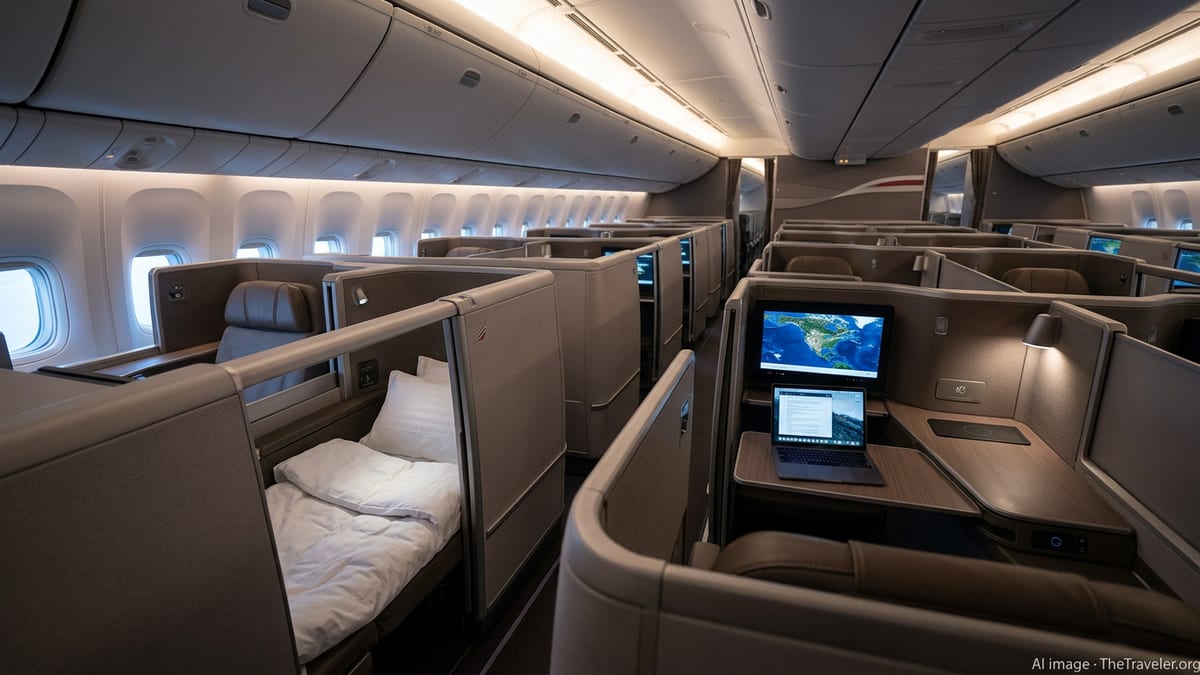
Strategic Bet on High-Yield Travelers
Publicly available investor materials and fleet updates indicate that American is redesigning the cabins of key narrowbody types, such as the Airbus A319 and A320, to increase the number of domestic first class and other higher-paying seats. The strategy builds on earlier decisions to grow premium capacity systemwide, including long-haul cabins, but now focuses more explicitly on single-aisle aircraft that dominate the airline’s U.S. network.
The emphasis on premium seating reflects a broader industry pattern in which major carriers rely heavily on corporate travelers, frequent flyers and affluent leisure passengers for profits. Higher fares at the front of the cabin, combined with strong demand for extra-legroom and other paid upsell products, offer a way to improve margins without significantly expanding the number of flights.
Analysts note that American’s renewed focus on premiumization coincides with a cooling but still resilient post-pandemic travel environment, in which business travel has recovered unevenly while so-called “premium leisure” demand has remained robust. Adding more first class and other enhanced seats on narrowbodies allows the airline to capture that demand on routes where widebody aircraft are either impractical or uneconomical.
At the same time, maintaining substantial main cabin density on these jets helps American compete with low-cost and ultra-low-cost carriers on price-sensitive routes, suggesting that premium expansion is being layered onto, rather than replacing, its mass-market offering.
Cabin Reconfigurations Across the Narrowbody Fleet
Documents shared with investors describe a step-by-step retrofit program that includes new interiors, larger overhead bins, refreshed finishes and updated powered seating across American’s A319 and A320 fleets. Within those projects, seat maps are being adjusted to create more domestic first class positions at the front of the cabin, increasing the share of premium inventory on high-demand routes.
Industry coverage of American’s fleet plans also points to continued growth of premium products tied to the Airbus A321 family, including the long-range A321XLR, which the airline has cast as a central part of its premium strategy. While much of the public attention has centered on lie-flat seats and long-haul comfort, the same aircraft family is expected to help expand higher-yield seating on narrowbody flights linking key hubs and major business markets.
On regional routes, American has been steadily shifting flying from single-class regional jets to dual-class aircraft, which offer both first class and main cabin seating. Recent schedule changes at some hubs show smaller jets being replaced by larger regional aircraft that feature a dedicated premium cabin, giving the airline more opportunities to sell higher-fare seats even on shorter flights.
Taken together, these cabin changes suggest that American is reshaping large portions of its single-aisle and regional fleets to mirror the revenue patterns it already sees on flagship long-haul routes, albeit tailored to shorter stage lengths and varying levels of demand.
Competitive Pressures From Delta and United
American’s move to expand premium seating on narrowbodies comes as Delta Air Lines and United Airlines also deepen their focus on higher-yield customers. In recent years, both rivals have expanded domestic first class, premium economy and extra-legroom offerings, while investing heavily in upgraded lounges and onboard amenities intended to appeal to frequent travelers who are willing to pay more.
Market observers frequently note that United in particular has used its Polaris and premium transcontinental offerings as a template for a broader premium push, while Delta has positioned its domestic first class and Comfort+ products as a core part of its brand. American’s expansion of premium seats on narrowbody jets can be seen as a direct response to this competitive landscape, especially on routes where the three carriers overlap heavily.
On many trunk routes, including transcontinental and key hub-to-hub services, premium demand has remained comparatively strong, even when economy-class pricing comes under pressure from low-cost competitors. Adding more first class and extra-legroom seats allows American to better monetize these markets, especially during peak business travel days when front-cabin availability is often constrained.
By increasing the number of premium seats rather than simply raising fares on a fixed cabin, American also gains more flexibility to segment demand. Travelers who might not have considered first class at traditional price points may be tempted by targeted upgrades, discounted day-of-departure offers or corporate contracts that fill a larger premium cabin.
Revenue Implications and Network Flexibility
Industry data and academic research on cabin layouts suggest that premium cabins, despite taking up more space per seat, can significantly enhance revenue per flight when demand for high-yield travel is strong. For American, reconfiguring narrowbody jets toward a higher share of premium seats raises the potential for improved unit revenues on business-heavy and affluent-leisure routes.
However, the strategy also raises questions about how the airline will balance premium growth with sensitivity to price-focused travelers. When more cabin space is devoted to first class and extra-legroom seating, fewer standard economy seats are available, which can put upward pressure on the lowest fares. That dynamic is particularly important on routes where American competes with carriers that fly denser configurations.
American appears to be addressing this by tailoring configurations to route profiles and by leveraging a diverse fleet that ranges from large narrowbodies to regional jets. On routes where premium demand is thinner, aircraft with more main-cabin seating can remain in use, while markets with consistent high-yield traffic are more likely to see reconfigured jets with expanded premium sections.
For the airline’s broader network, this flexible approach may help smooth out revenue volatility, allowing American to deploy its most premium-heavy narrowbodies where they can generate the greatest return while preserving capacity and competitive pricing elsewhere.
What It Means for Travelers
For passengers, the shift toward more premium seats on American’s narrowbody jets is likely to be most visible at the front of the cabin and in the rows designated as extra-legroom or other enhanced economy products. Travelers willing to pay more, or to use loyalty currency, may find better odds of securing a premium seat on domestic and short-haul flights as retrofits ramp up and additional reconfigured aircraft enter service.
Frequent flyers, particularly those with elite status, could see both benefits and trade-offs. A larger premium cabin can increase the number of upgrade opportunities, but it may also encourage American to refine how those seats are priced and managed, with a sharper focus on monetizing them whenever possible. That balance between upgrades and paid first class has already become a point of discussion among loyal customers across the industry.
In the main cabin, travelers may notice cabin refreshes, powered seats and larger overhead bins as part of the same retrofit programs that are adding premium capacity. At the same time, higher-density portions of the cabin may feel more constrained if seats are added or pitch is reduced to accommodate changes at the front, an ongoing concern for some passengers on newer layouts.
Ultimately, American’s expanded premium seating on narrowbody jets underscores a broader reality of modern air travel: airlines are increasingly organizing cabins around the spending patterns of their most lucrative customers, while using pricing, product tiers and loyalty programs to keep the rest of the plane full. For travelers across the fare spectrum, that means more choices, but also more trade-offs, as comfort, flexibility and price are reshuffled inside the same familiar single-aisle aircraft.