


More news on this day
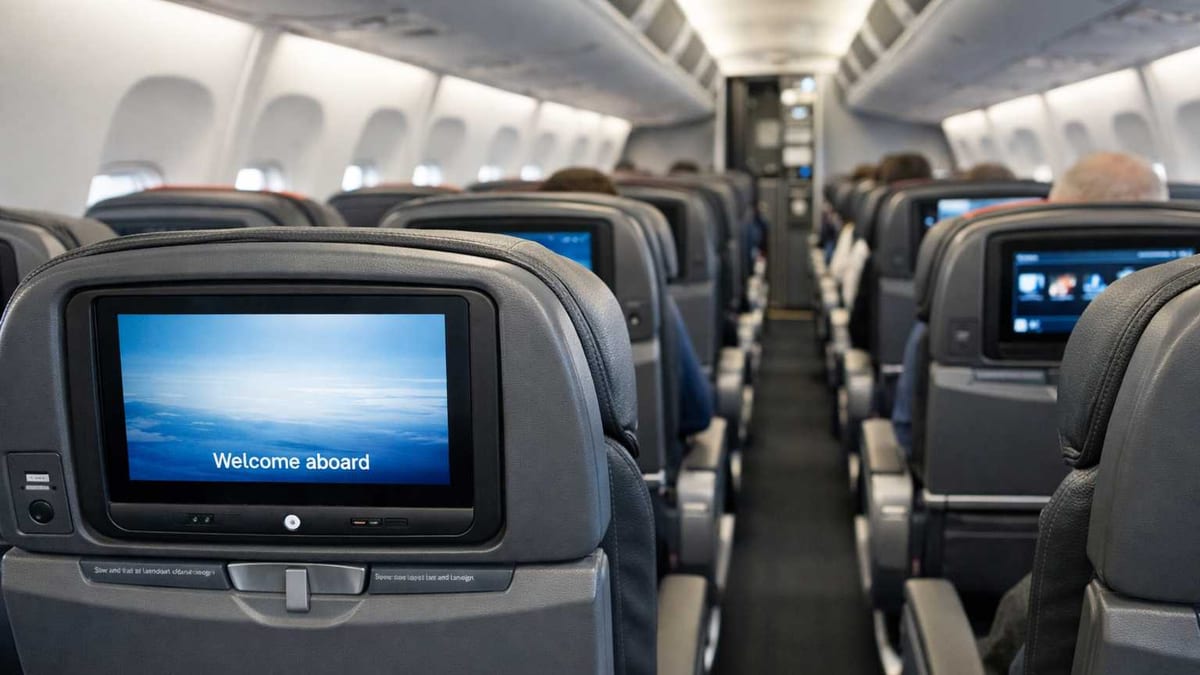
American Airlines is moving to bring seat-back entertainment screens back to portions of its fleet, marking a significant strategic pivot for a carrier that once bet heavily on passengers’ personal devices instead of built-in inflight entertainment.
Get the latest news straight to your inbox!
A Shift Away From the Bring-Your-Own-Device Strategy
For much of the past decade, American Airlines aligned itself with a cost-conscious trend in the U.S. market by removing most seat-back screens from its domestic narrowbody aircraft and focusing on streaming content to passengers’ phones, tablets, and laptops. The airline equipped cabins with device holders and power outlets and promoted fast inflight connectivity as the primary way to watch movies and TV on board.
Publicly available information shows that this strategy left American as an outlier among large U.S. competitors, which continued to highlight built-in entertainment as a hallmark of the onboard experience. Travelers increasingly compared American’s largely screen-free cabins with rivals that advertised thousands of hours of content on large, high-definition monitors at every seat.
Over time, that contrast became more pronounced as American accelerated interior retrofit programs that removed legacy screens from older Airbus A319s and special transcontinental A321 variants. As those aircraft cycled through the hangar, the carrier’s domestic fleet leaned ever more heavily on the bring-your-own-device model, even while international widebodies retained embedded systems.
Reports from industry observers indicate that the combination of competitive pressure, evolving passenger expectations and the premium ambitions of the airline’s long-haul strategy helped set the stage for a reevaluation of inflight entertainment on single-aisle jets.
New Narrowbody Cabins Signal a Different Direction
The pivot toward restoring seat-back screens is closely tied to American’s next generation of aircraft, particularly its Airbus A321XLR order and future Boeing 787-9 deliveries. Company statements and independent coverage describe these aircraft as the backbone of a more premium-focused long-haul and transcontinental operation, with new business-class suites, updated premium economy cabins and refreshed main cabins.
Published materials detailing the A321XLR interior show that every seat in the aircraft, including the main cabin, is being delivered with individual monitors, complete with Bluetooth audio connectivity and multiple charging options. This places the new narrowbody closer to a widebody-style experience, especially on routes such as New York to Los Angeles, where American has historically marketed an elevated product.
Similarly, newly delivered 787-9 aircraft are being outfitted with upgraded entertainment technology, reinforcing the message that screens remain a central part of the experience on long flights. The narrowbody move is notable because it brings that philosophy back into a segment where American had once signaled it could do without embedded systems.
Although detailed retrofit timelines for the broader narrowbody fleet have not been fully spelled out in public documentation, the decision to reintroduce screens on key single-aisle aircraft represents a clear departure from the previous assumption that passengers’ own devices alone would be sufficient.
Competitive Pressures in the U.S. Market
American’s turn back to seat-back entertainment highlights how inflight amenities have become a front in the battle for higher-yield travelers. Major U.S. rivals have been vocal about investing in larger, sharper screens and extensive content libraries, particularly on new long-haul aircraft and premium-focused narrowbodies.
Industry analysis notes that airlines increasingly view cabin technology as a differentiator in markets where schedules and fares often look similar. In that context, the absence of built-in screens on many American aircraft risked reinforcing a perception that the carrier offered a leaner product, even as it introduced lie-flat suites and other high-end touches in the premium cabin.
Restoring screens to prominent parts of the fleet allows American to reposition itself more squarely alongside peers that emphasize entertainment as part of a seamless, end-to-end experience. At the same time, the airline continues to highlight free onboard streaming and connectivity, signaling that it sees screens and personal devices as complementary rather than mutually exclusive.
Observers suggest that, as next-generation cabin products roll out, the contrast between aircraft with and without seat-back entertainment could become more visible to consumers shopping for long flights, potentially nudging future decisions about how widely screens are deployed.
Implications for Passengers and the Onboard Experience
For travelers, the return of seat-back screens on more American Airlines flights promises a less device-dependent experience, especially on longer routes where battery life, screen size and comfort matter. Built-in monitors free up phones and laptops for work or messaging while providing a dedicated interface for movies, series, live TV and moving maps.
Newer systems, as described in product overviews, offer higher resolution displays, intuitive interfaces and the ability to pair Bluetooth headphones, reducing cable clutter at the seat. Combined with universal and USB-C power outlets, this creates a more modern environment that reflects how passengers actually use multiple devices in flight.
The change also has operational implications. Embedded screens require additional maintenance and add weight compared with a streaming-only setup, but they can simplify the entertainment experience for less tech-savvy travelers and reduce reliance on personal hardware. Airlines that have invested in both screens and connectivity argue that the redundancy improves resilience when either system encounters issues.
American appears to be moving toward that hybrid model, pairing upgraded connectivity with physical screens on key aircraft types. For frequent flyers, the result is likely to be a more predictable entertainment offering across the airline’s long-haul network and select transcontinental and high-profile domestic routes.
A Test Case for Future Fleet Decisions
The decision to restore seat-back entertainment on new and high-visibility aircraft could serve as a test case for how American shapes the rest of its fleet in the coming years. The airline has hundreds of narrowbodies in service and on order, and their final interior specifications will influence customer perception well into the next decade.
Fleet strategy commentary points out that single-aisle jets are taking on longer missions that were once the domain of widebodies. On such flights, features like entertainment, power and seat comfort take on outsized importance in retaining loyal customers and attracting premium demand, particularly on busy transatlantic and transcontinental corridors.
As passenger feedback accumulates on aircraft like the A321XLR and the latest 787-9s, American will gain clearer insight into how strongly travelers value embedded screens compared with fast, free connectivity alone. The current pivot suggests that, at least for longer and more premium-focused routes, the market is signaling a preference for having both.
For now, the return of seat-back screens at American Airlines marks a notable change in direction for a carrier that once championed a screen-free narrowbody future. How far that reversal extends across the fleet will be closely watched by travelers and industry analysts alike.