


More news on this day
American Airlines is expanding its suite of digital tools designed to handle flight disruptions, introducing new app and website features that aim to give customers clearer information, faster rebooking options and easier access to support when travel plans change.
Get the latest news straight to your inbox!
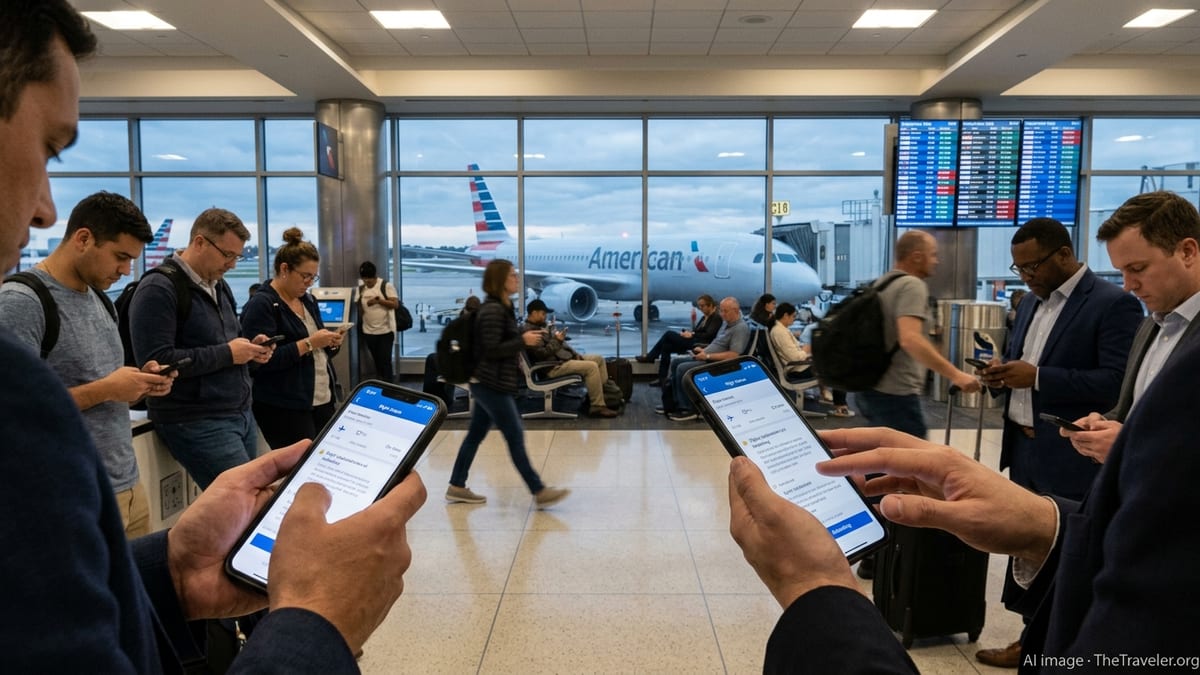
Centralized Disruption Hub Puts Key Options in One Place
Recent updates to American Airlines’ digital platforms bring disruption management into a single, centralized hub that appears directly within an affected trip. Publicly available information shows that when a delay, cancellation or missed connection occurs, customers now see a dedicated disruption area tied to their specific flight, instead of searching across multiple screens or channels for help.
The hub brings together several actions that travelers often need during irregular operations, including reviewing updated departure and arrival times, comparing alternate flights, and confirming or changing rebooked itineraries. Reports indicate that eligible customers can also access hotel, meal and ground transportation resources directly through the same interface, reducing the need to stand in airport queues or call customer service during peak disruption periods.
According to published coverage of the airline’s customer-experience strategy, the disruption screen is designed to surface only the options that are relevant to a particular traveler, such as same-day alternate flights, available seats and applicable vouchers. This approach is intended to simplify decision-making during stressful moments by avoiding long lists of generic offers or policies.
Industry analysis notes that centralizing these features reflects a wider shift among major carriers toward treating disruption management as a dedicated product, rather than an afterthought layered onto standard booking tools.
New App Enhancements Give Travelers More Autonomy
Alongside the disruption hub, American Airlines is introducing a series of enhancements to its mobile app and website that focus on self-service control. Recent company communications highlight new flows that allow customers to review and select alternative flights directly from their device when operations change, in many cases without needing to interact with an agent.
These tools are intended to support a range of scenarios, from weather-related cancellations to missed connections caused by inbound delays. Customers can compare options based on timing, routing and seat availability, then confirm the choice that best fits their needs. The system is designed to update boarding passes and itineraries in real time, helping reduce confusion at the gate.
Reports also point to clearer in-app messaging during disruptions. Instead of generic delay notifications, the latest version of the app is being configured to provide short explanations of what is happening and what actions are available. This is aimed at addressing one of the most common complaints in air travel, where passengers often receive fragmented updates from multiple channels.
Travel industry observers note that these upgrades align with a broader move by airlines toward automation and data-driven decision support, enabling customers to resolve many issues on their own while reserving live assistance for more complex cases.
Timely Flight Information and Contextual Alerts
American Airlines has also invested in delivering more timely and contextual flight information throughout the day of travel. A recent wave of customer-experience announcements describes an updated notification system that is intended to push key details about a trip at the moments they matter most, such as gate changes, boarding times and updated connection information.
During disruptions, the same infrastructure is used to send targeted alerts that link directly into the disruption hub for the affected flight. Instead of routing customers to a general home screen, notifications open the specific page where rebooking options and support resources are located. This is designed to shorten the path from receiving bad news to taking action.
External coverage of the airline’s digital roadmap indicates that these changes build on earlier updates to the American Airlines app, which focused on a more personalized home screen and streamlined access to upcoming trips. The disruption-focused enhancements appear to be the next phase, layering operational data and decision tools onto that redesigned foundation.
Aviation analysts suggest that timely, contextual communication is increasingly central to how travelers evaluate their experience, particularly for frequent flyers who are sensitive to connection risks and schedule reliability.
Integration With Broader Digital Upgrades
The new disruption tools are part of a larger digital modernization program at American Airlines. In recent months, the carrier has emphasized investments that span booking, airport processing and in-flight connectivity, positioning these efforts as interconnected elements of a single customer journey.
Publicly available materials highlight upgrades to the mobile app interface, expanded digital wallet support for boarding passes, and new options that allow travelers to manage many elements of their trip from a single screen. Disruption management sits within this ecosystem, alongside features such as seat selection, same-day flight changes and mileage tracking.
Industry reports also point to the role of onboard connectivity in enabling these services. With high-speed Wi-Fi now more widely available in the fleet, customers increasingly expect that they can receive disruption alerts, review alternate flights and confirm new plans even while still in the air, rather than waiting to land before taking action.
Analysts note that airlines that successfully link their operational systems, mobile apps and onboard connectivity can respond more flexibly to disruptions, sometimes rebooking customers or adjusting connections while a flight is still en route.
Competitive and Passenger-Experience Implications
The launch of enhanced digital tools for disruptions reflects growing competition among major carriers to provide more control and transparency when flights do not operate as scheduled. Travel industry commentary suggests that travelers now compare airlines not only on fares and schedules, but also on how easily they can recover from irregular operations.
For American Airlines, the expanded disruption platform is being positioned as a way to reduce friction across its large network by shifting many routine tasks out of airport lines and call centers and into the app. If the tools perform as intended, they could shorten recovery times, ease pressure on frontline staff and improve overall satisfaction scores during one of the most challenging parts of the travel experience.
Observers also point out that digital self-service does not eliminate the need for human assistance, particularly in complex situations such as international rerouting or multi-ticket itineraries. Instead, the new tools are seen as handling standard scenarios at scale, freeing up agents to focus on cases where judgment and negotiation remain essential.
As airlines head into another busy travel season, continued investment in disruption management technology is expected to remain a priority across the industry, with American’s latest tools offering a high-profile example of how carriers are attempting to turn irregular operations into a more structured, data-driven part of the journey.