


More news on this day
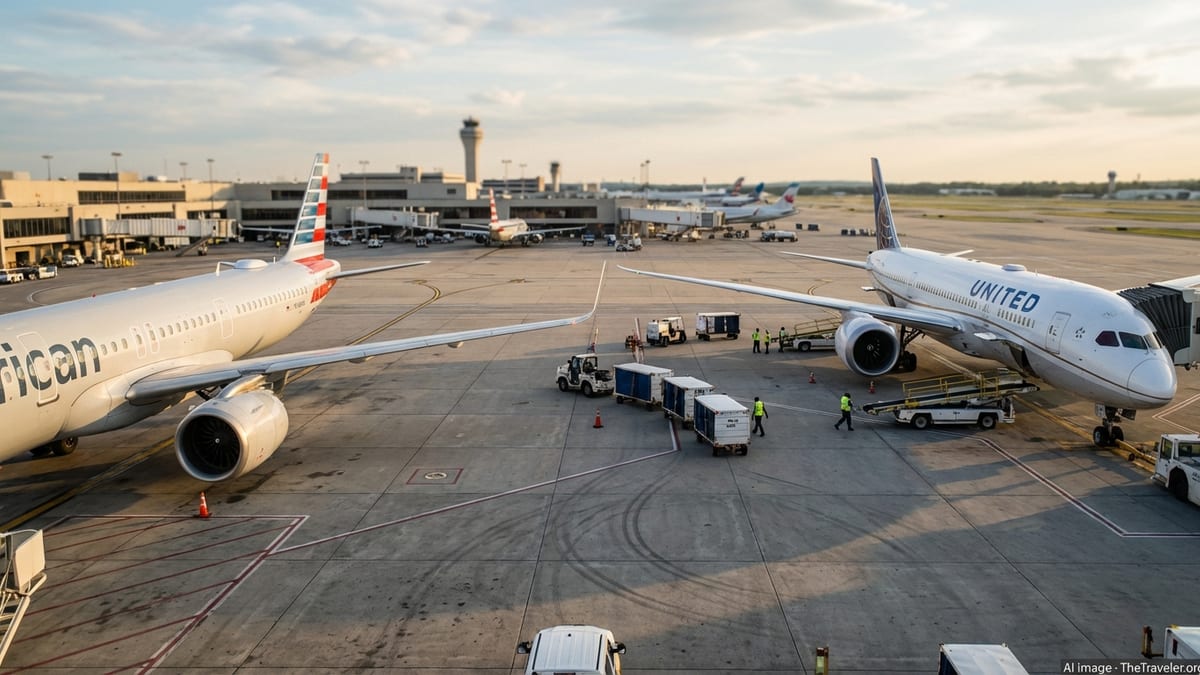
Newly released airline data from 2024 through 2026 shows U.S. carriers, led by American Airlines and United Airlines, cementing their grip on global rankings of the world’s busiest airlines by flights, seats and long haul capacity.
Get the latest news straight to your inbox!
American Remains the World’s Busiest Airline by Flights
Published industry analysis of 2024 schedules shows American Airlines operating more flights than any other carrier worldwide, with just over 2.1 million one way services during the year. The ranking, compiled from OAG’s Takeoff database and visualized in recent coverage of the world’s busiest airlines by flights, places American ahead of other full service and low cost competitors on sheer frequency.
That leadership reflects the scale of American’s domestic network in the United States, where a dense schedule of short and medium haul sectors continually feeds its hubs at Dallas Fort Worth, Charlotte, Chicago O’Hare and other major airports. Publicly available data on global airline metrics indicates that when all scheduled seats are counted, American also sits at or near the top worldwide for annual capacity, underlining how its high frequency translates directly into available seats for travelers.
While some low cost carriers match or exceed American on certain leisure routes, the combination of business heavy trunk lines, transcontinental services and a broad spread of international flying keeps the airline in the global lead for overall departures. Recent 2025 and 2026 OAG updates on the world’s top 20 airlines by capacity and frequency continue to identify American as number one by both metrics.
At the same time, the carrier does not dominate every scale measure. Analyses that weight capacity by distance flown show that American’s shorter average stage length, compared with some intercontinental rivals, leaves room for others to overtake it in long haul capacity even as it retains its title as the busiest by flights.
United Takes the Crown on Long Haul Capacity
Where American leads on total flights and seats, United Airlines has emerged as the global leader on available seat kilometers, the distance weighted capacity measure that captures the scale of an airline’s medium and long haul network. Industry summaries of 2024 and 2025 data report that United edges ahead of American and Delta on this metric, reflecting a larger share of international flying and a particularly heavy emphasis on transatlantic and transpacific routes.
OAG’s profiling of the world’s major airlines highlights that United allocates more than one fifth of its capacity to international services, several percentage points higher than American. That tilt toward longer stage lengths, combined with an extensive widebody fleet, allows United to generate more seat kilometers even with fewer total flights. As a result, it is often described as the busiest airline in the world when the focus shifts from domestic frequency to global reach.
The importance of hub locations also feeds United’s ranking. The carrier’s hubs at Chicago O’Hare, Newark Liberty, Houston Intercontinental and San Francisco anchor connections across the Atlantic, into Latin America and deep into the Asia Pacific region. Airport reports from Chicago and Houston show United accounting for close to half of passenger movements at those hubs, underscoring how the airline’s network structure concentrates long haul demand through a handful of very large connecting points.
Taken together, these data points mean that from 2024 through 2026 United has been able to claim a parallel superlative to American’s. While American can describe itself as the world’s busiest airline by flights and seats, publicly available compilations of airline statistics show United at or near the top when the discussion turns to long haul capacity and global network scale.
Delta, Southwest and International Rivals Round Out the Leaders
The dominance of American and United does not come in isolation. Other U.S. carriers, particularly Delta Air Lines and Southwest Airlines, occupy high positions in global rankings of airline size and activity. Delta frequently appears in industry tables as one of the top three airlines by total capacity and flights, and often leads when financial measures such as revenue, assets and brand value are considered.
Southwest, while focused almost entirely on short haul flying within the United States and nearby international markets, consistently ranks among the world’s largest airlines by passenger numbers and routes served. Data collated on the biggest airlines in North America places Southwest alongside the large network carriers across multiple years, reflecting how its point to point model generates high volumes of departures and seats.
Outside the United States, carriers such as Ryanair, China Southern, Emirates and Turkish Airlines also feature prominently in rankings of the world’s busiest airlines. Ryanair, for example, often leads on the number of routes served, while China Southern and other Chinese majors appear near the top by passengers carried. Long haul specialists including Emirates and Qatar Airways rank highly on available seat kilometers despite operating far fewer flights than the largest U.S. operators.
These international competitors illustrate how different metrics produce different leaders. When airlines are ranked by flights, U.S. carriers dominate the top of the table. When the focus is on long haul capacity or global connectivity, a more diverse mix of airlines from Europe, the Middle East and Asia join the upper tier, even if they do not match American and United on overall frequency.
From 2024 to 2026, U.S. Carriers Tighten Their Grip
Looking across multiple years, the pattern that emerges is one of continuity rather than sudden shifts. OAG’s tracking of the world’s top 20 airlines and separate analyses of air travel statistics for 2024 and 2025 indicate that American, United and Delta have all maintained or slightly increased their share of global capacity, with incremental growth continuing into 2026 schedules.
In the U.S. domestic market specifically, updated 2026 market insights show American as the largest airline by scheduled seats, with United, Delta and Southwest closely grouped behind. That concentration at home provides a foundation for international expansion, particularly for American and United as they redeploy aircraft to long haul markets where demand has rebounded strongly since the pandemic.
The combination of strong home market demand, extensive hub networks and large fleets has allowed these carriers to respond quickly to surges in travel. Reports on the busiest travel days of 2024 and 2025 describe record global seat counts, and U.S. majors have supplied a substantial share of that growth. Even as new entrants and low cost airlines expand in emerging markets, the scale gap between them and the largest U.S. groups remains wide.
For travelers, the data highlights how journeys across much of the world still run through American, United and their closest peers. Whether measured in flights, seats or long haul capacity, the world’s busiest airlines heading into the 2026 travel seasons continue to be dominated by a handful of U.S. carriers that anchor global connectivity.
Methodologies Matter: How “Busiest” Is Defined
The picture of American, United and other U.S. airlines dominating global rankings also reflects the ways in which “busiest” is defined. Industry databases such as OAG’s Schedules Analyser and Takeoff product track several different measures, from simple flight counts and total seats to more complex indicators such as available seat kilometers and network breadth.
Rankings focused on flight frequency elevate carriers with dense domestic operations and high daily utilization of narrowbody fleets. Measures centered on seat kilometers reward airlines that operate many long haul flights, even if their total number of departures is lower. Passenger carried statistics, which depend on company financial and traffic disclosures, can yield yet another set of leaders, particularly for airline groups that bundle multiple brands under a single corporate umbrella.
Because of these differences, no single carrier tops every list. However, cross referencing multiple published rankings for 2024, 2025 and early 2026 shows that American and United appear near the top of almost every major scale metric, from flights and seats to long haul capacity and passengers carried. That consistency across methodologies is what underpins the conclusion that they, along with Delta and Southwest, dominate the conversation about the world’s busiest airlines in the current travel cycle.
As data providers release further updates through 2026, shifts in fuel costs, aircraft deliveries and regional demand could alter the balance between leading airlines. For now, publicly available figures and comparative studies reinforce a clear message: the center of gravity in global airline scale remains firmly anchored in the United States.
Visual Capitalist: World’s Busiest Airlines by Flights in 2024
OAG: What the Top 20 Airlines Tell Us About the Market
OAG: Data Insights on the World’s Major Airlines
Economy Insights: Largest Airline Groups by Passenger Traffic