


More news on this day
Severe late-September flooding across Bangkok and other parts of Thailand is disrupting journeys for residents and visitors, forcing transport changes, temporary closures and special public holidays while underlining how climate and monsoon risks are reshaping travel across the country.
Get the latest news straight to your inbox!
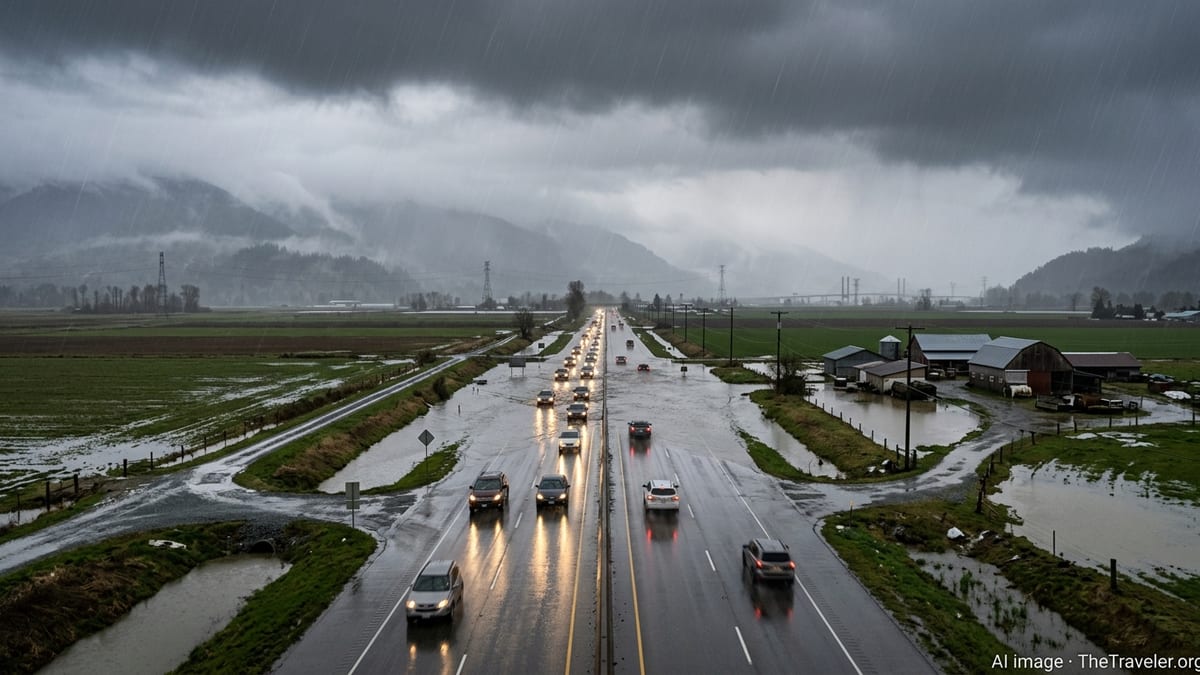
Transport networks under pressure in Bangkok and beyond
Heavy rainfall driven by a strong low-pressure system and an intensified southwest monsoon has led to widespread flooding across Thailand in recent days, with Bangkok and neighboring provinces among the hardest hit. Publicly available information from the Thai Meteorological Department describes repeated warnings for heavy to very heavy rain between September 25 and 27, with heightened risks of flash floods and runoff across much of the country, including the capital and its surrounding provinces.
In Bangkok, local coverage indicates that several major roads and low-lying neighborhoods were inundated over the weekend of September 26 to 27. Traffic disruptions have been reported on key routes leading to Suvarnabhumi Airport, particularly through the Lat Krabang area, where government advisories describe high standing water and urge drivers to avoid certain streets or allow significantly longer travel times.
Despite the challenging road conditions, rail-based urban transport has remained largely functional. A government travel update issued on September 27 states that the Airport Rail Link, the State Railway’s Red Line, and the BTS and MRT urban rail systems are operating, providing an important alternative for travelers seeking to reach central Bangkok or connect to intercity services. However, wet-weather delays and last‑minute timetable changes remain possible, especially where lines intersect with flooded districts or where access to stations is impeded.
Elsewhere in the transport system, localized disruption has extended beyond the capital. A widely shared weekly update for residents and long-stay visitors notes that on September 26 several State Railway of Thailand Eastern Line services, including commuter trains toward Chachoengsao, were cancelled after flooding affected track sections between Ban Kaeng and Sa Kaeo and near Aranyaprathet. These interruptions have complicated overland travel toward the Cambodian border and popular eastern destinations for at least part of the week.
Official holidays and emergency messaging aim to ease congestion
To limit risks during the height of the flooding, the Thai Cabinet approved special public holidays on September 28 and 29 in four heavily affected provinces: Bangkok, Nonthaburi, Pathum Thani and Samut Prakan. The decision, published by the Government Public Relations Department on September 27, is framed as a measure to reduce nonessential travel, ease pressure on flooded road networks and give local agencies more flexibility to manage the situation.
Under this decision, central government bodies in the four provinces may scale back in‑person services while maintaining essential functions and online operations. The guidance also indicates that state enterprises, banks and private-sector organizations can decide whether to follow the holiday declaration depending on their operational needs and legal frameworks. The Stock Exchange of Thailand, for example, is reported as remaining open.
Alongside the holiday announcement, Thailand’s disaster management and information agencies have increased their public communication. Recent government statements outline a three-phase approach to flood information: clear, time‑stamped warnings before and during heavy rain; practical guidance on evacuation routes and shelters while water levels are rising; and advice on returning home, hygiene and financial assistance once conditions improve. Public messaging has emphasized the need for residents and visitors to monitor broadcast and online channels for changing conditions at provincial level.
For travelers, this evolving mix of holidays, advisories and route-specific warnings means that itineraries may require more flexibility than usual. Some government communications explicitly encourage people to reconsider nonessential trips into affected zones while maintaining access for emergency services, logistics, and critical business operations.
Impact on tourists: airports operating but access routes strained
Airports in Bangkok have remained open, according to both official updates and on-the-ground reports shared publicly over the past 48 hours. Suvarnabhumi Airport’s runways and core infrastructure are described as operational, and recent footage from Don Mueang International Airport shows aircraft movements continuing despite surface flooding around parts of the airfield and nearby neighborhoods.
The main constraint for air travelers has been access to terminals rather than flight operations. Government travel advisories specific to Suvarnabhumi Airport highlight extensive waterlogging on certain approach roads and recommend using elevated expressways and checking live traffic information where possible. Similar concerns have appeared in community discussions about Don Mueang, where rising water in some residential streets has prompted car owners to move vehicles or seek higher ground.
The Tourism Authority of Thailand has responded by stepping up traveler support. A statement from September 26 notes that the agency has activated its 1672 hotline and is coordinating with Airports of Thailand and Bangkok Metropolitan Administration to share updates on road conditions and airport access. Tourism messaging encourages passengers to verify routes, allow additional time to reach terminals and remain in contact with airlines in case of schedule changes linked to weather or crew positioning.
International travel advisories are also flagging the situation. The United Kingdom’s foreign travel advice for Thailand, updated on September 25, references seasonal flooding and encourages travelers to check local weather information, follow regional guidance and ensure insurance policies adequately cover disruption from natural hazards and potential itinerary changes.
National parks and regional destinations feel the effects
Beyond the capital, recent flooding has started to impact popular natural attractions and regional hubs. A community update circulated on September 28 notes that Khao Yai National Park, a major destination for hiking and wildlife near Bangkok, has been closed indefinitely after floodwater reportedly destroyed a bridge leading to the Haew Narok waterfall viewpoint on the night of September 26. The closure cuts off access to one of the park’s signature attractions and may remain in place until structural repairs can be completed and safety checks carried out.
In the north and central regions, weekly summaries from the Thai Meteorological Department for the period of September 18 to 24 mention widespread rainfall and flooding in multiple provinces, including Mae Hong Son, Phetchabun, Phitsanulok and Chiang Mai. Flash floods and landslides have been reported in some mountainous districts, affecting local communities and secondary roads that also support tourism to national parks, hill regions and cultural sites.
Further south, travelers heading toward rainforest areas such as Khao Sok have raised questions about river levels and possible road closures after localized flooding near park boundaries was indicated on mapping services. Official nationwide warnings from the meteorological authorities single out the South, along with the North, lower Northeast, Central region and East, as areas with a continued risk of heavy rain and runoff through at least September 27. The situation remains dynamic, and regional tourism operators are adjusting schedules for boat tours, trekking and river activities in line with changing safety considerations.
These localized impacts build on Thailand’s recent experience with severe weather events in tourism-dependent regions. Central bank and public-health reports on earlier flood seasons, including significant southern floods in late 2025, describe damage to accommodation, transport links and attractions, underscoring how repeated extreme rainfall can disrupt visitor flows and strain local recovery capacities.
Longer-term warning for travelers and the tourism economy
The current floods come at a time when Thailand’s climate exposure is under closer scrutiny. Climatological data show that the country typically experiences its heaviest rainfall during August and September, with monsoon patterns and occasional tropical cyclones converging to produce intense downpours. Recent events linked to regional storms and low-pressure systems have demonstrated how quickly conditions can deteriorate when such systems pass over already saturated river basins and urban areas.
Policy papers and national assessments highlight that more frequent extreme rain events, sea-level rise and land subsidence in low-lying cities such as Bangkok are likely to increase flood risks over the coming decades. For tourism, this raises questions not only about immediate safety and disruption, but also about infrastructure planning, insurance coverage, and the resilience of destinations that rely heavily on peak-season visitor flows.
For travelers, the late-September floods offer a practical reminder that itineraries in Thailand during the wet season need built‑in flexibility. Recent guidance from national and foreign travel agencies stresses the importance of monitoring official weather warnings, checking the status of rail lines and regional highways, and confirming that national parks or marine attractions are open before undertaking long journeys. Booking refundable or changeable tickets and accommodations, where possible, can reduce financial exposure if conditions worsen.
For the wider tourism economy, recurring flood seasons highlight both vulnerability and adaptation. Investment in elevated transport corridors, improved drainage, smarter warning systems and stronger building standards can help keep key gateways like Bangkok’s airports and central districts functioning during severe weather. At the same time, clear and timely public information, such as the advisories issued over the past week, will remain critical in allowing visitors to make informed decisions as climate pressures continue to shape travel in Thailand.