


More news on this day
Seattle is emerging as the headline destination for Labor Day travelers in the United States, and its home airport is proving to be just as newsworthy, outperforming many larger hubs on the metrics that most directly shape a long weekend getaway.
Get the latest news straight to your inbox!
Seattle Tops Labor Day Booking Charts Again
Travel demand data ahead of Labor Day weekend 2026 points to Seattle as one of the country’s most sought-after spots for an end-of-summer escape. AAA booking figures highlight the Pacific Northwest city among this year’s leading domestic destinations, alongside Orlando, Boston, Denver and New York City, underscoring strong interest in both coastal getaways and major urban centers.
That pattern continues a trend reported in earlier seasons. Previous Labor Day analyses based on AAA reservations have repeatedly placed Seattle at or near the top of domestic rankings, reflecting sustained demand for the city’s mix of waterfront scenery, cruise access and national park gateways. The continued presence of Orlando and New York in the latest outlook reinforces how many travelers are pairing outdoor-focused trips with big-city breaks over the same holiday period.
Analysts note that this year’s travel rush is building on record-setting volumes. Transportation Security Administration data from recent Labor Day weekends shows passenger throughput in the tens of millions over the four to five day peak, and early 2026 figures suggest airports are on track to match or exceed those levels. Airlines have responded by adding capacity from major hubs into the most popular cities, with Seattle featuring heavily on late-summer route maps.
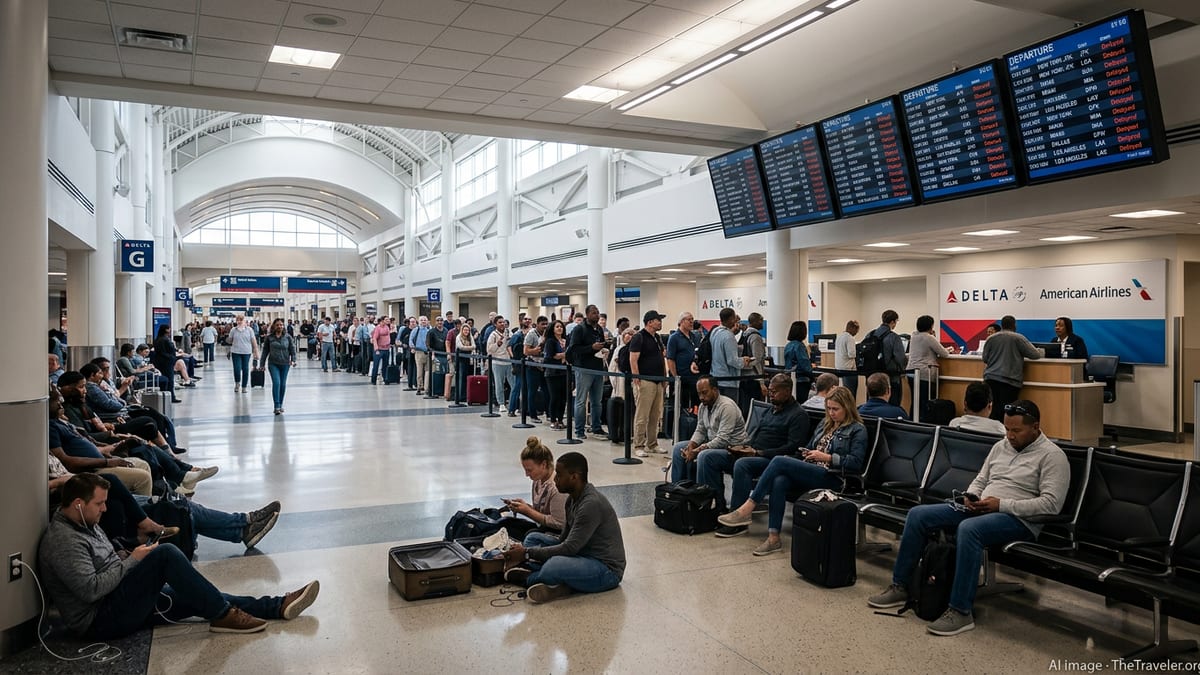
For travelers, the headline takeaway is that flights into Seattle over Labor Day are now part of the country’s most in-demand holiday corridors. That status brings full planes and crowded departure boards, but the experience on the ground at Seattle-Tacoma International Airport increasingly looks like a relative bright spot compared with many of the largest U.S. hubs.
Sea-Tac’s Quiet Edge on On-Time Performance
While airports such as Dallas Fort Worth, Chicago O’Hare and New York’s JFK dominate headlines for sheer volume, recent on-time performance tables draw a different map of where U.S. airports excel. Bureau of Transportation Statistics data compiled by independent analysts shows that several mid-to-large facilities, including Seattle-Tacoma International Airport, regularly post significantly higher rates of punctual departures and arrivals than some of the country’s best-known megahubs.
Honolulu’s Daniel K. Inouye International Airport has ranked first nationally in some Labor Day-focused analyses for punctual departures, but Seattle typically appears in the upper tier of performers as well. Aggregated figures for recent travel seasons show that Sea-Tac’s share of on-time flights outpaces those of multiple busier mainland hubs, especially during peak holiday windows when congestion magnifies minor schedule disruptions.
According to publicly available breakdowns of federal performance data, that edge shows up most clearly in measures of flight delays of 15 minutes or more, missed connections and cancellation rates. Some of the country’s largest connecting airports post double-digit percentages of late departures during holiday peaks, while airports such as Seattle record comparatively lower disruption rates, giving travelers a better chance of starting or ending a short break on schedule.
For Labor Day travelers, those differences translate into tangible time gains. A city can rank as a top holiday destination, but if its main hub consistently suffers heavy delays, a three-day weekend can quickly erode into lost hours in terminal queues. Seattle’s position as both a leading destination and a comparatively reliable operational performer means it currently stands out among U.S. airports serving headline Labor Day cities.
Where This Airport Outperforms Bigger Hubs
On-the-ground experience is another area where Seattle’s main airport is closing the gap with, and in some cases surpassing, more famous hubs. Recent North America airport satisfaction studies, which evaluate factors such as terminal layout, security wait times, retail and dining, and ease of connections, show mid-sized and efficiently designed hubs gaining ground on traditional giants like Atlanta and Chicago.
Published rankings of U.S. airports frequently highlight that facilities with simpler layouts and modernized terminals tend to perform better on passenger satisfaction than sprawling, heavily banked transfer hubs. In those studies, Seattle-Tacoma International Airport has scored competitively, benefiting from a unified terminal design and a wave of investment in concourses and passenger amenities intended to handle the region’s rapid growth in air travel.
By contrast, several of the country’s busiest connecting hubs routinely appear in lists of airports with higher disruption levels and lower satisfaction ratings during holiday peaks. Reports drawing on Department of Transportation and OAG data point to delays, gate constraints and complex transfer patterns at these megahubs as key drivers of traveler frustration, particularly when severe weather or air-traffic constraints ripple across the network.
Measured against that backdrop, Seattle’s role is distinctive. It is busy enough to attract intense Labor Day demand and support a broad route network, yet compact enough to offer comparatively straightforward terminal navigation and fewer cascading delays. For travelers choosing where to connect on their way to or from Labor Day destinations in the Pacific Northwest or Alaska, that balance of scale and usability has become an important differentiator.
Labor Day Crowds Put Airport Operations Under the Microscope
Labor Day weekend now functions as a stress test for the U.S. aviation system. Airline schedules, airport staffing and security screening all operate at or near peak capacity as passengers try to squeeze in one final summer trip. Recent analyses from travel research firms and consumer sites have documented how performance diverges sharply between airports under these conditions.
Research from airfare and travel platforms tracking Labor Day patterns notes that the busiest departure days, typically the Friday and Monday of the holiday weekend, see pronounced spikes in delays at major connecting hubs. Some of these facilities handle millions of passengers over just a few days, and their heavy reliance on tightly timed connection banks can magnify any disruption from weather or airspace restrictions.
NerdWallet’s 2026 Labor Day outlook, built on Transportation Security Administration data, indicates that travelers willing to shift their flights to off-peak days such as the Sunday before Labor Day often encounter lighter crowds and fewer delays. The same reports suggest that routes touching airports with stronger punctuality records, such as Honolulu and Seattle, tend to offer more predictable travel days, even when overall national volumes are elevated.
Industry observers point out that these operational differences are becoming more salient for travelers who now have access to detailed performance dashboards before they book. As record passenger volumes intersect with more extreme weather events and tight airline staffing, the gap between best- and worst-performing airports over key holiday periods is likely to widen further.
What Seattle’s Rise Signals for Future Holiday Travel
Seattle’s emergence as a leading Labor Day destination, paired with the solid operational record of Seattle-Tacoma International Airport, signals a subtle shift in how travelers might plan around future holiday weekends. Instead of defaulting to the largest traditional hubs, more passengers are weighing destination appeal together with airport reliability metrics when choosing where to start or end their trips.
For airlines, the city’s performance offers a case study in how an airport outside the very top tier of national traffic rankings can compete by focusing on punctual operations and passenger experience. As more data on delay patterns, missed connections and satisfaction scores becomes public, mid-sized hubs with strong performance profiles may attract a larger share of discretionary holiday traffic and new point-to-point routes.
For passengers eyeing upcoming long weekends, the lesson from this Labor Day is that the “top destination” story increasingly runs through the airport as much as the city itself. In 2026, Seattle stands out because it appears near the top of both lists, offering a combination of scenery, city life and an airport that, by multiple public measures, is beating many of America’s biggest hubs where it matters most.
Supporting sources for this article can be found here: ABC News Labor Day travel outlook, AAA travel trends and top destinations, Hopper Labor Day outlook, NerdWallet Labor Day airport and timing analysis, TravelPulse airport on-time performance data.