


Landing in Rio de Janeiro for the first time can feel both exciting and confusing, especially once you leave the aircraft and join the lines for passport control and customs. Rio de Janeiro/Galeão Antonio Carlos Jobim International Airport (GIG) is the city’s main long haul gateway, handling most intercontinental flights into Rio. Knowing what to expect from immigration, baggage claim and customs, and how much time to allow before a domestic connection or onward ground transport, will make your arrival smoother and less stressful.
Get the latest updates straight to your inbox!
Understanding Rio’s International Arrivals Layout
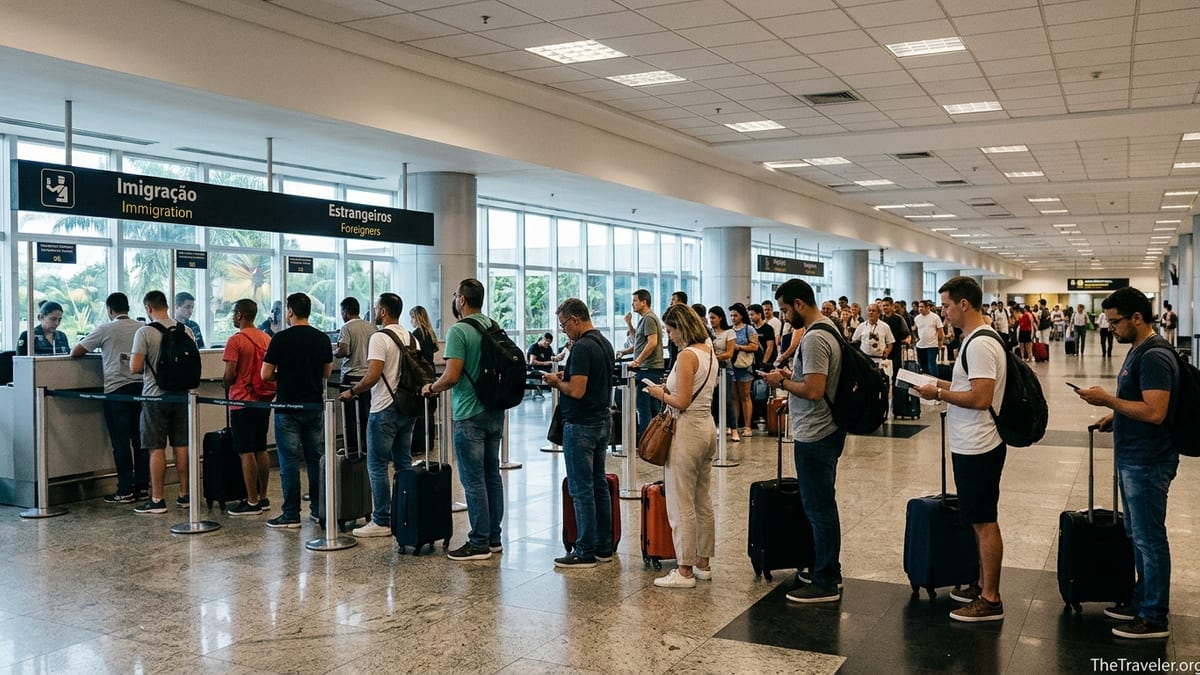
Almost all international flights into Rio now use Terminal 2 at Galeão, which concentrates arrivals into a single building but can also mean queues build quickly when several wide body aircraft land around the same time. After leaving the aircraft, you will follow overhead signs for “Imigração / Immigration” and walk along long corridors before reaching the Federal Police passport control hall. There is no way to bypass this area: all arriving international passengers must clear immigration in Rio, even if they are connecting onward inside Brazil.
Once you clear passport control you descend by escalator to the baggage claim level, where carousels are grouped together in a single hall. Airline staff sometimes make announcements about which belt is used, but in practice you should check the overhead monitors for your flight number. After collecting your bags, you move directly toward customs. Here the flow is similar to many other countries: you choose either the green channel if you have nothing to declare or the red channel if you are carrying items over the duty free limits or large quantities of electronics and currency.
Only after customs do you exit into the public arrivals hall, where you can find official taxi desks, app based ride pick up points, airport buses and the elevator and escalator up to check in for domestic connections. The whole sequence is linear. You cannot access shops or meet friends in the public area until you have completed immigration, baggage claim and customs formalities, so any delays in one step will push back everything that comes after it.
Passport Control: How Long It Really Takes
Immigration at Rio is handled by Brazil’s Federal Police. Queue times vary widely depending on your arrival time, the day of the week, and whether several long haul flights have landed together. Online wait time trackers and crowd sourced reports often show light traffic at certain hours, with some travelers clearing passport control in around 10 to 20 minutes during quieter mid afternoon or late evening arrivals. At busier peaks, especially early morning waves from North America and Europe, it is common for foreign visitors to spend 30 to 60 minutes in line before reaching a booth.
Brazilians and residents usually have access to separate queues and, in some cases, automated e gates, which can move much more quickly. Foreign tourists should follow signs for “Estrangeiros / Foreigners.” If you have a Brazilian residence permit but are traveling on a foreign passport, expect to use the foreigners line unless an officer directs you otherwise. Officers may ask basic questions about your stay, such as your accommodation address, length of visit, and proof of onward travel. Having hotel confirmations and a return or onward ticket available on your phone or printed can help the interview go faster.
As a working guideline, most travelers should plan for about 45 minutes from leaving the aircraft door to clearing passport control in normal conditions, and accept that it can stretch to an hour or slightly more if you land in a busy bank of arrivals. A real world example: passengers arriving from New York on a morning flight have reported clearing immigration in under 20 minutes when they were among the first off the plane, but up to an hour when they reached the hall behind passengers from multiple European flights landing at a similar time. Because of that variability, you should avoid booking tight domestic connections immediately after a long haul flight.
Baggage Claim and Customs: Typical Timing and Checks
Baggage delivery times at Rio can range from surprisingly quick to frustratingly slow. On some routes where many passengers are traveling with only carry on bags, airlines can unload and deliver checked luggage within about 20 to 30 minutes after arrival at the gate. However, anecdotal accounts from frequent Rio fliers mention waits of 45 to 60 minutes for bags when the flight is full and handling operations are busy. If you are among the last to disembark or seated near the rear of the aircraft, you may find that by the time you reach the carousel your suitcase is already circulating, but you should not count on this in your planning.
Brazilian customs uses a green and red channel system. Most tourists with personal belongings and a reasonable amount of duty free goods can walk through the green “Nada a Declarar / Nothing to Declare” exit. Customs officers sometimes allow passengers to pass without interruption, but they also conduct random inspections. That can involve sending your luggage through an x ray machine or asking you to open bags on a table. Travelers carrying large numbers of electronics, expensive photo gear still in sealed boxes, or many high value designer items may attract more attention and should be prepared with receipts in case questions arise.
When customs is doing only spot checks, you might walk straight from the baggage carousel to the arrivals hall in five minutes. At peak times, or if there is a cruise season influx and officers decide to examine more bags, that step can add another 10 to 20 minutes. From a timing perspective, most visitors should expect around 30 to 60 minutes from aircraft door to having luggage in hand, then another 5 to 20 minutes for customs, giving a reasonable total of 45 to 80 minutes before emerging into the public arrivals area in typical conditions.
Peak Arrival Periods and How They Affect Queues
Rio’s Galeão airport handles a pronounced wave of arrivals in the early morning, particularly on weekends and during peak travel seasons such as Carnival, New Year, and the July and January school holidays in Brazil. Many overnight flights from North America and Europe are scheduled to land between roughly 5:00 and 9:00 in the morning, which can fill the immigration hall with passengers from several wide body jets at once. At these times, even well staffed passport control lines will move more slowly simply because of the sheer number of arrivals.
Another, smaller peak typically occurs in the late afternoon and early evening, when some South American regional flights and extra seasonal services arrive. If you land at 3:00 or 4:00 in the afternoon on a weekday outside of major holidays, you may find much shorter lines and a calmer atmosphere. Travelers arriving late at night after 22:00 often report very quick processing, but they also face a reduced range of transport options into the city, as some bus services operate less frequently and traffic patterns on the main expressway can change.
If you are choosing flights and have flexibility, an arrival outside of the early morning rush can significantly reduce your time in queues. For example, landing at 14:00 on a Tuesday in September is likely to involve a smoother passage through immigration than landing at 7:00 on a Saturday during Carnival week. However, airlines sometimes adjust schedules seasonally, and charter or extra flights can create unexpected spikes, so there is never a guarantee of short waits. It helps to check recent passenger reports or app based wait time tools in the days before your trip to get a fresh sense of current patterns.
Connections and Minimum Time Before Onward Travel
For passengers connecting through Rio from an international arrival to a domestic flight within Brazil, the key issue is how long it takes to clear immigration, collect checked bags and pass customs before rechecking luggage and going back through security. Official planning documents for Galeão set a general minimum connecting time in the range of about 55 to 60 minutes for international to international connections and around 90 minutes for international to domestic connections when booked on a single ticket and protected by an airline. In practice, however, most experienced travelers recommend allowing a longer window, especially if you are on separate tickets.
A conservative rule of thumb is to allow at least three hours between a long haul international arrival and a domestic departure when you must clear immigration and customs in Rio. This gives you breathing room for a one hour passport control line, a 30 to 45 minute baggage wait, plus customs and a margin for delays in deplaning. For example, if you land from Lisbon at 6:00 in the morning and have a domestic flight to Salvador at 9:15 on the same ticket, that is usually workable. If you booked the domestic flight separately for 7:30, you would be tightly exposed to any delay or backlog at the border, and a missed connection would be at your own expense.
For purely international connections, such as Buenos Aires to Rio to Europe on one through ticket, your bag may be tagged all the way to your final destination and, depending on airline agreements and current procedures, you might not need to reclaim and recheck luggage during a same day international transfer. You still must follow airline and airport guidance on where to pass through immigration and security. If you are not sure whether you need to pick up your baggage in Rio, ask the check in staff at your origin airport to confirm. Separate tickets always require you to collect bags and check in again, which means you should treat the transfer like a fresh departure and build in extra time.
Planning Ground Transport After Arrival
Once you exit customs into the arrivals hall, the next timing question is how long it will take to reach your accommodation in the city. In normal traffic, a taxi or app based ride from Galeão to the South Zone neighborhoods of Copacabana or Ipanema can take around 30 to 45 minutes, and to downtown Rio roughly 20 to 30 minutes. During rush hours, particularly weekday mornings heading into town or late afternoons leaving the city, that can stretch to an hour or more. If you arrive at 8:00 in the morning and need to reach a business meeting downtown by 10:00, you should account for up to an hour for airport formalities and up to an hour in traffic.
Official taxi booths inside the terminal sell fixed price vouchers for city zones, which can help first time visitors avoid haggling. Ride hailing apps are widely used, but pick up locations may require you to follow specific signs or directions from the driver, and demand can spike after the arrival of a full long haul flight. If you prefer public transport, there are airport buses that connect the terminal with key neighborhoods and sometimes link to the city metro, but they are slower and less frequent, especially late at night. For example, an airport bus to Copacabana might take 60 to 90 minutes depending on traffic and intermediate stops.
When estimating your overall arrival schedule, add the expected transfer time from the airport to your hotel or apartment to your estimated customs and immigration time. A realistic composite example: arriving from Europe at 7:00, clearing immigration and customs by 8:15, and reaching a Copacabana hotel by around 9:00 to 9:30 if traffic is reasonable. If your accommodation is farther afield, such as in the beach town of Búzios, you will need to plan several hours more by road. In those cases it is particularly important to allow a generous buffer, as drivers and shuttle operators will not always be able to wait if your flight is late or you are delayed at passport control.
Documents, Visas and Practical Tips to Speed Things Up
The single best way to avoid delays at passport control in Rio is to arrive with your paperwork fully in order. Entry rules depend on your nationality, purpose of visit and length of stay, and they have changed several times in recent years. Some nationalities can enter Brazil visa free for short tourist or business stays, while others must apply for an electronic or traditional visa in advance. Since airlines are fined if they transport passengers who are refused entry, check in agents are usually strict about verifying visas and passport validity before boarding your flight to Brazil.
Make sure your passport will not expire soon after your planned entry. Some foreign governments advise their citizens to have at least six months of validity beyond the date of arrival in Brazil, even if Brazilian law itself focuses on your planned period of stay. Airlines often follow the most conservative interpretation, so renewing your passport in advance is strongly recommended if it is approaching its expiry date. For dual nationals who also hold Brazilian citizenship, traveling on a Brazilian passport can simplify your time at immigration, but you must check the latest guidance from your consulate on what documents are required to enter and exit the country.
Practical steps can also shave minutes off your time in the arrivals hall. Fill out any entry card or declaration form handed out on the plane before landing rather than waiting until you reach the passport control desk. Keep your passport, boarding pass, hotel address and return flight details accessible in a small pouch rather than buried in a backpack. If you are traveling with children, be aware that Brazil enforces strict rules on documentation for minors, particularly when one parent is not present, so carry any required authorization letters and birth certificates as specified by Brazilian authorities. Missing paperwork in these cases can lead to long discussions with officials and, in worst case scenarios, denial of entry for the child.
The Takeaway
Arriving at Rio de Janeiro’s Galeão airport need not be stressful if you have a realistic picture of what will happen after landing. The basic sequence is straightforward: a walk from the gate to the immigration hall, passport control with Federal Police, baggage claim, customs, and then exit into the public arrivals area where you can continue your journey into the city or connect to another flight. What varies most from day to day is how long each step takes, particularly passport control and baggage delivery, which are sensitive to flight banks, staffing, and operational conditions.
As a broad planning guide, most visitors should expect somewhere between 45 minutes and 1 hour 30 minutes from aircraft door to arrivals hall in typical conditions, with longer times possible at peak periods or during major events like Carnival and New Year. For same day connections, a buffer of about three hours between an international arrival and a domestic departure is a comfortable target, especially if the flights are on separate tickets. For onward travel into the city, add at least 30 to 45 minutes by car in normal traffic, and more during rush hour or if you are continuing onward by bus to more distant destinations.
If you choose arrival times outside the busiest early morning banks, prepare your documents carefully, and allow sensible margins in your plans, you are unlikely to feel rushed or surprised on arrival. That, in turn, leaves you free to focus on the more enjoyable part of your trip: stepping out into the Rio air, spotting your first glimpse of Guanabara Bay or the distant hills, and starting your time in one of South America’s most memorable cities.
FAQ
Q1. How long does it usually take to get through immigration at Rio Galeão?
Most travelers can expect about 20 to 60 minutes at passport control in normal conditions, with shorter times in off peak hours and longer waits during early morning arrival banks and busy holiday periods.
Q2. How much total time should I allow from landing to exiting the airport?
A reasonable estimate is 45 to 90 minutes from aircraft door to the public arrivals hall, covering immigration, baggage claim and customs, though it can take longer when the airport is very busy.
Q3. Is a two hour connection enough from an international arrival to a domestic flight at Rio?
Two hours may be sufficient when everything runs smoothly on a single through ticket, but many experienced travelers prefer to allow around three hours to comfortably clear immigration, collect bags, clear customs and check in again.
Q4. Do I have to collect my luggage in Rio if I am connecting to another Brazilian city?
If your flights are on separate tickets, you must always collect your bags in Rio and check them in again. On through tickets, policies vary by airline and routing, so ask at check in whether your bags are checked to your final destination.
Q5. Are there separate immigration lines for Brazilians and foreign tourists?
Yes. Brazilians and residents generally have their own lanes and, in some cases, access to automated gates, while foreign visitors use the “Estrangeiros / Foreigners” queues, which tend to be slower at busy times.
Q6. How long does it take to reach Copacabana or Ipanema from the airport?
By taxi or app based ride, the trip to the main South Zone beaches usually takes around 30 to 45 minutes in normal traffic, but it can stretch to an hour or more during rush hour or major events.
Q7. What happens if my passport is close to expiring when I arrive in Brazil?
You may face issues at check in or border control if your passport will expire soon, so most travelers are advised to renew in advance and travel with at least several months of validity beyond their planned stay.
Q8. Are customs inspections strict at Rio Galeão?
Customs uses a green and red channel system with random inspections. Most tourists walking through the green channel with ordinary personal belongings are waved through, but officers can ask to x ray or open bags at their discretion.
Q9. Is it safe to use ride hailing apps from the airport at night?
Ride hailing apps are widely used at Rio’s airport, including at night, but you should meet your driver at the designated pick up point, verify vehicle details in the app and keep your belongings close, as you would in any large city.
Q10. What is the best arrival time of day to avoid long lines at immigration?
Arrivals outside the early morning wave of overnight long haul flights, such as mid afternoon or late evening on weekdays outside major holidays, tend to have shorter lines, although actual conditions can vary from day to day.