


More news on this day
Air travel across Europe faced another day of heavy disruption as Amsterdam and 11 other major airports reported 70 flight cancellations and 1,953 delays, affecting hundreds of travelers and straining airport operations at the close of the busy summer season.
Get the latest news straight to your inbox!
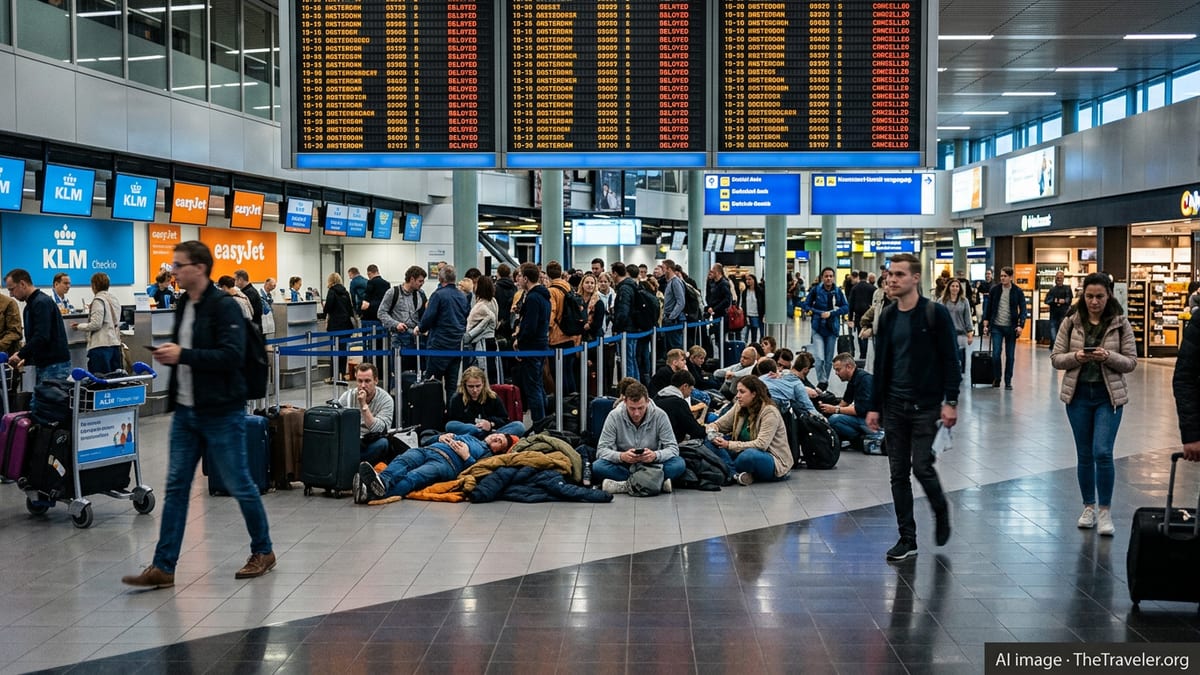
Amsterdam Tops Europe’s Delay League
Publicly available disruption data for September 1, 2026 shows that Amsterdam Schiphol recorded the highest number of delayed flights among major European airports, placing it at the center of a continent-wide day of aviation disruption. According to aggregated airport performance figures, Amsterdam saw more than 300 delayed departures and arrivals combined, making it the single most impacted hub in Europe on the day when 70 flights were canceled and 1,953 were delayed across key airports.
Reports indicate that the disruption was not confined to a single country. Travel monitoring platforms tracking real-time performance highlighted widespread delays at other major hubs including Paris Charles de Gaulle, London Gatwick, Frankfurt, Barcelona, Oslo and airports in Portugal, Italy, Denmark, Norway and the Netherlands. Amsterdam, however, stood out for the volume of late operations, underlining the strain at one of Europe’s busiest gateways.
Historic punctuality data for Amsterdam already shows a challenging operating environment, with earlier European punctuality reports ranking the airport among the less on-time large hubs in the region. The September 1 disruption therefore adds to an existing pattern of pressure, coming just as late-summer passenger volumes remain high and airlines are still operating dense schedules across the continent.
How 70 Cancellations and 1,953 Delays Rippled Across Europe
The 70 cancellations and 1,953 delays recorded at 12 major European airports represented a significant share of the day’s total scheduled operations, creating knock-on effects well beyond the cities initially affected. Even when a relatively small portion of flights are canceled, late departures and arrivals can quickly cascade through airline networks, disrupting aircraft rotations and crew positioning and complicating onward connections.
Published coverage of the disruption shows that delays were heavily concentrated around large intercontinental and intra-European hubs. Airports such as Amsterdam, Paris Charles de Gaulle, London Gatwick, Frankfurt and Barcelona all reported elevated delay figures, while Oslo saw one of the highest cancellation totals among the monitored airports. Combined, these hubs serve as critical transit points for travelers moving between Europe, North America, Africa and Asia, magnifying the impact of any operational issues.
The effects were felt across a range of carriers, from national flag airlines to low-cost operators, with delays affecting both short-haul and longer intercontinental services. Timing also played a role. Early delays in the morning and mid-day waves affected subsequent rotations, resulting in late-evening arrivals and missed connections for many travelers, particularly those relying on tight transfer windows at hub airports.
Likely Drivers Behind the Latest Disruptions
While no single cause has been identified as responsible for all of the cancellations and delays, publicly available information points to a familiar combination of factors that frequently undermine schedule reliability in Europe. High late-summer demand continues to push airports and air traffic systems close to capacity, leaving little room to recover when weather deteriorates or when individual flights face operational challenges.
Recent punctuality reports for Europe highlight that large hubs such as Amsterdam, Frankfurt, Barcelona and others often operate with constrained runway capacity, tight turnaround times and complex airspace management. Under these conditions, even brief local weather issues such as low cloud ceilings, wind or thunderstorms can result in traffic flow restrictions, which then generate queues for takeoff and landing and drive up average delay minutes per flight.
At the same time, airlines and airports are still balancing staffing levels and infrastructure limits with resilient operations. Ground handling bottlenecks, aircraft maintenance requirements and crew duty time restrictions can all compound primary delays that start with weather or congestion. As these different elements align on busy travel days, the outcome is a pattern of widespread but uneven disruption similar to what was recorded across the 12 European airports.
What the Disruptions Mean for Affected Travelers
For passengers caught up in the September 1 wave of disruptions, the practical consequences ranged from moderate schedule changes to full day-long travel setbacks. Delayed flights typically forced travelers to endure extended waits at departure gates, miss onward connections or arrive at their final destination late at night. Canceled services required rebooking, overnight accommodation in some cases and the potential loss of prepaid arrangements at destination.
Consumer-rights platforms tracking disruptions in Europe emphasize that travelers departing from or arriving at airports within the European Union or on EU-based airlines are often covered by EU air passenger rules. These regulations may provide eligibility for compensation or reimbursement under specific conditions, particularly in cases of long delays or short-notice cancellations that are not caused by extraordinary circumstances. Passengers are encouraged by these platforms to retain boarding passes and receipts, as these documents are frequently necessary when filing claims.
Many airlines also offer flexible rebooking tools, mobile notifications and self-service options through apps and websites, which can help travelers navigate days of heavy disruption. In recent advisories, major carriers operating from Amsterdam and other European hubs have pointed passengers to online disruption centers and travel alerts pages, where customers can check eligibility for refunds, change their travel dates or request alternative routing when flights are significantly delayed or canceled.
How to Prepare for Ongoing Operational Volatility
The latest wave of flight disruptions highlights the importance for travelers of building flexibility into itineraries when passing through Europe’s busiest airports. Travel services that monitor real-time performance recommend allowing longer connection times at hubs such as Amsterdam, Paris, London and Frankfurt, especially during peak holiday periods and around weekends when schedules are most heavily loaded.
Checking flight status repeatedly on the day of departure is also increasingly necessary, as delay patterns can evolve quickly. Airport and airline websites, mobile apps and live flight-tracking platforms provide the most up-to-date view of departure and arrival times and can alert passengers when boarding times or gate assignments change. For complex itineraries involving multiple carriers, monitoring each segment separately can reduce surprises mid-journey.
Travelers are also advised by consumer advocacy and flight-compensation services to familiarize themselves with their rights before departure. Understanding when compensation may be owed, the difference between delays caused by controllable operational issues and those linked to extraordinary events, and the process for submitting claims can make it easier to respond if a disruption occurs. As the European aviation system continues to operate under high demand, the combination of preparation, flexibility and awareness of rights can help mitigate the impact when cancellations and delays spike across multiple major airports.
Travel And Tour World coverage of 92 cancellations and 2,079 delays at European airports
Flightradar24 Europe airport disruption overview