


Planning a trip to the Côte d’Azur often leads to the same question: should you stay in Antibes or Cannes? These two Riviera neighbors sit just 7 minutes apart by train, yet they offer very different moods, price points and experiences. Choosing the right base can completely change the feel of your holiday, whether you are dreaming of long beach days, glamorous shopping or slow sessions at a café under plane trees.
Get the latest updates straight to your inbox!
Getting Oriented: Two Neighbors, Two Different Moods
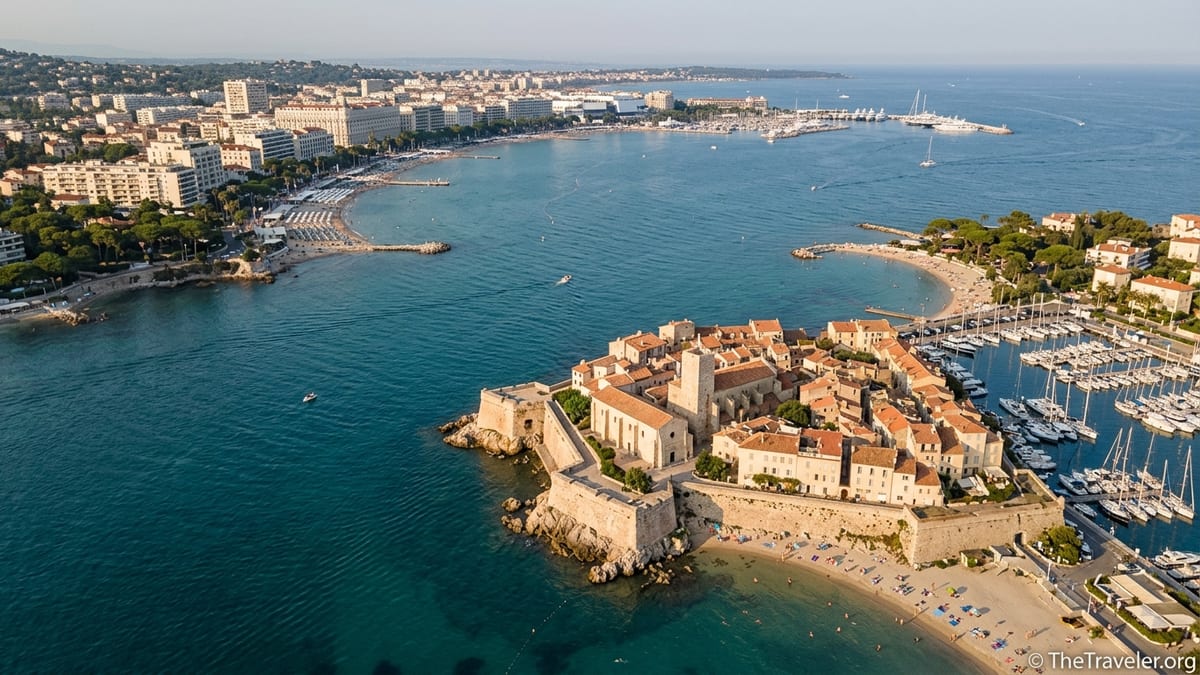
Antibes and Cannes share the same sparkling stretch of Mediterranean coast between Nice and Saint-Raphaël, but they attract slightly different crowds. Antibes, with its medieval ramparts, Picasso Museum and working marina, balances resort town fun with a lived-in, small-city atmosphere. You are as likely to see schoolchildren cutting through the old town as you are yacht crews stocking up at the morning market.
Cannes, centered on the famous Boulevard de la Croisette and the Palais des Festivals, leans into its luxury image. Designer boutiques, glossy hotel façades and private beach clubs signal that this is a place built around the idea of la dolce vita with a red-carpet gloss. Even outside the May film festival, the city’s branding is unmistakably high-end.
In practical terms, the two are close enough that you can stay in one and day trip to the other. TER regional trains run along the coast with frequent services, and the ride between Antibes and Cannes typically takes under 10 minutes. That proximity makes it less about what you can see and more about how you prefer to feel day to day: village-like and relaxed, or polished and resort-like.
For many travelers, Antibes ends up being the better fit when they want charm and manageable prices, while Cannes suits visitors who get energy from window shopping at Chanel, sipping spritzes on white loungers, and people-watching along a wide seafront boulevard.
Atmosphere & Aesthetics: Old-World Charm vs Polished Riviera Glamour
If you picture yourself wandering narrow lanes with pastel shutters and laundry lines overhead, Antibes will feel instantly right. Its old town wraps around a fortified promontory, with stone ramparts, the Musée Picasso in the Château Grimaldi, and viewpoints over Port Vauban where superyachts sit opposite small local fishing boats. In the evening, locals and visitors mix in wine bars around Place Nationale and on café terraces off Cours Masséna after the daily market vendors have packed up.
Just a few minutes away on foot, the scene in Juan-les-Pins, part of the Antibes commune, is different again: Art Deco façades, pine trees in the Parc de la Pinède and a boardwalk feel, especially in July and August when beach clubs fill up with families and groups of friends. It feels summery and social, but still casual. You can walk from old town Antibes to Juan-les-Pins in about 25 to 30 minutes, or hop a short local bus if the heat is intense.
Cannes offers a more composed, cinematic backdrop. La Croisette is a wide palm-lined promenade where five-star hotels like the Carlton and the Martinez overlook manicured private beaches. Behind the seafront, the shopping streets around Rue d’Antibes and Rue Hoche are dense with international labels and polished cafés. The old quarter of Cannes, Le Suquet, climbs the hill behind the port with more atmospheric cobbled streets and bistros, but the general feel of the city center is unapologetically upscale resort.
For travelers sensitive to overt displays of money, Cannes can occasionally feel like a showroom, especially in peak summer when luxury cars idle in front of hotels and queues form at designer boutiques. Others find this glamorous energy precisely what they are looking for on a short break in the sun. Antibes, by contrast, tends to feel warmer and more lived-in, especially once you step a block back from the waterfront.
Beaches & Swimming: Where You Will Actually Get in the Water
Both Antibes and Cannes offer sandy beaches, which is one reason travelers often choose them over Nice, whose main city beach is mostly pebbles. In Antibes proper, Plage de la Gravette sits right under the ramparts, protected by stone walls that create a sheltered cove with gentle waves. It is free, family friendly, and an easy stop after a morning at the market. A short stroll south brings you to Plage du Ponteil and Salis, two more public sandy beaches with views across the bay towards the Alps on a clear day.
Around the Cap d’Antibes, Plage de la Garoupe is known as one of the prettiest beaches on the coast, with clear water and a mix of public sand and exclusive beach clubs where a sunbed with waiter service can cost from roughly 30 to 60 euros per day in high season, depending on how close to the water you sit and which club you choose. Reaching Garoupe requires either a local bus, taxi or a pleasant 30 to 40 minute coastal walk from Antibes along part of the famous coastal footpath, so it feels a bit more of a destination day.
In Juan-les-Pins, sandy bays line the curve of the town, with a blend of public areas and private concessions. Construction works to refresh parts of the seafront and stabilize the beaches have been underway in phases, but local authorities have emphasized keeping access open and maintaining enough space for public sunbathing and swimming, especially from late spring through autumn. In practice, you will still find free stretches where you can lay your towel between the beach clubs, though space can tighten in July and August.
Cannes also offers a split between public and private beaches. On La Croisette you will see long runs of private clubs with restaurant decks and rows of white parasols. Public beaches such as Plage Macé and Plage du Midi provide free access, but can become busy in peak season and may feel narrower compared with the clubs. If you want the classic Cannes experience with waiter service, expect to pay in a similar range to Cap d’Antibes for a lounger, with prices rising during the film festival or major congresses. For budget travelers, Antibes’ concentration of easily accessed public sand directly next to the old town is often a decisive advantage.
Budget & Value: How Far Your Money Goes
Price differences between Antibes and Cannes are not dramatic on every line item, but they add up over a three or four night stay, particularly in summer. As a rule of thumb, a comfortable, well-reviewed midrange hotel or apartment in or just outside Antibes old town might run in the region of 130 to 220 euros per night for a couple in June, with rates climbing in late July and August. Equivalent accommodation in central Cannes, especially within a few blocks of La Croisette, often starts a bit higher and can rise sharply around major events.
Food and drink follow a similar pattern. In Antibes, you can still sit down at a brasserie near the covered market and order a plat du jour such as grilled sea bream with seasonal vegetables for roughly 18 to 24 euros at lunchtime, with a glass of house rosé for 5 to 7 euros. In Cannes, particularly on or just off La Croisette, mains at seafront restaurants frequently start a few euros higher, and cocktails can be priced at 16 to 20 euros in fashionable bars. Step back a few streets into the more residential parts of Cannes and prices moderate, but the overall average skews upward.
Beach days can be another subtle budget divider. Travelers who are content with public sand and a supermarket picnic will not notice much difference. But if your ideal Riviera day involves renting sun loungers and lingering over a sit-down beachfront lunch, Cannes can work out more expensive because the density of private clubs and their prime addresses allow for premium pricing. Along the Cap d’Antibes and in Juan-les-Pins, you can generally find a broader spectrum of simple snack bars, family-run beach restaurants and more low-key clubs.
Transport costs between the two are negligible, with TER train tickets between Antibes and Cannes typically just a few euros each way and local buses even cheaper. From Nice Airport, budget-conscious travelers often take a short local train from Nice Saint-Augustin station to either Antibes or Juan-les-Pins for under 10 euros rather than booking a private transfer. That leaves more of the budget free for food, experiences and the occasional splurge.
Nightlife, Dining & Cultural Life: Choosing Your Evenings
Your preferred evening rhythm is one of the best indicators of whether Antibes or Cannes will suit you better. Antibes offers a lively but compact nightlife scene. In summer, bars around the old town squares and side streets fill up with a mix of residents, yacht crews and visitors. You will find wine bars pouring Provence rosés, small cocktail spots, and relaxed pubs where live music or DJ sets run to around midnight or 1 a.m. Juan-les-Pins adds a more overtly beach-resort vibe, with seafront bars, a few small clubs and late-night ice-cream promenades.
Cannes, by contrast, caters more strongly to late-night and big-spend entertainment. Upscale hotel bars along La Croisette, beach clubs that transform into lounges after sunset, and nightclubs that go well into the early hours are common. During the Cannes Film Festival and major trade shows, restaurant reservations can be hard to secure and minimum spends at certain venues can increase. If you enjoy dressing up and lingering over long dinners at Michelin-starred or celebrity-chef restaurants, Cannes will offer more density and variety at the top end.
On the cultural front, Antibes carries significant art history, notably through the Musée Picasso, where the artist worked in 1946, and through smaller galleries dotted around the old town. Summer often brings open-air concerts and temporary exhibitions near the port and ramparts. The city’s Jazz à Juan festival in nearby Juan-les-Pins has hosted major international artists for decades and lends the area a distinctive cultural identity.
Cannes’ cultural calendar is dominated by its festivals and congresses. Beyond the internationally known film festival in May, the Palais des Festivals hosts a steady stream of events ranging from television and music gatherings to yachting and luxury trade shows, which inject bursts of energy and international crowds into the city throughout the year. Outside these spikes, Cannes can feel calmer than its glamorous reputation suggests, especially in the shoulder seasons, though there are still cinemas, small galleries and the atmospheric streets of Le Suquet to explore.
Ease of Getting Around & Day Trips
Both Antibes and Cannes sit on the same coastal railway line, making them convenient bases for exploring the wider Côte d’Azur by train. From Antibes, direct services run east to Nice, Villefranche-sur-Mer, Monaco and Menton, and west to Cannes, Théoule-sur-Mer and Saint-Raphaël. The Antibes station is a short walk from the old town and port, which makes catching early trains for day trips straightforward.
Cannes station is centrally located as well, only a few blocks from La Croisette and the old harbor. In terms of pure train connections, there is little difference between the two, though Antibes sits slightly closer to Nice and Monaco, shaving a few minutes off journey times in that direction. For travelers planning frequent day trips along the coast, either works fine, and many visitors report simply choosing based on where they find the best accommodation.
Within the towns themselves, Antibes is particularly walkable. You can cross the old town in about ten minutes, stroll along the ramparts, then continue on to Ponteil and Salis beaches without needing a bus. Local networks like Envibus connect Antibes, Juan-les-Pins and the Cap d’Antibes beaches with frequent departures, and single tickets are typically just a couple of euros. This compactness appeals to travelers who like to leave the hotel on foot and get everywhere they need without much planning.
Cannes is also manageable on foot if you stay centrally, though some visitors find the seafront strip fairly long, especially when walking from the western Plage du Midi area to the far end of La Croisette. Public buses cover the hills behind Cannes and its suburbs, and ferries from the old port reach the nearby Lérins Islands, a rewarding half-day escape with pine forests, calm coves and the historic Fort Royal. From Antibes, equivalent boat excursions head to the Cap or around the bay, giving each town its own flavor of on-the-water exploration.
Who Each City Suits Best: Matching Destination to Travel Style
While any kind of traveler can enjoy both Antibes and Cannes, certain profiles tend to be happier in one or the other. Antibes generally suits couples and solo travelers who value atmosphere over glitz, families looking for an easy base with walkable sandy beaches, and visitors who plan to make several day trips by train but still want a home base that feels like a real coastal town. If you picture early morning coffee at a market café, afternoons split between museum visits and the beach, and evenings at bistros rather than velvet-rope venues, Antibes will likely feel well matched.
Cannes is often the better choice for those who genuinely enjoy the high-end Riviera aesthetic, or who are traveling specifically for festivals, conferences and events at the Palais des Festivals. If your dream stay involves a sea-view room in a grand hotel, shopping for resort wear along Rue d’Antibes, lunching at a beach club and staying out late at cocktail bars, then it makes sense to place yourself directly in that environment. Travelers on a short city break who are content to spend a bit more per day in exchange for sheer convenience and an instantly glamorous backdrop often gravitate here.
For budget-conscious travelers who still want easy access to Cannes’ glamour, a common strategy is to stay in Antibes or Juan-les-Pins, where midrange options are more plentiful, then day trip to Cannes once or twice. A typical pattern might be three nights in Antibes with one afternoon walking La Croisette and dining in Cannes, before returning to the quieter streets around Antibes’ ramparts at night.
On the other hand, some repeat visitors split their time, booking a few nights in each to experience both moods fully. For example, a week-long trip might start with three nights in Antibes to explore the old town, Cap d’Antibes walks and nearby hill villages, then finish with two or three nights in Cannes focused on beach clubs, shopping and harborfront restaurants before heading home.
The Takeaway
Antibes and Cannes sit just a few train stops apart, but they tell two different stories about the Côte d’Azur. Antibes offers intimate lanes, daily market life, easy access to public sandy beaches and a pace that feels like a coastal town first and resort second. Cannes delivers the Riviera as imagined in magazine spreads, with palm-lined boulevards, a skyline of grand hotels and a social calendar shaped by global events.
If you lean toward authenticity, walkability, and the idea of slipping into a community rhythm even for a few days, Antibes is likely to be your better fit. Its combination of history, beaches and practical pricing makes it an especially good base for longer stays and for travelers who plan to explore up and down the coast.
If you are drawn to polished surroundings, enjoy people-watching in glamorous settings and do not mind paying a bit more for hotel rooms, cocktails and beach loungers, Cannes will give you that concentrated Riviera experience in a compact, attractive package. Even on an ordinary week outside the film festival, the city’s stage-set quality is part of the charm.
For many visitors, the ideal itinerary involves sampling both: basing themselves where their budget and travel style are most at ease, and treating the other city as a day-long change of scenery. On this stretch of the Mediterranean, the distances are short, but the difference in feel is big enough that choosing the right base can make your French Riviera trip feel perfectly tailored to you.
FAQ
Q1. Is Antibes or Cannes better for a first-time visit to the Côte d’Azur?
For most first-time visitors who want charm, walkable sandy beaches and good value, Antibes is usually the better base, with Cannes easy to visit as a day trip.
Q2. Which is cheaper, Antibes or Cannes?
Antibes tends to be slightly cheaper overall, especially for midrange accommodation and casual dining, while central Cannes, particularly near La Croisette, generally commands higher prices.
Q3. Where are the better beaches, Antibes or Cannes?
Both have sandy beaches, but Antibes offers more easily accessible public sand right next to the old town, while Cannes has a higher proportion of private beach clubs along La Croisette.
Q4. Is nightlife better in Antibes or Cannes?
Cannes has a more intensive nightlife scene with upscale bars and clubs that stay open late, while Antibes offers a lively but more relaxed mix of bars, pubs and smaller venues.
Q5. Which town is better for families with children?
Antibes, including nearby Juan-les-Pins, is often preferred for families thanks to its sheltered sandy beaches, compact old town and slightly calmer evening atmosphere.
Q6. Is it easy to visit both Antibes and Cannes without a car?
Yes. Frequent regional trains connect Antibes and Cannes in under 10 minutes, and local buses and walking paths make it straightforward to explore each town on foot once you arrive.
Q7. Which is closer to Nice Airport, Antibes or Cannes?
Both are reachable from Nice Airport by train or car, but Antibes lies a bit closer to Nice, so journey times are typically a few minutes shorter than to Cannes.
Q8. Where should I stay if I want to do a lot of day trips along the coast?
Either town works, but Antibes is especially convenient for frequent train trips east to Nice and Monaco and west to Cannes and beyond, while still feeling small and easy to navigate.
Q9. Does Cannes feel empty outside the film festival?
Outside major events, Cannes is calmer and more like a typical resort town, though its seafront, shopping streets and old quarter remain pleasant to visit year-round.
Q10. If I only have one day, should I choose Antibes or Cannes?
If you prefer historic streets and a more authentic town feel, choose Antibes. If you are curious about Riviera glamour and beach clubs, spend your limited time in Cannes.