


The New Jersey Pine Barrens have a reputation that precedes them. For some, this sprawling forest is a shadowy home to the Jersey Devil and eerie ghost towns. For others, it is a globally significant biosphere and one of the last big wild spaces between Boston and Washington, D.C. If you are wondering whether the Pine Barrens are actually worth visiting or just an overhyped legend wrapped in campfire stories, the answer depends entirely on what kind of traveler you are and what you expect from a destination.
Get the latest updates straight to your inbox!
What the Pine Barrens Really Are, Beyond the Myths
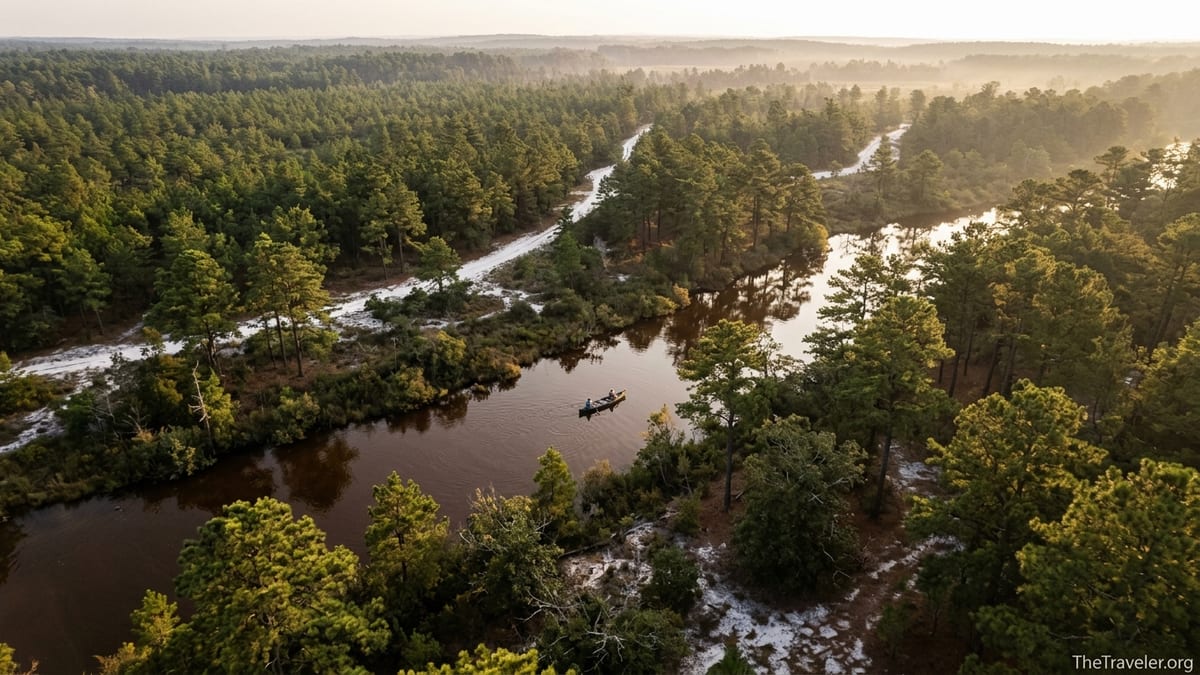
First, it helps to understand that the “Pine Barrens” is not a single park but a vast region in southern New Jersey, officially protected as the Pinelands National Reserve. It covers around one million acres of sandy forest, wetlands, small towns and former industrial villages. You will drive past gas stations and diners one minute, then suddenly be surrounded by pitch pines, white sand roads and dark cedar streams the next.
Visitors are often surprised that this is not a dense, mountain-style wilderness. The landscape is relatively flat and open, with low pine trees, scrub oak and sandy soil that early European settlers dismissed as “barren” because it would not grow traditional crops well. Today, that same poor soil supports rare plants, including carnivorous species in bogs and a globally important pine–oak ecosystem, which conservation groups highlight as one of the most distinctive habitats in the northeastern United States.
The region’s character is shaped as much by history as by nature. During the 18th and 19th centuries it was dotted with iron furnaces and glassworks that used local bog iron, charcoal and sand. Over time, those industries collapsed, leaving behind company towns such as Batsto and Atsion that feel frozen in time. Walking through these restored villages, with their workers’ houses, company stores and mills, you are reminded that this was once a hard-working industrial frontier, not just a backdrop for ghost stories.
Because the Pine Barrens sit between major metro areas, they are relatively easy to reach. Many travelers visit on a day trip from Philadelphia, Atlantic City or the Jersey Shore, then realize that the region could easily absorb several days of hiking, paddling, birding and exploring historic sites. It is less about ticking off big-name attractions and more about immersing yourself in a subtly unusual landscape.
The Folklore: How Much of the Hype Is Jersey Devil Marketing?
Folklore is the reason many people have heard of the Pine Barrens in the first place. The most famous tale is the Jersey Devil, a horned, winged creature said to lurk in the woods and scream on stormy nights. The New Jersey Pinelands Commission even hosts an educational page describing the legend as part of the region’s cultural heritage, a reminder of how deeply it is woven into local identity.
In practice, you will see the Jersey Devil everywhere: on T-shirts in gift shops, on the labels of local craft beers and hot sauces, and on the cover art of regional ghost-story paperbacks sold in small-town bookstores. Towns near the forest occasionally run themed events, from spooky nighttime tours to “Devil hunts” meant more to entertain than seriously search for a cryptid. In Hammonton, bars and breweries near the edge of the forest sometimes adopt devilish branding and host storytelling nights around Halloween.
Is this overhyped? It can feel that way if you arrive expecting a theme-park level of theatrics. The forest itself does not lean into jump-scare tourism. Walk a quiet trail near Batsto Lake at dusk and the experience is more likely to be hushed and contemplative than terrifying. Sightings and tales live mostly in conversation, podcasts and social media threads. Locals might tell you about a cousin who “heard something weird” while camping, but they are just as likely to roll their eyes at the legend as to play it up.
What the folklore does provide is a mood. The Pine Barrens can be extraordinarily quiet once you step away from main roads. The sandy soil muffles footsteps, the pines whisper in the wind, and the cedar-stained streams run dark reddish-brown. In this kind of environment, a rustle in the undergrowth or a distant call at night lands differently. Whether you believe in the Jersey Devil or not, the forest lends itself to feeling watched and to late-night storytelling around a fire.
Nature, Rivers and Trails: What You Actually Do There
For travelers who care more about experiences than legends, the Pine Barrens are primarily an outdoor recreation destination. Wharton State Forest, the largest state forest in New Jersey, serves as a gateway for many visitors. Here you can paddle the Mullica or Batsto rivers, hike short loop trails near Batsto Village, or set up camp in designated campgrounds that range from drive-in sites with basic facilities to primitive riverside clearings accessible only by boat.
Guided paddling companies based near Hammonton and Chatsworth rent canoes and kayaks and run shuttle services, so you can spend three to six hours meandering down tea-colored streams without worrying about your car. A half-day guided trip on the Mullica River, including boat rental and transport, typically costs a moderate fee per person, similar to outfitters in other Mid-Atlantic river destinations. The rivers are mostly gentle, with enough current to keep you moving and occasional downed trees or tight bends to make the route interesting but generally manageable for beginners.
On land, the long-distance Batona Trail runs roughly 50 miles through three state forests: Bass River, Wharton and Brendan T. Byrne. Section hikes allow visitors to sample classic Pine Barrens scenery in a day: pitch-pine uplands, Atlantic white cedar swamps, and sandy roads that once linked industrial villages. Many stretches feel surprisingly remote, especially on weekdays outside of summer, when you may walk for hours and see only a few other people.
For wildlife enthusiasts, the Pine Barrens offer seasonal birdwatching, especially during migration, and a chance to spot reptiles and amphibians adapted to its unique habitats. In spring and early summer, you might encounter box turtles grazing along sandy paths, or hear the calls of pine warblers high in the canopy. Because this is critical habitat for rare species, visitors are encouraged to stay on established trails and follow state park guidelines to avoid disturbing sensitive areas.
Historic Villages, Cranberry Culture and Small-Town Stops
To decide whether the Pine Barrens are worth your time, it helps to look at what you can actually see beyond the trees. One of the region’s signature stops is Batsto Village, a preserved 18th and 19th century ironworks and glassmaking town inside Wharton State Forest. Today it functions as a state historic site with a visitor center, museum exhibits, and around three dozen preserved buildings ranging from the mansion of the ironmaster to workers’ cottages and a gristmill. State and nonprofit partners note that Batsto draws well over 100,000 visitors in a typical year, a clear sign that history, not just folklore, is a major draw.
Walking Batsto’s dirt streets, you can look into the post office, see the old general store and peer down at Batsto Lake, once the power source for the industry that stood here. Interpretive signs explain how the local bog iron and charcoal operations tied the Pine Barrens into early American industry, including supplying goods to the Continental Army. On many weekends from spring through fall, volunteers and park staff run guided tours of the mansion or host craft fairs and living history events, turning the village into a lively open-air museum.
A short drive away, Atsion offers another glimpse into the region’s industrial and agricultural past. The Atsion mansion and remnants of the company town stand beside a popular swimming lake and campground. It is a good example of how the Pine Barrens blend recreation and history: families picnic and swim while, across the road, the white-columned mansion hints at the ambitions of 19th century entrepreneurs who tried to tame this sandy landscape.
Then there is the agricultural side. Towns like Chatsworth, often called the unofficial capital of the Pines, sit amid working cranberry bogs and blueberry fields. In autumn, visitors sometimes catch sight of flooded cranberry bogs turned vivid red during harvest. Local farms host seasonal events, such as cranberry or blueberry festivals and “pick-your-own” days, that combine agritourism with education about how these crops helped sustain Pine Barrens communities. Stopping at a roadside stand for blueberries in July or cranberry baked goods in October can be as memorable as any forest hike.
Who Will Love the Pine Barrens, and Who May Be Disappointed
The Pine Barrens are ideal for a certain type of traveler. If you enjoy low-key nature escapes, quiet paddling trips, photography of subtle landscapes and the satisfaction of uncovering local history, you will likely find the region deeply rewarding. Couples might book a bed-and-breakfast in a nearby town like Hammonton or Mays Landing, spend one day paddling and another exploring Batsto and nearby trails, then finish with dinner in a small local restaurant that serves regional seafood and produce.
Families with school-age children often combine a folk-legend hook with hands-on experiences. A typical weekend might include a stop at a small museum or education center to hear about the Jersey Devil, an afternoon canoe trip on a calm section of the Wading River, and an evening around a campground fire telling stories under dark, starry skies that are rare in the suburbs. Because the terrain is mostly flat, shorter hikes work well for kids and less experienced walkers.
On the other hand, travelers expecting dramatic scenery, big elevation changes or a dense cluster of curated attractions may feel underwhelmed. There are no towering waterfalls or sweeping canyon views. Infrastructure such as visitor centers, cafes and shops is relatively sparse once you leave the highway towns, and cell service can be patchy in the interior. If your benchmark for a great outdoor trip is something like Acadia National Park or Shenandoah’s Skyline Drive, the Pine Barrens will feel more minimalist and self-directed.
Urban-minded visitors might also struggle with the Pine Barrens’ quieter pace. Outside peak summer weekends and major holidays, campgrounds and trails can be nearly empty, and small towns close early. Those who thrive on energy, nightlife and restaurant-hopping will be happier using the Pine Barrens as a daytime side trip from Atlantic City, Philadelphia or beach resorts like Long Beach Island and returning to more urban comforts at night.
Practicalities, Safety and Seasonal Considerations
From a practical standpoint, a Pine Barrens visit is relatively budget friendly. Day-use fees for state forests are modest, and parking at some trailheads and historic villages is free or low cost. Canoe and kayak rentals with shuttle service are usually comparable to other regional river destinations and can be shared among a group. Simple drive-in campsites in Wharton State Forest or Bass River State Forest are generally priced in line with other New Jersey state parks, and rustic cabins in state forests offer a step up in comfort without resort-level prices.
Planning, however, is essential. Many of the region’s roads are unpaved sand, and although they are legal for street-registered vehicles, they can be narrow, soft and confusing. Most travel experts recommend that first-time visitors stick to main paved roads, park at known trailheads, and book guided river trips rather than attempting complex backcountry navigation on their own. Printed maps or offline navigation apps are valuable, since GPS directions occasionally route drivers down unsuitable sand tracks.
Safety considerations are more about environment than crime. The Pine Barrens are a fire-adapted ecosystem, and wildfire risk is taken seriously by agencies such as the New Jersey Forest Fire Service and the Pinelands Commission, which have launched wildfire safety projects and public education campaigns in recent years. In dry, windy periods, authorities may close certain areas, and travelers should check park advisories before visiting. Ticks and mosquitoes are common in warmer months, so long sleeves, repellent and post-hike tick checks are recommended.
Seasons matter. Spring and early summer bring mild temperatures, blooming mountain laurel and active wildlife. High summer can be hot and humid, with biting insects at their peak, though river trips remain popular for cooling off. Autumn is arguably the most rewarding time, with comfortable days, fewer bugs, colorful foliage on oak and maple, and cranberry harvests adding splashes of red to the landscape. Winter visits, while quieter and sometimes stark, reveal the structure of the forest and can feel especially atmospheric if you are chasing the mood that inspired so many Pine Barrens ghost stories.
The Takeaway
So, are the Pine Barrens worth visiting or just overhyped folklore? For travelers craving dramatic vistas or highly developed attractions, the region can feel subtle to the point of anticlimax. The Jersey Devil alone is not a reason to come; it is a story that adds spice to a landscape, not a guarantee of thrills.
But if you measure a destination by its sense of place, the Pine Barrens are quietly extraordinary. Few other spots on the East Coast combine a million acres of protected forest, unusual ecology, preserved industrial villages, working cranberry bogs and a living folklore tradition within an easy drive of major cities. A day spent drifting down a cedar-stained river, wandering the streets of Batsto Village and watching the sun set over a pine ridge can be every bit as memorable as a more famous national park, just in a different key.
In the end, the Pine Barrens reward curiosity and patience. Come for the Jersey Devil if you like, but stay for the soft crunch of white sand underfoot, the silhouettes of pitch pines against a pink evening sky and the realization that wildness can be subtle, fragmented and still deeply compelling. For the right traveler, that combination is not overhyped at all. It is exactly the point.
FAQ
Q1. Are the Pine Barrens safe for first-time visitors?
Yes, the Pine Barrens are generally safe for visitors who prepare properly. Stick to marked trails and paved or clearly maintained roads, check state park advisories for fire conditions or closures, carry a paper map or offline navigation, and bring water, insect repellent and basic first-aid supplies. As with any large natural area, common sense and awareness of your surroundings go a long way.
Q2. Do you really need a guided tour to enjoy the Pine Barrens?
No, many travelers explore independently, especially at popular sites like Batsto Village, Atsion and Bass River State Forest. However, a guided canoe or kayak trip on rivers like the Mullica or Batsto can simplify logistics and improve safety, particularly for first-time paddlers or visitors unfamiliar with sandy back roads and changing water levels.
Q3. Is it possible to visit the Pine Barrens as a day trip from major cities?
Yes, the Pine Barrens are within a reasonable drive of Philadelphia, New York City and Atlantic City. Many people visit for a single day of paddling or hiking, then return to an urban base. If you want to see multiple sites, such as a river, a historic village and a cranberry bog area, an overnight stay in a nearby town or state forest campground makes the trip more relaxed.
Q4. Will I actually see anything related to the Jersey Devil on my visit?
You are unlikely to see anything supernatural, but you will encounter the legend in local culture. Expect Jersey Devil imagery on souvenirs, occasional themed events or tours around Halloween, and plenty of stories from longtime residents. The forest itself, especially at night, provides the eerie atmosphere that keeps the tale alive, even if the creature remains firmly in the realm of folklore.
Q5. What is the best season to visit the Pine Barrens?
Autumn and spring are often considered the most comfortable seasons. Spring offers mild temperatures and blooming plants, while fall combines cool weather, changing leaves and, in some areas, visible cranberry harvests. Summer is popular for swimming and paddling but can be hot and buggy, and winter visits appeal to those who enjoy solitude and stark, quiet landscapes.
Q6. Are there accommodations inside or near the Pine Barrens?
Yes, there are several options. Inside state forests you will find campgrounds and, in some parks, rustic cabins that can be reserved in advance. Just outside the forest boundary, small motels, inns and bed-and-breakfasts in towns like Hammonton, Mays Landing and Barnegat provide simple lodging. Many visitors also base themselves at Jersey Shore towns or Atlantic City and drive inland for day trips.
Q7. Can I visit cranberry bogs and blueberry farms in the Pine Barrens?
Yes, but access varies by farm and season. Some cranberry and blueberry farms offer seasonal tours, festivals or pick-your-own experiences, especially during peak harvest or summer months. Others are working agricultural operations not open for casual drop-ins. It is wise to check ahead with local tourism offices or farm websites to find visitor-friendly locations and current schedules.
Q8. Is the Pine Barrens a good destination for children?
Yes, provided activities are age-appropriate and safety is prioritized. Short hikes on flat trails, calm-water paddling with life jackets, swimming at supervised lakes, and visits to historic sites like Batsto Village tend to work well for families. Many children also enjoy the storytelling side of the Jersey Devil legend, as long as adults present it in a fun, not frightening, way.
Q9. Do I need special equipment to hike or paddle in the Pine Barrens?
For hiking, sturdy walking shoes, sun protection, insect repellent and plenty of water are usually sufficient. For paddling, local outfitters provide boats, paddles and life jackets, and they often give basic instruction before you launch. If you plan to explore unpaved sand roads or more remote areas, a higher-clearance vehicle and detailed maps are recommended, but they are not necessary for the most popular sites and river trips.
Q10. How much time should I plan for a first visit to the Pine Barrens?
A full day is enough for a taste of the region, such as a half-day paddle and a visit to Batsto Village. For a more rounded experience that includes hiking, historic sites, and a slow drive through small towns and farm country, plan a weekend. Outdoor enthusiasts interested in longer hikes, multi-day paddling routes or in-depth exploration of different state forests could easily spend three to four days without repeating activities.