


Ask frequent travelers about their ultimate bucket list, and the Northern Lights almost always appear near the top. Recent surveys of U.S. travelers show aurora trips ranking as a dream experience for 2026, yet reviews and forums tell a more nuanced story. Some visitors return home calling it the most magical night of their lives. Others describe faint gray smudges, cloudy skies, or a week of waiting that never paid off. So are the Northern Lights really worth traveling for, once the glow of social media expectations fades and you are standing in the cold beneath a dark Arctic sky?
Get the latest updates straight to your inbox!
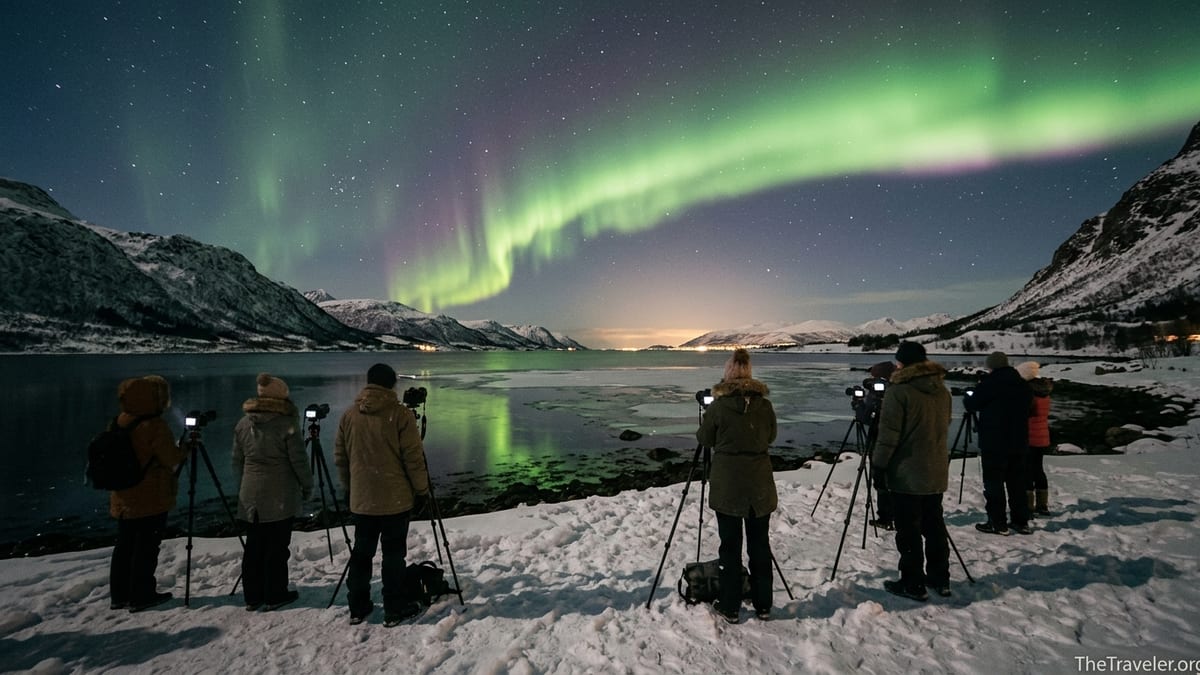
Why the Northern Lights Captivate So Many Travelers
For many people planning big trips in 2025 and 2026, the Northern Lights are not just another sightseeing stop but the central reason to fly north. Surveys commissioned by major airlines and tour operators in recent years have repeatedly found aurora viewing ranking as a top “experience of a lifetime” among Americans and Europeans. One recent study tied to 2026 travel trends reported that a Northern Lights trip sits ahead of places like the Grand Canyon and the Colosseum on many U.S. bucket lists, signaling how strongly the idea of the aurora has captured the popular imagination.
Part of the pull is timing. We are in a period of heightened solar activity, which generally increases the chances of stronger, more frequent auroras at high latitudes. Travel brands like Expedia have highlighted that a large share of Americans are willing to prioritize an aurora trip over other dream experiences in years when the lights are likely to be more active. That sense of “now or never” nudges people to finally book that February flight to Tromso or Fairbanks after years of daydreaming.
But the deeper motivation is emotional rather than technical. Travelers often describe the Northern Lights using spiritual language: a green curtain “dancing like a living thing,” or a sky that feels “bigger than anything I have seen before.” On Reddit threads where people share first-hand stories, those who have seen a vivid display often place it in their top three life experiences, alongside events like seeing the Himalayas at sunrise or watching a total solar eclipse. The idea that nature can still surprise and overwhelm us is a powerful reason to go.
This mix of bucket-list status, perceived urgency, and the promise of a rare emotional high sets the stage for both unforgettable nights and crushing disappointment. Whether the Northern Lights are “worth it” depends heavily on where you go, how you plan, and what you expect when you step off the plane.
What Visitors Actually See: Awe, Subtle Skies and Cloudy Disappointments
Reading through recent trip reports paints a mixed but illuminating picture. On the positive side, there is no shortage of accounts from travelers who describe their aurora night as “worth every cent” of an expensive tour. On a small-group minibus chase from Tromso in northern Norway, for instance, one guest in early 2026 wrote that they had never imagined the colors could be so vivid to the naked eye. They described standing by a frozen lake, far from town lights, watching green arcs erupt overhead and ripple for hours, with the guide capturing professional-quality photos that later became their favorite trip souvenir.
In Alaska, recent reviews of interior tours from Fairbanks mention similar highs. One traveler who joined a small group trip into the backcountry described the guide repeatedly checking weather and space-weather data before driving over 100 miles to escape clouds. The group waited at a simple wilderness lodge, hot drinks in hand, until the sky suddenly exploded into green and purple bands. For them, the combination of effort, remoteness, and the drama of the sudden display made the night feel almost unreal and unquestionably worth the cost.
Yet right beside these glowing reviews are more muted stories. A widely shared column in a major British newspaper details how one visitor, after a lifetime of dreaming about the aurora, finally saw what looked to them like a faint gray arc rather than the neon spectacle seen in travel ads. Only when their guide showed long-exposure photos on a camera screen did the classic vibrant greens appear. On Reddit and travel forums, many visitors echo this, noting that under moderate activity the aurora can look like pale clouds with only a hint of color, especially to eyes unaccustomed to darkness.
Then there are the people who never see the lights at all. In Iceland, Finland, Norway and Canada, it is common to find end-of-season posts from travelers who spent a week or more under solid cloud, or who joined two or three tours without a single clear night. Some describe the experience as “gutting” at first, especially when trip marketing had centered almost entirely on aurora photos. With time, many say they remember the glacial lagoons, dog-sledding trails or snow-covered fjords more than the missed light show, but in the immediate aftermath, the answer to “Was it worth it?” is often a conflicted “not for the lights alone.”
How Much It Really Costs to Chase the Lights
To evaluate whether the Northern Lights are worth traveling for, money matters as much as magic. A typical one-week, aurora-focused trip for a couple from the United States might include round-trip flights to somewhere like Reykjavik, Tromso, or Fairbanks, six or seven nights of accommodation, and two or three dedicated Northern Lights tours. Even without luxury extras, that often adds up to several thousand dollars.
As of early 2026, round-trip winter flights from major U.S. East Coast hubs to Reykjavik can sometimes be found for under 600 dollars per person on sale, while flights to Tromso or northern Finnish Lapland via Oslo or Helsinki more commonly run between 800 and 1,200 dollars per person depending on dates. From the West Coast, flights to Fairbanks or Anchorage for prime aurora season can fall in a similar range, though prices spike during holidays and major events.
On the ground, mid-range hotels in Reykjavik in February can average 150 to 250 dollars a night, with simple guesthouses in smaller Icelandic towns often costing a bit less. In Tromso and Rovaniemi, winter rates for central three-star hotels often fall around 180 to 260 dollars per night, and Northern Lights lodges with glass-roofed cabins can cost considerably more. In Fairbanks, visitors can still find motel-style rooms under 150 dollars in winter, but aurora-focused lodges that include late-night viewing decks, hot drinks, and sometimes photography support can push nightly costs north of 300 dollars for a couple.
The tours themselves are a crucial part of the calculation. Basic bus excursions from Reykjavik advertising a chance to see the Northern Lights often start around 60 to 100 dollars per person for a four-hour outing, while more intimate super-jeep or small-group tours can range from 150 to 250 dollars per person. In Tromso, small-group minibus chases that include hot meals, professional photos, and flexible routing to outrun clouds frequently cost 180 to 250 dollars per person. In Alaska, similar small-group interior chases from Fairbanks can cost somewhere in that same band, with overnight lodge stays or multi-night packages priced higher. For travelers on a tight budget, those numbers raise a fair question: is it wise to spend a significant share of a year’s travel money on a phenomenon that may or may not appear?
Common Regrets and Complaints: What Visitors Wish They Had Known
When travelers say a Northern Lights trip was not worth it, their complaints usually cluster around a few themes: misunderstood expectations, overreliance on photos, and itineraries that did not offer enough else to enjoy on cloudy nights. A recurring regret voiced on forums like Reddit and Fodor’s is having built an entire vacation around “seeing the lights” rather than choosing a destination rich in daytime activities. People who flew to Arctic towns with little interest in anything beyond the aurora often report feeling trapped when weather or solar activity does not cooperate.
Another frequent disappointment is the difference between camera images and human vision. Long-exposure photos show intense bands of electric green and purple that can make even an average aurora event look spectacular. In reality, many travelers first encounter the lights as something softer and more subtle. Recent posts from visitors to Iceland and Finland describe initially confusing the aurora for high, faint clouds, only realizing what they were seeing after a guide pointed it out and demonstrated with a few seconds of camera exposure. Those who had expected the sky to look like a saturated Instagram feed sometimes leave feeling underwhelmed, even when they technically “saw the Northern Lights.”
The way tours are marketed can also lead to frustration. Some operators advertise “guaranteed viewings” or “Northern Lights or free rebook” policies. While these can provide peace of mind, recent reviews from Lapland and Iceland show that guarantees usually refer to the chance to join another tour if the lights do not appear, not a promise that nature will cooperate. Travelers who only have one or two nights available often misunderstand these terms, and a few write sharply worded reviews after discovering that no amount of driving could punch through a week-long cloud deck.
Cold, fatigue, and logistics round out the regret list. Aurora viewing usually means standing outside between roughly 9 p.m. and 2 a.m. in temperatures well below freezing. Visitors who arrive in city clothes without proper base layers or windproof outerwear sometimes spend more time thinking about their frozen toes than the sky. In Tromso, for example, multiple reviewers note that being offered insulated suits and boots made a bigger difference to their night than any photography tips. When travelers cut corners on clothing or underestimate the toll of late nights, even a good display can feel like “more misery than magic.”
When the Northern Lights Feel Absolutely Worth It
On the other hand, thousands of travelers step off their return flights each winter convinced they would happily make the trip again. Their stories offer clues about what makes the experience feel truly worthwhile. A common pattern is that people remember not just the lights but the entire setting around them: a circle of new friends standing around a campfire on a frozen lake, a thermos of hot chocolate in hand, or the moment a guide switched off van headlights to reveal a sky filled with stars and a faint green arc slowly brightening into something astonishing.
Many of the most enthusiastic reviews come from trips that treated the Northern Lights as a bonus layered on top of other strong reasons to visit. Couples who spent their days snowshoeing in Finnish national parks, visiting Sami cultural centers, or soaking in Icelandic hot springs often write that their vacation would have been memorable even without the aurora. When the lights did appear, whether for a few minutes or a few hours, it felt like an unexpected gift rather than a test the trip had to pass. One traveler to northern Norway summed it up on a discussion thread as: “We went for the dogs, the fjords, and the snow. The lights were just the universe throwing in dessert.”
Guided tours that help people understand what they are seeing also tend to boost satisfaction. Recent reviews from highly rated operators in Tromso, Fairbanks, and Rovaniemi often praise guides who explain how solar storms work, point out constellations, and teach simple night photography techniques. This framing can transform even a modest display into something special, especially for visitors seeing truly dark skies for the first time. It also shifts the focus from “Did I get the shot?” to “Did I feel connected to this place and this moment?” which is a very different metric for worth.
Repeat visitors are another interesting group. Some avid aurora chasers admit they have spent several trips sitting under clouds, but the nights when everything came together were so extraordinary that they keep trying. They often plan travel around strong solar predictions, stay a week or more in one region, and invest in high-quality winter gear rather than a single lavish excursion. For this group, the Northern Lights are unquestionably worth traveling for, but only as part of a long game rather than a once-in-a-lifetime gamble.
How to Decide if an Aurora Trip Is Right for You
So, how do you decide if spending significant time and money on a Northern Lights trip makes sense for you personally? One practical approach is to think about your risk tolerance and what you need from a vacation to feel satisfied. If you are someone who will feel deeply disappointed and resentful if you do not see a dramatic light show, it may be wise to choose a destination where the aurora is only one of many highlights, such as Iceland’s South Coast, northern Norway’s fjord country, or the interior around Fairbanks where hot springs, wildlife centers, and winter sports can fill cloudy days.
Next, consider your relationship with cold, darkness, and late nights. In peak season, prime aurora hours are often coldest and bleakest. If you already dislike winter and prefer beach trips, you may not enjoy waiting by the side of a snowy road at midnight, no matter how strong the solar storm. On the other hand, if you love crisp air, starry skies, and the quiet that falls over frozen landscapes, the experience of simply being outside in those conditions can be rewarding even when the aurora is shy.
Budget and flexibility are the other big variables. Travelers with more flexibility can monitor long-range weather patterns and solar forecasts, then book flights on relatively short notice when conditions look promising. Most people, however, must lock in dates months ahead for work and family reasons, which increases the role of chance. If your travel budget for the next few years can only comfortably stretch to one major international trip, you should weigh the risk that your primary goal might not materialize. In that case, choosing a destination where you would be thrilled even without the lights is especially important.
Finally, be honest about why you want to go. If your main motivation is replicating a particular viral photo, the experience might feel hollow. If what you want is to feel small under a big sky, to witness a rare natural phenomenon if you are lucky, and to embrace the uncertainty as part of the adventure, you are closer to the mindset shared by travelers who come home saying, “Yes, it was absolutely worth it, regardless of how strong the aurora was.”
Practical Tips from Travelers Who Have Been There
Visitors who describe their Northern Lights trips as worth it often credit a handful of practical decisions. The first is choosing location and timing carefully. High-latitude destinations such as Tromso in Norway, Abisko in Sweden, Rovaniemi in Finnish Lapland, Fairbanks in Alaska, and select regions of northern Canada sit in or near the auroral oval, where displays are statistically more frequent. Many experienced travelers aim for months such as February or March in the Northern Hemisphere, when nights are still long but skies can be a bit clearer than at the very start of winter, and daytime temperatures are slightly less harsh than in mid-January.
Another key decision is whether to book organized tours or DIY. On forums dedicated to Iceland and Lapland, travelers who joined serious “aurora chase” tours sometimes say they begrudged the cost at first but later considered it money well spent. Good guides follow up-to-date cloud maps, drive several hours if necessary, and provide warm clothing and photography assistance. For instance, recent reviews of minibus chases from Tromso mention drivers who crossed into neighboring valleys and even toward the Finnish border to escape stubborn cloud banks, something most visitors would not attempt on their own in icy conditions.
Packing properly is also repeatedly emphasized. Successful aurora watchers tend to travel with layered thermal base clothing, insulated mid-layers, waterproof outer shells, thick wool socks, and accessories like balaclavas and hand warmers. Many recommend taking a tripod and practicing simple night photography techniques in advance, so you are not fumbling with camera settings in the cold. Some travelers even pack a lightweight camping chair or ground mat, transforming long waits in the dark into more comfortable, almost meditative sessions.
Lastly, people who feel satisfied with their trips usually plan daytime activities that have nothing to do with the aurora. In Iceland, that might mean ice cave tours, geothermal lagoons, or driving along the South Coast to see waterfalls and black-sand beaches. In Alaska, it could be dogsledding, visiting the Museum of the North in Fairbanks, or soaking at Chena Hot Springs. Framing the Northern Lights as the “headline act” of a trip that is already rich with other experiences takes much of the pressure off any one night in the sky.
The Takeaway
Are the Northern Lights worth traveling for? Based on what visitors say after seeing them, the honest answer is: it depends what you are hoping to get out of the journey. When everything lines up, the aurora can be one of the most moving encounters with nature that a traveler can have. People who witness powerful displays in places like northern Norway, Alaska, or Finnish Lapland often return home with stories that they will tell for the rest of their lives, remembering not just the lights but the silence, the cold, and the feeling of being very small under a restless sky.
At the same time, traveler reviews, forum posts, and personal essays are full of cautions. The Northern Lights are unpredictable, sometimes faint, and easily hidden by cloud and city glare. Many visitors see only subtle glows, and some see nothing at all despite careful planning and significant expense. Those who build an entire trip around a single mental image pulled from a heavily edited photograph are the ones most likely to go home disappointed.
If you can afford the time and money, enjoy cold-weather destinations, and are willing to value the journey as much as the outcome, then an aurora-focused trip can be very much worth it. The key is to choose a destination you would love even without the lights, pack well, manage expectations, and remember that the sky does not owe any of us a show. Think of the Northern Lights as a rare conversation with the sun and the Earth’s atmosphere: if you are patient and fortunate enough to hear it, it may change the way you look at night forever. If not, you will still have traveled to some of the most beautiful, quietly dramatic places on the planet.
FAQ
Q1. Are the Northern Lights as bright in real life as they look in photos?
In many cases, no. Long-exposure photos exaggerate brightness and color. To the naked eye, the aurora can range from faint grayish bands with a hint of green to genuinely vivid curtains of color. Strong displays in very dark locations can look spectacular, but travelers should be prepared for a more subtle experience than heavily edited images suggest.
Q2. Which destinations give me the best chance of seeing the Northern Lights?
Popular high-latitude bases include Tromso in Norway, Abisko and Kiruna in Sweden, Rovaniemi and nearby villages in Finnish Lapland, Fairbanks in Alaska, and several communities in northern Canada and Iceland. These locations lie in or near the auroral oval, where activity is statistically more frequent, especially from late autumn to early spring.
Q3. When is the best time of year to travel for the Northern Lights?
In the Northern Hemisphere, most travelers target a window from about late September through late March, when nights are long and skies can be dark enough for viewing. Many experienced visitors prefer February and March for a balance of long nights, slightly milder temperatures than midwinter, and often clearer weather, though good displays can occur anytime within the broader season.
Q4. How many nights should I plan to increase my chances?
If possible, aim for at least three to five nights in a good viewing region, with flexible plans that let you adjust around local forecasts. More nights give you a better chance to dodge clouds and catch a strong solar event. Travelers who stay only one or two nights are far more vulnerable to bad luck with weather.
Q5. Are Northern Lights tours worth paying for, or can I go on my own?
It depends on your destination, budget, and comfort with winter driving. In places with complex weather and snowy roads, such as Tromso or interior Alaska, many visitors feel guided “aurora chase” tours are worth the cost because experienced guides know local microclimates and can drive several hours to escape clouds. In areas with easy road access and good forecasts, confident drivers sometimes choose to self-drive to dark locations instead.
Q6. What should I pack to stay comfortable on a Northern Lights trip?
Plan on thermal base layers, warm mid-layers like fleece or wool, insulated and windproof outerwear, thick wool socks, insulated boots, a warm hat, gloves or mittens with liners, and a face covering or balaclava. Hand warmers, a thermos, and even a small camping chair can make long waits outside much more enjoyable. In severe cold, exposed skin can become uncomfortable quickly, so proper gear is key.
Q7. How much does a typical Northern Lights trip cost?
Costs vary widely, but a mid-range one-week trip for two people from North America to a destination like Iceland, Tromso, or Fairbanks can easily reach several thousand dollars when you include flights, accommodation, meals, local transportation, and two or three guided tours. Budget travelers may reduce costs with hostels or guesthouses and fewer paid excursions, while glass igloo stays and private guides can raise the price significantly.
Q8. Can I rely on “guaranteed viewing” promises from tour companies?
Generally, “guaranteed viewing” means a chance to join another tour if you do not see the lights, not a guarantee that the aurora will appear on your specific date. Weather and solar activity are beyond any operator’s control. It is important to read the fine print and schedule tours early in your trip so you have flexibility to rebook if needed.
Q9. Is it worth traveling only for the Northern Lights, or should I plan other activities too?
Most experienced travelers advise planning a trip that would still feel worthwhile even if you never saw the aurora. Choosing destinations with strong daytime attractions, such as ice caves in Iceland, dog sledding and fjord cruises in Norway, or hot springs and museums in Alaska, helps ensure you will have a memorable vacation regardless of how the sky behaves at night.
Q10. Are the Northern Lights dangerous or harmful to watch?
The aurora itself is not harmful to people watching from the ground. The main safety considerations are practical: extreme cold, slippery surfaces, and fatigue from late nights. As long as you dress appropriately, watch your footing on ice, and avoid unsafe driving conditions, viewing the Northern Lights is generally considered a safe activity for most travelers.