


More news on this day
Etihad Airways and Emirates are rapidly expanding waivers, rerouting plans and flexible rebooking windows as both Gulf supercarriers race to shield passengers from unprecedented airspace disruption and schedule volatility across the Middle East.
Get the latest news straight to your inbox!
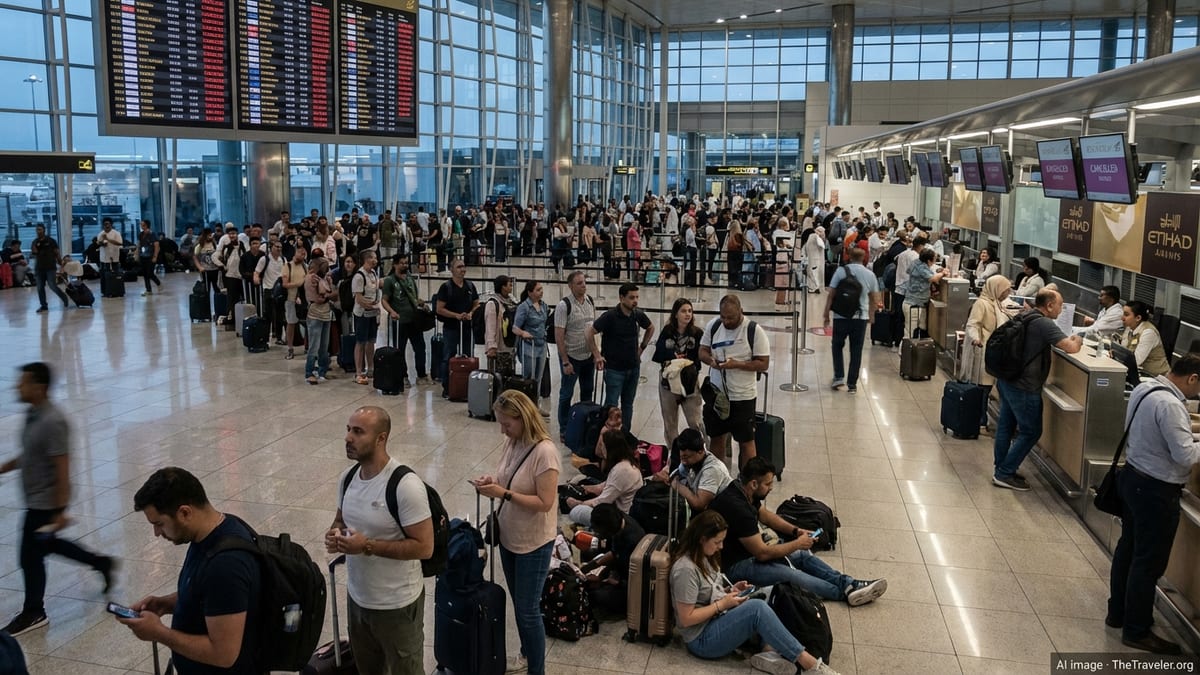
Expanded Waivers as Regional Disruption Drags On
Weeks of airspace restrictions and conflict-linked curbs across parts of the Middle East have pushed Etihad and Emirates to lean heavily on their disruption playbooks, rolling out broader rebooking and refund options in an effort to stabilise journeys and restore confidence in Gulf hubs.
Publicly available information shows that Etihad has repeatedly extended commercial waivers tied to the regional situation, allowing free rebooking or refunds when schedules change or routes are suspended. These waivers typically cover tickets issued before a specified cut-off date and travel during clearly defined disruption windows, giving affected travellers more room to reshuffle plans without extra cost.
Emirates has taken a similar tack, attaching flexible rebooking and refund policies to a series of airspace closures and reduced schedules. Advisory notices describe reduced operations and allow customers with travel during the affected periods to bring trips forward, postpone them, reroute within the same region or request refunds, depending on fare rules and whether travel has started.
While the exact terms vary by ticket type and date, the broader pattern for both carriers is clear: when regional instability forces cancellations or major retimings, fees are being waived more often, and passengers are being encouraged to manage changes online instead of waiting in call centre queues.
Rerouted Networks Form a “Shield” Around Conflict Zones
The most visible part of this emerging passenger shield is in the sky. Flight-status pages and traveller reports indicate that Etihad has shifted several services onto adjusted routings, skirting sensitive airspace while maintaining links between Europe, Asia and Australia. These detours lengthen flight times but keep itineraries intact, which many long-haul passengers see as preferable to wholesale cancellations.
Emirates has been operating on a reduced but steadily recovering schedule after regional closures forced large-scale timetable cuts earlier in the year. Aviation industry coverage notes that the Dubai-based airline has now restored the vast majority of its global network, even as some routes still operate at lower frequencies or with adjusted timings to accommodate altered flight paths.
Analysts describe these combined measures as a form of network shielding, in which carriers accept higher operating costs, longer sectors and complex crew planning in order to preserve as many through-connections as possible. For travellers, the practical effect is that a flight may leave earlier or later, or take a more southerly route, but still deliver them to their destination on the same day.
The trade-off is felt in longer journeys and sometimes tighter connection windows. However, in a region where airspace availability can change quickly, the ability of Gulf carriers to redraw their route maps within days has become a critical component of keeping itineraries viable.
Self-Service Tools Become the First Line of Defense
Another pillar of the passenger shield lies on the ground in digital channels. Both Etihad and Emirates are actively pushing customers toward managing disruptions through online portals, which aggregate eligibility checks, rebooking options and refund requests in one place.
Guidance from Emirates highlights its Manage Your Booking platform as the fastest path to rebook or request refunds when flights are cancelled or significantly retimed. Recent policy tweaks have widened rebooking windows, in some cases allowing travel to be moved by several weeks without change fees, and have relaxed advance-notice requirements that previously limited how late passengers could adjust plans.
Etihad’s disruption handling relies on a similar mix of proactive notifications and structured options once a schedule change is confirmed. Public information about its waiver policies indicates that affected customers can accept proposed alternatives, request different dates within policy limits, or pursue refunds when flights are cancelled outright or routing becomes impractical.
These self-service systems effectively form the first barrier between travellers and chaos, enabling large volumes of passengers to secure new itineraries without lengthy calls or airport queues. For corporate travel managers and travel agencies, the digital tools also provide clearer rule sets for what can be changed and when, reducing uncertainty as conditions evolve.
Passenger Rights, Limits and Frustrations
Even with expanded waivers, the passenger shield has clear limits, and those constraints have become a flashpoint for travellers caught mid-journey. Online discussion forums show a mixed picture: some customers report smooth, fee-free rebookings and full refunds, while others describe long waits for assistance, limited alternative dates and reluctance by airlines to place passengers on rival carriers.
Regulatory frameworks such as European and UK passenger protection rules add an extra layer of complexity. For flights departing from regulated jurisdictions, compensation and rebooking obligations may go beyond voluntary airline policies, including situations in which travellers can claim the cost of reaching their destination on another carrier if the original airline cannot offer timely alternatives.
However, many of the current disruptions stem from security-related airspace closures, which are often classified as extraordinary circumstances under consumer rules. In those cases, travellers are more likely to be entitled to care, rebooking or refunds than to additional cash compensation, and outcomes can differ significantly depending on departure point and ticket conditions.
The result is an uneven experience: while the headline waivers and rerouting policies are expansive, individual passengers may still find that acceptable options are scarce during peak periods, or that rebooking on different airlines is not routinely offered unless regulations clearly require it.
Balancing Capacity Recovery With Ongoing Volatility
Despite the turbulence, both Etihad and Emirates are signalling that their passenger-shield strategies are about recovery as much as protection. Public data from Emirates shows that the airline has restored nearly all of its pre-disruption global network, transporting millions of passengers even as adjusted routings and selective reductions remain in place.
Etihad, meanwhile, has focused on targeted capacity management, aligning schedules with airspace availability while keeping key long-haul corridors open through detours and timetable changes. Extended waivers and schedule-change policies are being used to smooth the bumpiest edges of that process, encouraging flexible travellers to shift into flights where seats and safe routings are easier to guarantee.
Industry observers note that this twin-track strategy of aggressive network restoration and generous but time-limited waivers effectively creates a moving shield: as conditions stabilise on particular corridors, airlines taper extraordinary measures and return to standard rules, while retaining the ability to reintroduce special policies if fresh disruptions emerge.
For passengers planning trips through the Gulf in the coming months, the picture is one of guarded opportunity. Schedules are largely back, and online tools make it easier to respond to sudden changes, but the fine print on waivers and local passenger rights remains crucial to understanding how far the protective shield will extend if the regional situation shifts again.