


Far above the Arctic Circle in Finnish Lapland, Lake Inari stretches out in a maze of dark water and low islands, framed by silent spruce forest and big northern sky. It is the country’s third-largest lake and one of the most sacred landscapes in Sámi culture, yet it receives a fraction of the visitors who crowd Rovaniemi or Levi. For travelers who are willing to go a little farther, the question is simple: is Lake Inari worth the journey? The answer, for anyone who values wilderness, night skies and living indigenous culture, is a resounding yes.
Get the latest updates straight to your inbox!
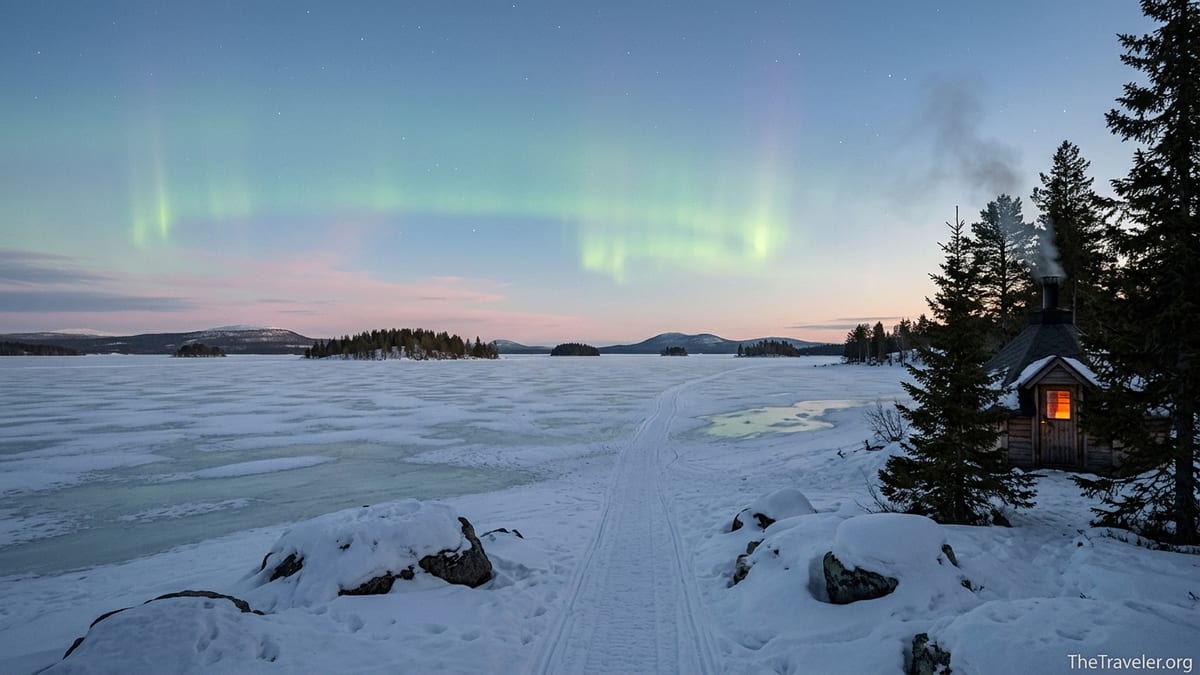
A Sacred Lake at the Edge of Europe
Lake Inari, known as Inarijärvi in Finnish, lies in the municipality of Inari in northernmost Lapland, above the Arctic Circle. With an area of roughly 1,000 square kilometers and more than 3,000 islands, it is Finland’s third-largest lake and the largest lake in Sápmi, the broader homeland of the Sámi people. Unlike the busy resort towns further south, the shores here are mostly forest, marsh and small villages, so your first impression is often one of space and silence rather than infrastructure.
The lake is not just a geographical feature; it is central to the history and spirituality of the Inari Sámi, who traditionally fished and hunted along its shores and still live around the lake today. Certain islands, such as Ukonsaari, have been documented as ancient Sámi sacrificial sites, and you will still hear local guides refer to parts of the lake as sacred. Boat cruises from Inari village routinely pass by Ukonsaari, and many operators explain its significance, helping visitors understand that they are not just looking at a pretty island, but at a place that once hosted rituals and offerings.
Modern travelers encounter this sacred landscape in simple, tangible ways. On a calm summer evening you might sit on the wooden jetty outside a lakeside cabin in Nellim, listening to the soft slap of small waves while the sun takes hours to dip below the horizon. In midwinter, you may stand on the frozen surface during a snowmobile excursion, your guide quietly pointing out islands that used to be seasonal fishing bases or burial places. The lake’s spiritual weight is felt less through signs and monuments, and more through the stories locals tell as they pour coffee from a blackened kettle over a campfire.
Because the lake lies so far north, seasons here are dramatic. In late June and early July, the midnight sun lingers over the water and you can paddle or hike at any hour, with the light never fully fading. From roughly late August through April, darkness returns and with it the aurora season, turning the lake into one of Finland’s most atmospheric places to watch the northern lights dance above snow and ice.
Why Travelers Say Lake Inari Is Worth the Journey
Visitors who make it to Lake Inari consistently highlight two things: the sense of untouched wilderness and the feeling that culture here is still lived rather than performed solely for tourists. Compared with more famous Lapland destinations, Inari village and nearby hamlets like Nellim and Sevettijärvi remain relatively small, which means you are more likely to find yourself sharing a restaurant with local reindeer herders or municipal workers than with busloads of tour groups.
On a practical level, the lake is surprisingly accessible. Most travelers fly into Ivalo Airport, about 50 kilometers south of Inari village. From there, scheduled buses and prebooked transfers take around 45 minutes to reach lakeside hotels such as Hotel Inari or the cabins of Visit Inari. In winter, many package trips from companies based in Helsinki or abroad include this transfer, so you can land in mid-afternoon and be standing on the lake’s shore by early evening, in time for an aurora forecast.
Travelers who have visited both Rovaniemi and Inari often comment that Lake Inari feels calmer, more authentic and far less commercial. You will still find organized excursions, from husky safaris to northern lights hunts, but they tend to be smaller scale. For example, an evening northern lights cruise by boat on open water in early autumn might take just a dozen people, with a guide serving hot berry juice on deck and pointing out constellations. In winter, snowmobile or minibus aurora tours usually run with compact groups, often led by guides who live in the area year-round rather than seasonal staff.
For independent travelers, the region also works well. The village center of Inari is compact enough to explore on foot, with a supermarket, a couple of cafés, a petrol station and the Sámi Museum and Nature Centre Siida all within a short walk of lakeside accommodation. That means you can base yourself in a cabin and mix prebooked excursions with low-key days walking the Juutua River trail, visiting Siida, or simply watching the changing light over the lake from your veranda.
Nature Experiences: From Silent Cruises to Frozen-Lake Adventures
Lake Inari’s appeal rests heavily on its nature, and operators have gradually developed ways for visitors to experience the lake in all seasons without overwhelming the environment. In summer and early autumn, electric-hybrid catamaran cruises run from Inari harbor, usually lasting around two to three hours. These cruises glide past low forested islands, stop near Ukonsaari, and often include a brief shore landing on an island where you can walk over lichen-covered rocks and look back at the wide expanse of water.
Smaller outfits offer kayaking, canoeing and rowing boat rentals for experienced paddlers. A typical summer day might see a couple traveling independently, loading a rented canoe with dry bags and setting off to camp on one of the wilderness islands, following Finland’s everyman’s right while respecting local regulations and not using sacred islands as campsites. Others choose guided multi-day canoe trips into the Vätsäri Wilderness Area north of the lake, where nights are spent at simple campfire sites and mornings start with coffee brewed over open flames on smooth granite ledges.
Winter turns the lake into a hard white plain that supports an entirely different set of experiences. Many visitors book guided snowmobile safaris that cross the frozen surface to remote islands and wilderness cabins. Operators like Visit Inari and smaller local companies supply thermal suits, boots and helmets, then lead groups along marked routes past ice-fishing holes and low snow-covered islets. For those who prefer a slower pace, snowshoe hikes on or alongside the lake are common, with guides choosing safe areas based on ice thickness and recent weather.
One of the most evocative activities is ice fishing. On a typical trip, your guide drives a snowmobile and sled out from Inari village, drills a hole through the thick ice, and hands you a short rod while explaining how locals still fish for whitefish and perch to fill home freezers. Even if you catch nothing, the experience of sitting on a reindeer skin in the middle of an Arctic lake, listening to the muffled creak of ice under snow, is often what travelers remember most.
Northern Lights, Polar Nights and the Drama of the Arctic Climate
The latitude of Lake Inari makes it one of the most reliable places in Finland to see the northern lights, provided the sky is clear and you stay at least a couple of nights between roughly late August and early April. Tour companies in Inari advertise that aurora can be visible about 200 nights a year, though of course actual sightings for any one traveler depend on both weather and solar activity. The key advantage here is very low light pollution; step a few hundred meters away from the village and you will often find truly dark skies.
In autumn, when the lake is still ice-free, some operators run private aurora tours by boat. These small-group trips, sometimes priced from roughly 450 euros for a 2-hour cruise for up to three people, take you out onto the open water to watch the lights reflected on the lake surface. Hot drinks are served on deck, and the experience feels more like a quiet night sail than a crowded excursion. As temperatures drop and the lake freezes, aurora tours switch to snowmobile, reindeer sled or minibus, often including a break in a lakeside cabin where the guide checks aurora forecasts and keeps a fire going.
Winter days around Lake Inari are short but rarely completely dark. Even in December and early January, when the sun does not rise fully above the horizon for several weeks, a blue twilight spreads over the snow for a few hours around midday. Travelers often structure their time around this rhythm: a late breakfast, a midday activity like a short snowshoe hike or visit to Siida, a rest in the afternoon twilight, then an evening aurora watch. Proper clothing is essential, with temperatures frequently dropping below minus 20 degrees Celsius and occasionally lower. Many accommodations provide or rent insulated overalls and boots, and guided excursions generally include them in the price.
In summer, the same latitude delivers the opposite experience: the midnight sun. From about late May to mid-July, the sun barely dips below the horizon, and the lake glows in soft golden light even at 2 a.m. Travelers staying in glass-roofed cabins or lake-facing rooms sometimes find themselves awake late into the night simply watching the changing colors. Practical touches like blackout curtains and eye masks become as important in June as wool layers are in January. Locals take advantage of this endless light to fish, repair boats and spend weekends at lakeside cottages, so visiting then offers a rare glimpse of everyday Arctic summer life.
Sámi Culture, Sacred Sites and Traveling Respectfully
One of the key reasons Lake Inari feels different from more generic Arctic destinations is the strength of Sámi culture around the lake. Inari village hosts the Sámi Museum and Nature Centre Siida, where permanent exhibitions cover Sámi history, languages, clothing, handicrafts and the ecology of the surrounding fells and forests. Many travelers start their visit there, then recognize elements from the exhibits later during excursions, such as traditional lávvu tents or distinctive Sámi jewelry worn by guides.
Local families run reindeer farms that welcome visitors on prebooked tours. At Inari Reindeer Farm Renniina, for example, guests can meet and feed reindeer, then step into the family’s home or a traditional building for coffee, reindeer or lake fish-based meals, and storytelling about reindeer herding and Sámi traditions. Other family-run outfits near Inari and Ivalo combine short sleigh rides with cultural presentations, songs or joik, giving context to the animals that appear on so many Lapland postcards.
For all its beauty, the lake and its villages are not an open-air museum; they are living communities. In recent years, Sámi voices have raised concerns about uncontrolled tourism and visitors entering private land or treating cultural symbols like costumes or sacred islands as Instagram props. Travelers who wish to visit respectfully can take simple steps: book tours run or endorsed by Sámi or local operators, follow your guide’s instructions about where you can and cannot go, avoid drones over villages or reindeer herds without explicit permission, and treat cultural performances as you would any serious artistic event rather than background entertainment.
Visiting sacred sites like Ukonsaari also calls for sensitivity. Most organized cruises now encourage visitors to stay on marked paths and to refrain from leaving anything on the island or taking stones or artifacts away. Listening to a guide explain why this rocky islet matters to the community, while standing quietly among twisted pines, often proves more powerful than any attempt to stage elaborate photos.
Practicalities: Costs, Seasons and Where to Stay
Lake Inari is not a bargain destination, but with some planning it can be surprisingly manageable. Accommodation ranges from simple hostel-style rooms to lakeside hotels and glass-roofed cabins. In high winter season, midrange double rooms in Inari village often hover around the low to mid hundreds of euros per night, while more luxurious aurora cabins, particularly those with direct lake views or private saunas, can run significantly higher. In shoulder seasons such as late September or April, prices typically ease a little, and some properties offer multi-night packages including activities.
Activity prices reflect the remote Arctic setting. A shared evening northern lights chase by minibus might cost somewhere in the range of 120 to 160 euros per person, usually including snacks and warm clothing. Snowmobile safaris tend to start a little higher, reflecting equipment costs and fuel, while intimate experiences like private aurora boat tours or overnight stays in wilderness cabins increase the price further. Travelers on tighter budgets often choose one or two key excursions and then fill the rest of their time with free or low-cost activities, such as walking the Juutua River trail, visiting Siida, exploring Inari’s small shops that sell Sámi handicrafts, or simply enjoying the lake from shore.
Food options in Inari are limited but improving. The village typically has a couple of restaurants attached to hotels, a café or two, and a supermarket where you can stock up on groceries if you are staying in a self-catering cabin. Menus frequently feature local ingredients like reindeer, Arctic char from Lake Inari, and forest berries. Lunch buffets in hotel restaurants might cost around 15 to 20 euros, while dinner mains can range from moderately priced daily specials to more elaborate multi-course meals. Vegetarian and vegan options are appearing more regularly but are still less extensive than in larger Finnish cities, so travelers with specific dietary needs should communicate with their accommodation in advance.
Season choice has a big impact on both experience and budget. Winter high season, particularly around Christmas and New Year, sees peak prices and busiest activity schedules, but also offers the highest chance of classic snowy landscapes and deep winter activities. Autumn, especially late September and early October, provides northern lights, autumn colors and lower prices, though some winter-only activities like husky sledding will not yet be running. Summer brings midnight sun, hiking, paddling and boat cruises, and can be a cost-effective time to visit if you are happy to self-cater and focus on nature rather than organized excursions.
The Takeaway
So, is Lake Inari worth visiting? For travelers looking for high-rise hotels, extensive nightlife or convenient ski-in ski-out slopes, perhaps not. But for those who dream of wide horizons, quiet forests, living Sámi culture and some of Finland’s darkest skies, Lake Inari offers something rare: an Arctic destination that still feels rooted in its own rhythms rather than in tourism alone.
What sets Lake Inari apart is the way its elements intertwine. The same lake that reflects the aurora on a silent March night is the one that sustained generations of Inari Sámi fishers. The trails you walk in July midnight sun are used in winter by reindeer herders moving animals between grazing grounds. Your guide on a snowmobile safari may spend the rest of the year fishing the same waters for home use. This interweaving of nature and culture gives every excursion, from an electric-hybrid lake cruise to a simple shoreline walk, a depth that stays with many travelers long after they return home.
If you are willing to travel a little farther north, pack serious winter clothing, and approach the region with curiosity and respect, Lake Inari is more than worth visiting. It is the kind of place that does not just tick a box on an Arctic bucket list but reshapes how you think about silence, dark skies and the meaning of a sacred landscape in modern Europe.
FAQ
Q1. How do I get to Lake Inari from abroad?
Most international visitors fly into Helsinki, then take a domestic flight of around 1.5 hours to Ivalo Airport in Lapland. From Ivalo, scheduled buses and pre-arranged transfers connect to Inari village in about 45 minutes, and some hotels and tour companies include this transfer in winter packages.
Q2. When is the best time to visit Lake Inari for northern lights?
The main aurora season runs roughly from late August to early April, when nights are dark enough. Many travelers choose September to October for milder temperatures and open water, or December to March for snowy landscapes and frozen-lake activities, then stay at least three nights to increase their chances of a clear, active sky.
Q3. Is Lake Inari suitable for families with children?
Yes, with some planning. Many accommodations offer family rooms or cabins, and winter activities such as reindeer farm visits, husky sled rides and gentle snowshoe walks are popular with older children. Parents should be prepared for very cold temperatures in winter, limited indoor entertainment options, and early bedtimes for younger kids during late-night aurora hunts.
Q4. Do I need a guided tour, or can I explore Lake Inari independently?
You can combine both. The village of Inari is walkable, with a supermarket, museum and lakeside paths accessible on your own. However, for activities on the lake itself in winter, such as snowmobiling or ice fishing, and for cultural visits to reindeer farms or sacred islands, guided tours are strongly recommended for safety, local access and context.
Q5. How expensive is a trip to Lake Inari compared with other parts of Finland?
Lake Inari is generally more expensive than southern Finland but comparable to other remote Arctic destinations. Accommodation and guided activities reflect higher operating costs in Lapland. Travelers on budgets often choose self-catering cabins, cook some meals, and focus on a smaller number of carefully chosen excursions rather than booking an activity every day.
Q6. What kind of clothing do I need in winter?
In midwinter, temperatures can drop below minus 20 degrees Celsius, so layered clothing is essential. Bring thermal base layers, a warm mid-layer such as fleece or wool, a windproof and insulated outer jacket and trousers, thick socks, insulated boots, a warm hat, gloves or mittens, and a face covering or buff. Most winter excursions provide additional thermal overalls and boots, but it is best to arrive with a solid base of your own.
Q7. Is Lake Inari crowded with tourists?
Compared with more famous Lapland hubs, Lake Inari is relatively quiet. Winter and peak holiday weeks do bring more visitors, and popular activities can book out, but you are unlikely to encounter mass-tourism crowds. Outside of organized excursions and the small village center, you can easily find stretches of shoreline or forest trails where you see few other people.
Q8. Can I drive myself around the Lake Inari region?
Yes, many travelers rent a car at Ivalo Airport and drive to Inari or Nellim. Roads are generally well maintained, even in winter, but you must be comfortable with snow, ice, limited daylight and possible reindeer on the road. A car offers flexibility to explore nearby viewpoints, trailheads and villages, though you should still rely on guided services for lake travel in winter.
Q9. How can I visit Sámi cultural sites respectfully?
Choose tours and experiences run by Sámi or local operators, listen to your guides, and follow their instructions about where you can walk, photograph or fly drones. Treat sacred places like Ukonsaari with the same respect you would give to historical or religious sites elsewhere: stay on designated paths, do not take stones or artifacts, and avoid leaving anything behind.
Q10. Is Lake Inari worth visiting if I have already been to Rovaniemi or other parts of Lapland?
Many travelers who have seen more commercial parts of Lapland find Lake Inari a very different experience. It offers a quieter, more wilderness-focused and culturally rooted stay, with fewer large attractions but more opportunities for deep nature immersion, Sámi-led experiences and genuinely dark skies for aurora watching, making it well worth a separate trip.