


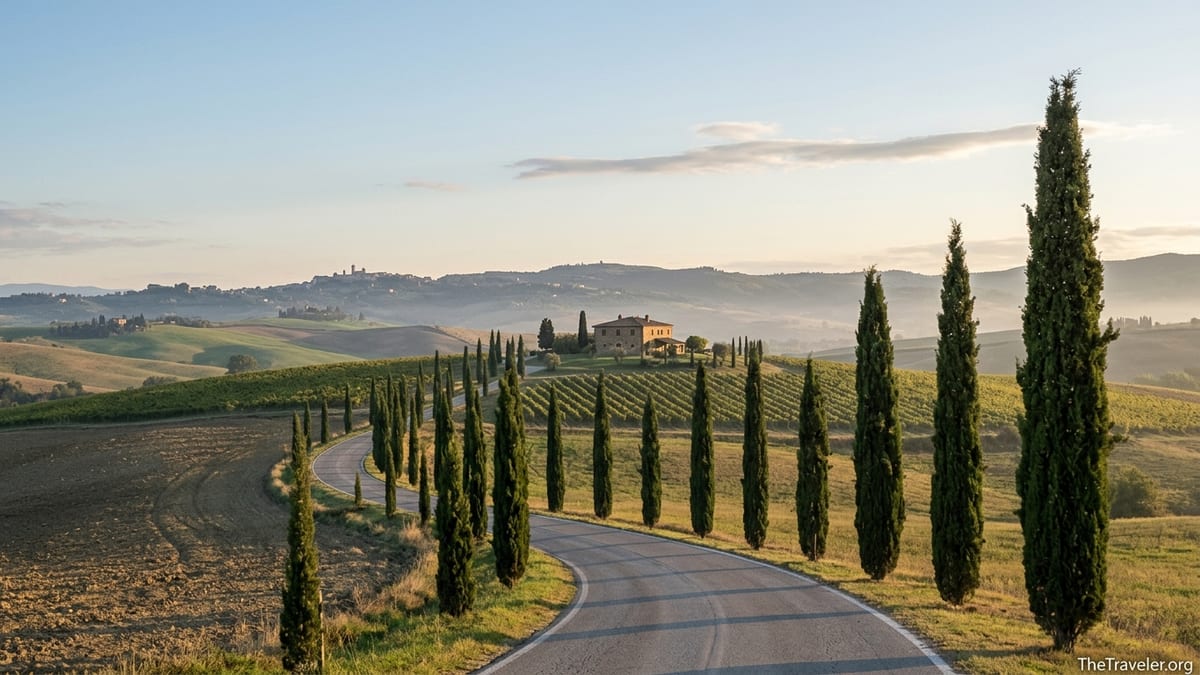
Few places loom as large in the travel imagination as Tuscany. Golden fields, cypress-lined lanes and stone farmhouses appear on calendars and screensavers around the world. Yet travelers still wonder: are Tuscan landscapes really worth visiting specifically for road trips, wine and photography, or have the images oversold the reality? The answer, for most visitors, is that Tuscany not only lives up to its postcard reputation but rewards those who come with time to drive, sip and shoot thoughtfully.
Get the latest updates straight to your inbox!
What Makes Tuscan Landscapes Special for Travelers
Tuscany covers a large slice of central Italy, but when people talk about timeless landscapes they usually mean a few key areas: the Val d’Orcia south of Siena, the Crete Senesi just east of it, and the Chianti Classico hills between Florence and Siena. These regions combine soft, rolling terrain with rows of vines, olive groves and hill towns in a way that is unusually harmonious and photogenic. The Val d’Orcia, in particular, is recognized as a UNESCO World Heritage cultural landscape, celebrated for how centuries of farming have shaped a scene that looks both natural and meticulously composed.
For road trippers, the appeal is how quickly scenery changes with a small turn of the wheel. Driving between Pienza, Montalcino and Montepulciano, you can move from wide, wheat-covered hills to steep vineyard terraces and tiny stone chapels perched alone in fields. Unlike some mountain destinations where hairpin roads demand constant concentration, most Tuscan provincial roads are gentle and low-stress, with frequent pull-offs where you can safely stop for a photo or to simply sit on a stone wall and absorb the view.
Wine lovers come for the diversity packed into a relatively small area. Within an hour or two of driving you can taste Brunello di Montalcino, Vino Nobile di Montepulciano and Chianti Classico, each a different expression of Sangiovese grapes grown on different soils and elevations. Many estates sit right in the middle of the famous scenery, allowing you to taste wines while looking directly at the vines they came from, sometimes in cellars carved into the same hill that supports a medieval town.
Photographers, whether with a smartphone or a full kit of lenses, benefit from the way Tuscan light interacts with the land. In spring and early summer the hills turn neon green with young wheat and vines, while early autumn brings rows of gold and rust as vineyards change color. Morning fog sometimes fills the valleys while hill towns and lone cypress trees rise above, creating layers and silhouettes that are unusually forgiving for those still learning their camera settings.
Driving Tuscany: How Scenic Are the Roads Really?
If your image of a scenic drive is a narrow lane curling past vineyards, lined with tall cypress trees and stone farmhouses, the reality in Tuscany often matches that dream. Classic stretches include the SR2 through Val d’Orcia, where you see the famous zigzag cypress lane near La Foce and long views towards Pienza, and the SP146 between San Quirico d’Orcia and Montepulciano, which offers continuous panoramas of fields and distant towns. Drivers frequently pull into gravel lay-bys to shoot the same vistas used in car commercials and travel campaigns.
Further north, the Chiantigiana road, marked as SR222, connects Florence and Siena through the heart of Chianti Classico. Between Greve, Panzano and Castellina in Chianti, the road winds through terraced vineyards and thick oak forests, with frequent brown signs pointing to local wineries, agriturismi and small hamlets. It is not a fast road, but that is its charm: expect to average 30 to 40 kilometers per hour, stopping at roadside viewpoints and simple bars in villages for an espresso or a glass of house red.
Conditions are generally good, with paved surfaces and clear signage, but this is still rural Italy. Many scenic side roads narrow to a single lane with no shoulder, and tractors or cyclists can slow things down. Travelers renting a compact car often find it easier to navigate village centers and tight parking than those in larger SUVs. For example, a small hatchback from a major rental firm typically costs less in fuel and is easier to park under the walls of Montalcino than a larger vehicle, especially in high season when lots fill quickly.
For those hesitant to drive, localized tours can provide a similar scenic experience with less stress. In towns such as Siena and Montepulciano, local operators run small-group or private day trips in minivans along many of the same routes independent travelers use, often including a couple of winery stops and time in one or two villages. These can be a good compromise if you want to photograph through the window without worrying about unfamiliar road rules.
Wine on the Road: Tasting Across Tuscan Landscapes
One of the main reasons Tuscan landscapes are so closely associated with road trips is that the countryside is designed, in modern tourism terms, around wine routes. South of Siena, the hills around Montalcino produce Brunello di Montalcino, one of Italy’s most prized reds. Many estates lie along quiet country roads leading out of town, with tasting rooms overlooking steep vineyards. Some offer short cellar tours that walk you past towering Slavonian oak casks before pouring a flight that might include a Rosso di Montalcino for earlier drinking and a more structured Brunello for aging.
East of Val d’Orcia, Montepulciano and its surrounding hills are dedicated to Vino Nobile di Montepulciano, another historic Sangiovese-based wine. A signposted wine route, often referred to locally as the Strada del Vino Nobile, links vineyards and agriturismo properties between the town and the Valdichiana plain. In practice, this means you can drive gentle country lanes from one family-run cellar to another, tasting wines and sometimes pecorino cheese or cured meats, then end your day walking the steep streets of Montepulciano itself, where several underground cellars run directly beneath Renaissance palaces.
Typical tasting fees vary widely. At smaller estates in Chianti Classico or around Montepulciano, a basic tasting of three or four wines might start around 15 to 25 euros per person, increasing if you add a cellar tour, lunch or premium labels. Larger, more famous wineries that market elaborate “wine experiences” can charge considerably more, especially in peak months, so it is wise to check prices in advance and book where possible. Many agriturismo stays include an informal tasting or a glass of house wine with dinner, which can be a more relaxed way to experience the local product.
Because you are driving, planning is essential. In practice, most travelers limit themselves to one or two formal tastings during a day of touring and then enjoy additional wines at dinner in their village base, where they can walk back to their room. Some visitors choose to dedicate a single day to a chauffeured tour that covers multiple cellars in one region, leaving the rest of the trip for independent drives with occasional roadside stops at wine bars or farm shops.
Photography Payoff: Classic Tuscan Views and How to Capture Them
For photographers, Tuscany offers a rare combination: iconic scenes that are still accessible. Canonical viewpoints such as the line of cypress trees leading up to a farmhouse near San Quirico d’Orcia, or the little chapel of the Madonna di Vitaleta between San Quirico and Pienza, sit just off public roads. This means you can often park in a gravel lay-by and walk a short distance along a path or field edge to compose the same shot you have seen in magazines, especially at sunrise or sunset when the light is soft and low.
Equipment does not need to be elaborate. Many of the most popular compositions in Val d’Orcia rely on a moderate telephoto lens, which compresses rolling hills into layers of green or ochre, but a smartphone with a good zoom mode can still capture the feeling of distant farmhouses floating above morning mist. If you are carrying a mirrorless or DSLR camera, a mid-range zoom such as a 24–70 mm lens is usually enough for village street scenes and broader landscapes, while a 70–200 mm equivalent helps isolate cypress lines and chapels from afar.
Timing arguably matters more than gear. In spring, particularly in April and May, the hills around Pienza glow an almost electric green after rain, with tractor lines etching curves into the slopes. In late June and early July, wheat fields shift to deep gold and hay bales appear like scattered punctuation marks, while vineyards fill out but remain lush. Early autumn, around late September and October, brings a patchwork of vines turning red and orange, with grape harvest activity in the fields and low sun casting long shadows across plowed earth, especially in the clay-rich Crete Senesi.
Practical considerations are also important. Many of the most photogenic spots sit along relatively quiet country roads that lack sidewalks. Using signposted pull-offs and farm tracks, and avoiding standing in the roadway, ensures both your safety and courtesy to local drivers. Sunrise is ideal not only for light but also for traffic, as most agricultural movement starts later in the morning. Packing a lightweight tripod helps with low-light scenes such as blue-hour images over towns like Montalcino or San Gimignano, where illuminated towers rise out of the dusk.
When to Go and How Much Time You Need
Choosing the right season can determine whether Tuscan landscapes feel magical or merely pleasant. Spring, roughly from late April through early June, is widely regarded as the most photogenic time for green hills and wildflowers, especially in Val d’Orcia and Chianti. Temperatures are usually mild, ideal for hiking between small villages or lingering at vineyard viewpoints. Crowds are lighter than in August, though weekends and holidays can still feel busy in famous spots like San Gimignano.
Summer brings the driest conditions and the most predictable weather for driving, but it can also mean heat and haze in the middle of the day. In July and August, many fields are already harvested, leaving a more muted palette of browns and golds. For travelers focused on road trips and photography, this period can still work well if you plan activity early and late in the day, using midday for winery visits, long lunches in shaded courtyards or swimming at agriturismo pools surrounded by vines.
Early autumn, especially September and October, offers perhaps the best balance for wine lovers. Grapes ripen and are harvested at different times depending on the zone, so you may see workers in Brunello vineyards one week and in Chianti the next. Many villages hold harvest festivals featuring local wines, chestnuts and truffles, and evenings cool down enough for comfortable walks through stone-paved centers. For photographers, the colors of changing vines and low, slanting light make this an extremely productive period.
As for trip length, a focused three-day visit gives enough time to base yourself in one area, such as Val d’Orcia, and explore a loop of nearby villages. With five to seven days, you can comfortably link two classic landscapes, for example spending half your nights near Pienza or Montepulciano and the rest in Chianti or closer to Siena. Distances are relatively short but the density of views, wineries and small towns means that slow travel tends to feel more rewarding than trying to cross the entire region each day.
Balancing Authenticity, Crowds and Expectations
One concern some travelers have is whether Tuscany has become a stage set, overwhelmed by visitors and Instagram expectations. In high season, popular viewpoints along the main Val d’Orcia routes or in villages like Pienza can indeed attract clusters of tripods at sunrise and tour groups by late morning. However, stepping just a few kilometers away from the most shared scenes often reveals quieter lanes and small towns where daily life continues largely unaffected by tourism.
Staying in agriturismo accommodations, which are working farms that also welcome guests, can help balance the desire for beauty with a sense of place. Many of these properties sit among vines or olive groves, sometimes reached via gravel drives lined with cypress trees, offering classic views from your breakfast terrace or pool. At dinner you might eat dishes made from the farm’s own olive oil and vegetables, accompanied by wines from their cellar, while chatting with owners about the challenges of cultivating vines on steep slopes.
Costs have risen in recent years, particularly in areas heavily marketed abroad. Wine tastings that once were free with a bottle purchase now more often carry a set fee, and some famous estates price their tours to reflect strong demand from international visitors. At the same time, many smaller wineries and village wine bars keep things accessible, selling local Chianti Classico or Rosso di Montalcino by the glass at reasonable prices and providing a relaxed setting to compare styles without committing to full tastings at multiple estates.
The key to satisfaction is managing expectations. If you arrive in mid-August and expect empty roads and fields entirely to yourself, you are likely to be disappointed. If you come understanding that Tuscany is both a living agricultural region and a popular destination, and you plan your drives and photo sessions for quieter hours, chances are high that you will find moments when it feels like the landscape exists solely for you, even if just for a few minutes at a time.
The Takeaway
So, are Tuscan landscapes worth visiting specifically for road trips, wine and photography? For most travelers, the combination is unusually rewarding. The road network invites slow exploration, with gentle curves, frequent villages and easy access to renowned wine regions. Vineyard routes around Montalcino, Montepulciano and Chianti deliver tastings that are deeply tied to the land you see from your windshield and your lens, while agriturismo stays allow you to wake up inside the very vistas that drew you to Tuscany in the first place.
Photography opportunities range from world-famous cypress-lined lanes to small, unscripted scenes: a farmer repairing a stone wall at dusk, laundry hanging from a balcony in a hill town, or morning fog lifting off the Orcia valley. These moments, combined with the sensory richness of tasting Sangiovese-based wines where they are grown, make the region more than just a pretty backdrop. If you value landscapes that invite lingering rather than rushing, and you are willing to travel at the pace of a country road rather than a highway, Tuscany is likely to feel well worth the journey.
FAQ
Q1. Do I need a car to enjoy Tuscan landscapes, wine and photography?
While you can visit some towns by train and bus, a car or private driver gives you far more flexibility to reach scenic viewpoints, small wineries and rural photo spots that are not served by public transport.
Q2. What is the best base for a first road trip focused on landscapes and wine?
Many first-time visitors choose either Val d’Orcia, basing near Pienza or Montepulciano for classic views and Vino Nobile, or Chianti Classico between Florence and Siena for easy access to many wineries and hill towns.
Q3. How many winery visits per day are realistic if I am driving?
Two formal tastings in a day is usually the upper limit if you are also exploring villages and viewpoints. Many travelers prefer one scheduled visit and then enjoy additional wine with a leisurely dinner on foot.
Q4. Are tastings in Tuscany expensive?
Prices vary, but a basic tasting of three or four wines often starts around 15 to 25 euros per person at smaller estates, with higher fees at famous wineries or for more elaborate tours that include food pairings.
Q5. When is the best time to visit for photography?
Spring, from late April to early June, offers bright green hills and wildflowers, while late September and October bring colorful vineyards and softer light. Early morning and late afternoon generally give the most flattering conditions.
Q6. Is driving in Tuscany difficult for visitors from abroad?
Most drivers find rural Tuscan roads manageable, with good surfaces and clear signs. The main challenges are narrow village streets, limited parking and understanding local regulations such as restricted traffic zones in historic centers.
Q7. Can I visit vineyards without booking in advance?
Some smaller wineries accept walk-ins, especially outside peak months, but many now require or strongly recommend reservations. Booking ahead is wise if you want a full tour or plan to visit in summer or during harvest.
Q8. What kind of camera gear should I bring?
A smartphone can capture much of the scenery, but a camera with a mid-range zoom lens is useful for villages and broad views, while a telephoto lens helps isolate cypress lines, chapels and layered hills from a distance.
Q9. How long should I plan for a landscape and wine-focused trip?
A minimum of three days allows a good introduction to one area, while five to seven days give time to explore two regions, such as Val d’Orcia and Chianti, without rushing between them.
Q10. Are Tuscan landscapes overrated compared with other wine regions?
Opinions vary, but many travelers find that Tuscany’s combination of gentle driving, accessible hill towns, diverse wines and consistently photogenic scenery makes it stand out even among other famous wine regions.