


There is a moment in Tuscany when the light seems to soften and lengthen, when the folds of the hills catch fire in shades of gold and copper, and every cypress line becomes a silhouette. If your dream is to stand above the Val d’Orcia or the Crete Senesi and watch this landscape turn to liquid light, timing your trip matters as much as the place you choose. Tuscany is beautiful year-round, but the rolling hills and golden light that fill postcards and coffee-table books appear most reliably in specific months, and often at very specific times of day.
Get the latest updates straight to your inbox!
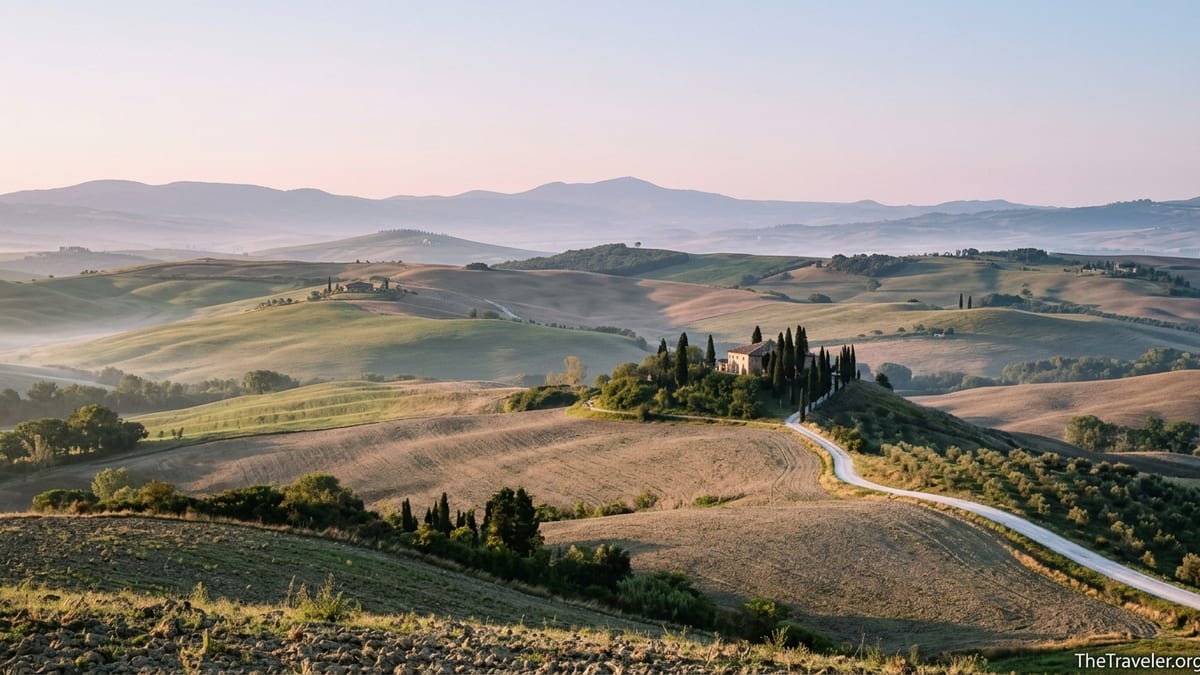
Understanding Tuscany’s Light and Landscape
The Tuscan countryside is not a single, static view. It is a working agricultural landscape that changes color with the seasons and with the life cycle of wheat, vines and olive trees. South of Siena, the Val d’Orcia and neighboring Crete Senesi are the classic landscapes most travelers picture: wide valleys, isolated stone farmhouses, winding gravel roads lined with cypress trees and softly rolling hills that catch every change in the sky. In spring they are almost neon green; by early summer those same hills fade to straw yellow and then to rich earth tones after harvest.
Light is the other half of the equation. In high summer, the sun in Tuscany is strong and high in the sky for much of the day, which can flatten the landscape in photographs. Around the shoulder seasons, especially from April to early June and from September to early November, the sun sits lower and the days start and end with longer, softer golden hours. Photographers who return to Tuscany year after year often pick these windows because they can count on warm, grazing light at sunrise and sunset rather than the harsh glare of July.
Weather adds another layer. Spring and autumn bring more variable skies, with a mix of sun, cloud and occasional showers. That variability is exactly what makes the landscape dramatic. A passing front over the Val d’Orcia can leave pockets of low mist in the valley on cool mornings, while sun breaks through to light up a lone farmhouse above. In autumn, this combination of tilted sun and light fog is one reason why many landscape photographers specifically schedule trips for late October or early November, when the air cools and the first mists begin to cling to the hollows.
Finally, the agricultural calendar decides whether you look out over velvety fields, tall wheat, harvested stubble or freshly plowed clay. Around Pienza and San Quirico d’Orcia, for example, wheat fields are lush green in April and May, turn blond by late June, and are usually harvested by early July, leaving rolling patterns of brown and tan. In vine-growing areas like Montalcino and Montepulciano, September and early October bring grape harvest, with vines shifting from deep green to yellow and red as the season advances.
Spring Green: Late April to Early June
For many travelers focused on landscapes, the period from late April through May is the single best time to see Tuscany’s hills at their greenest. After winter rains, the wheat and grasslands in the Val d’Orcia, Crete Senesi and Val di Chiana surge into growth. Travel guides dedicated to the region often describe April and May as the prime months for landscape lovers, when the countryside around Pienza, Montalcino and Asciano looks almost unreal in its saturated greens, sometimes dotted with wild red poppies in the foreground.
A typical day at this time of year might begin with dawn light over the Belvedere farmhouse viewpoint near San Quirico d’Orcia. Standing at the roadside pull-off, you look down into a sea of rolling green that seems to rise and fall in slow waves. In late April, the wheat is thick but not yet tall, so the hills read as smooth, unbroken surfaces. By around 6:30 to 7:00 in the morning, the first sunlight brushes the tops of the folds while the valleys remain in shade, creating strong contrast and depth. If you are staying in Pienza or San Quirico, it is an easy 10 to 15 minute drive to be on location before sunrise.
Days are comfortably mild in this period, often ranging from the mid-teens to low twenties Celsius during the day. That makes it easy to spend long mornings and late afternoons outdoors, driving the white roads around Monticchiello or parking near the famous winding cypress road at Podere Baccoleno in the Crete Senesi. Hotel prices and rental car costs are generally lower than in peak summer; for example, a mid-range agriturismo with views over the Val d’Orcia might cost noticeably less in early May compared with mid-July, while giving you far better light for photography.
Spring also brings more frequent showers and changeable weather, so flexibility is useful. If the forecast calls for overcast skies in the Val d’Orcia, you might spend that morning in nearby Siena, then return to the hills when the clouds break later in the day. Overcast light can still be excellent for capturing the subtle textures of the Crete Senesi’s clay ridges, but if your goal is glowing golden light, you will want to watch for those small clear windows at sunrise and sunset. Having your own car or hiring a driver for a private day tour from Siena or Florence can make it much easier to respond spontaneously.
From Green to Gold: Early Summer Wheat and Sunflowers
By late May and into June, the Tuscan countryside begins its transition from pure green to a mix of green, yellow and gold. Around the Val d’Orcia, local guides note that the wheat starts to turn from bright green to blond as June advances. In early June you can often find fields half-green and half-gold, which photograph beautifully in low evening light, especially with a long lens compressing the layers of hills between Pienza and San Quirico d’Orcia.
This is also when sunflower fields start to appear in many parts of Tuscany, particularly in the northern part of the Val d’Orcia, around the Val di Chiana and in lower-lying areas closer to the Tuscan coast. Farmers’ planting schedules vary from year to year, but as a rough rule, many sunflower fields reach peak bloom from late June through July. Driving the country roads between Montepulciano and Cortona or between Siena and Asciano, you may encounter entire hillsides turned yellow. These make striking foregrounds against the still-green vineyards and olive groves on adjacent slopes.
Light in early summer is abundant and days are long, which offers more flexibility but also requires some discipline if you want that golden quality. In late June, sunrise in Tuscany can be shortly after 5:30, and sunset after 9:00 in the evening. The hours between 10:00 and 17:00 are often very bright, flattening the relief of the hills. Many photographers use this time for scouting or for enjoying long vineyard lunches rather than serious landscape work. For instance, you might spend midday on a wine tasting at a Brunello estate near Montalcino, then drive 20 minutes to a hilltop outlook as the light softens toward evening.
Summer also introduces heat and haze. Daytime temperatures in July commonly reach the high twenties or low thirties Celsius, especially in inland valleys. Haze can soften distant views across the Val d’Orcia, which can be either a challenge or a creative opportunity depending on your style. For visitors who prioritize comfortable walking and crisp, clear views, late June and early July are usually preferable to the peak heat and crowds of August, when many Italians also take their holidays.
Harvest Colors and Long Shadows: September to Early November
If your mental picture of Tuscany involves golden hills, rust-colored vineyards and long, dramatic shadows stretching across freshly plowed fields, then the period from September through early November is your best bet. This is harvest season in much of Tuscany. In wine regions like Chianti Classico, Montalcino and Montepulciano, grape harvest typically begins in early September and continues into early or mid October depending on grape variety and elevation. Olive harvest often follows in late October and November. As grapes ripen and leaves begin to change, the patchwork of vineyards shifts from uniform green to a palette of yellows, oranges and reds.
Light changes too. By September, the sun sits notably lower in the sky than in mid-summer. Around the Val d’Orcia, evenings arrive earlier and the golden hour lengthens, bathing the landscape in soft, angled light well before sunset. Specialist photography guides often recommend late September and October for exactly this reason: you can shoot sunrise without waking at an extreme hour, and you get generous warm light late in the afternoon. On clear days in early October, a simple drive from Pienza to San Quirico d’Orcia around 17:00 can reveal view after view of cypress-lined drives and stone farmhouses glowing against tawny hills.
The character of the land itself shifts as farmers plow and sow new crops. In areas like the Crete Senesi, by October many wheat fields have already been harvested and the ground has been turned, exposing the bare clay. Combined with long shadows and low sun, this creates a sculpted look, with ribbed forms and subtle color gradients from gray to ochre. South-facing slopes may appear almost copper in golden hour, while north-facing hollows hold onto shadows and layers of mist. Travelers in November often describe the landscape as reminiscent of old master paintings, with soft, diffused light and quiet, empty roads.
Harvest season also brings a particular atmosphere on the ground. In September, agriturismi surrounded by vineyards are busy with crews picking grapes by hand. Some estates near Montalcino and in the coastal Maremma open their harvest activities to visitors, offering simple vineyard walks where you can watch the process from vine to fermentation tank. Country trattorias in small towns like Montisi or Bagno Vignoni update their menus with dishes built around new olive oil and just-picked produce. Even if your main goal is landscape photography, scheduling a visit during this period gives you both the visual drama of golden light and the cultural richness of harvest traditions.
Fog, Mist and Minimalism: Late Autumn and Winter
Although far fewer travelers consider visiting Tuscany in November through February, this can be a compelling time if you are interested in atmospheric light rather than postcard-perfect greens. As temperatures cool and nights lengthen, fog and low mist become more common in the valleys. Photographers who have spent many seasons in the Val d’Orcia often highlight November as one of their favorite months, precisely because of these conditions: soft sun, temperatures that can still reach around 20 degrees Celsius on good days, and mist filling the hollows at dawn.
On a November morning, you might drive up to the viewpoint near Pienza before sunrise and find the entire valley floor submerged in a thick layer of fog, with only hilltop farmhouses, lines of cypress trees and the distant crest of Monte Amiata emerging above. As the sun rises, the mist begins to break apart, with beams of light slicing through and catching isolated trees or chapels. This is a very different kind of golden light than you will find in summer. It is softer, more muted and far more fleeting, sometimes lasting only minutes before the fog dissipates or thickens again.
The landscape itself is more minimal in this season. After harvest, many fields sit bare, plowed into clean curves and ridges. Vines have lost most of their leaves, leaving dark lines against pale soil. The color palette is narrowed to browns, grays, muted greens and occasional evergreens. For photographers who love strong shapes and subtle tonal gradations, this is an opportunity to work almost in monochrome, using low winter sun to accentuate form rather than color. The Crete Senesi in particular can look almost lunar on clear winter days, with deep shadows emphasizing its eroded gullies.
Practically, late autumn and winter bring trade-offs. Daytime is short, and some rural accommodations and restaurants close or reduce hours between November and March. On the other hand, prices for those that remain open can be significantly lower than in high season, and classic viewpoints like the cypress-ringed farmhouse of Poggio Covili or the Cappella della Madonna di Vitaleta are often almost empty at sunrise. With careful planning and a willingness to adapt to forecast changes, you can experience a quieter, more introspective Tuscany, with golden light that feels like a rare gift when the clouds part.
Timing Your Day for Golden Light
Regardless of the month you choose, the best Tuscan light almost always coincides with the first and last hour of the day. Around sunrise and sunset, the sun sits low, shadows are long and the color temperature shifts warmer, giving the hills a golden or amber glow. The exact timing of these windows varies through the year, but a simple rule is to be in place at least 30 to 45 minutes before the published sunrise or sunset time. That allows you to catch pre-dawn and blue hour tones, as well as the moment the first direct light hits the landscape.
In practical terms, this means planning your base and daily schedule around your chosen viewpoints. If you want to photograph the mist-filled Val d’Orcia at dawn, for example, staying in Pienza, San Quirico d’Orcia or nearby villages like Monticchiello limits your early-morning drive to 10 to 20 minutes. You can then return to your accommodation for breakfast once the good light has passed. For evening shoots at classic spots such as the cypress ring at Poggio Covili or the winding road to Agriturismo Baccoleno, aim to arrive roughly 60 minutes before sunset. This gives you time to park, walk out and experiment with compositions as the light changes.
The position of the sun also affects how the rolling hills appear. In spring and autumn, when the sun’s path across the sky is more oblique than in midsummer, side light brings out the texture of plowed fields and wheat patterns. Shooting with the sun at roughly 90 degrees to your line of sight will emphasize ridges and furrows, while shooting toward the sun, especially shortly before it dips below the horizon, can create glowing edges on cypress lines and soft flares that enhance a dreamy mood. Many photographers alternate between a wide-angle lens for sweeping vistas and a telephoto to compress layers of hills, capturing the subtle gradations of color and light receding into the distance.
Weather apps and simple on-the-ground observation help with decisions. If you see clear skies the night before, you can expect a strong, direct sunrise but less chance of dramatic clouds. If a front is passing and the forecast suggests scattered clouds, it is often worth an early start, since breaks in the cloud cover can let shafts of golden light sweep across sections of the valley while other parts remain in shadow. On mornings after rain in autumn or spring, keep an eye out for fog forming in lower-lying areas along the Orcia river and between the hills of the Crete Senesi; these are the days when silhouettes and layers become most pronounced.
Where to Base Yourself for Classic Rolling Hills
Choosing the right base can make the difference between chasing light in a rush and experiencing it with ease. For the archetypal rolling hills and cypress scenes, the Val d’Orcia and adjacent Crete Senesi remain unrivaled. Towns like Pienza, San Quirico d’Orcia, Montalcino and Montepulciano all sit on ridges with wide views and offer quick access to country roads in multiple directions. Staying in Pienza, for instance, puts you within a short drive of the Belvedere farmhouse view, the zigzagging cypress road near La Foce and the Vitaleta chapel, all of which benefit from both sunrise and sunset light at different times of year.
Agriturismi scattered through the countryside add another layer of immersion. Many are working farms with their own olive groves and small vineyards, where you can watch the changing light directly from the terrace or pool deck. In spring, you might wake up at an agriturismo near Monticchiello to find green wheat fields rolling away in every direction; in October, the same view could show tawny stubble and lines of vines turning red. Because these properties are spread out, they also give you darker skies for night photography and quieter surroundings, which can be appealing if you plan to rest between dawn and dusk shoots.
For visitors who need public transport, basing in Siena or even Florence and joining guided day tours to the Val d’Orcia is a workable alternative, though it limits your ability to catch the very best light. Many organized tours from Florence, for example, leave mid-morning and return in the evening, giving you scenic views and brief photo stops but missing sunrise. A compromise is to stay in Siena, which has bus links to smaller towns and sits closer to the rolling country. From there, you can book a private driver for an early-morning or late-afternoon excursion tailored to your priorities, including specific viewpoints with favorable orientations for the time of year.
If you have more time in Tuscany, you can pair the Val d’Orcia and Crete Senesi with other landscape areas that also shine in golden light. The Chianti hills between Florence and Siena, the Maremma coast and the Garfagnana north of Lucca offer their own variations on rolling countryside, vineyards and hill towns. However, if your stay is limited to a few days and your main goal is to see and photograph the archetypal rolling hills under golden light, focusing your efforts south of Siena gives you the highest return on your travel time.
The Takeaway
There is no single perfect week that guarantees the Tuscan landscape you have in your mind. Instead, there are seasons and windows that tilt the odds in your favor for certain moods and colors. Late April through May delivers lush, vibrant green hills under mild temperatures, ideal if you love fresh growth and wildflowers. Late June and early July add blond wheat and sunflowers, with long days and strong contrasts, while September through early November paint the countryside in golds, coppers and soft browns, wrapped in the particular atmosphere of harvest. Even winter can reward those who seek misty valleys and minimalist forms under low, delicate light.
What unites all these periods is the importance of timing within the day and of choosing a base that lets you respond to changing light without stress. If you plan your trip around sunrise and sunset rather than museum opening hours, and if you give yourself a few days in or around the Val d’Orcia instead of rushing through on a single midday tour, you greatly increase your chances of standing on a ridge road as the hills below turn liquid gold. In the end, the best time to see Tuscan landscapes for rolling hills and golden light is less a fixed date than a thoughtful combination of season, place and patience.
FAQ
Q1. What is the single best month to see Tuscany’s rolling hills in golden light?
There is no absolute best month, but many landscape-focused travelers favor late April or October. Late April offers intensely green hills under soft spring light, while October combines golden, harvested fields, changing vineyard colors and longer golden hours. Your choice depends on whether you prefer fresh greens or autumn tones.
Q2. When are the Val d’Orcia hills greenest?
The Val d’Orcia hills are typically at their greenest from late March through May, with a peak in late April and early May. In these weeks, wheat fields are lush and continuous, with fewer plowed or harvested patches. By June, the green begins to fade toward yellow as the crops mature.
Q3. When does Tuscany usually have sunflower fields in bloom?
Sunflower season varies with planting and weather, but many Tuscan fields bloom from late June into July. In some years you may find later fields flowering into early August. Regions such as the Val di Chiana, parts of southern Tuscany and lower-lying areas near the coast often have visible sunflower plantings along country roads.
Q4. Is August a good time for golden light photography in Tuscany?
August can still offer attractive golden light at sunrise and sunset, but it is also the hottest and often the busiest month. Midday light is very harsh, haze can reduce long-distance clarity and rural roads and popular viewpoints may feel crowded. If you must travel in August, focus your photography on the first and last hours of daylight and allow time to rest in the heat of the day.
Q5. Will I see misty valleys in summer, or is that only an autumn phenomenon?
Mist can appear in almost any season when cool, humid air settles in valleys overnight, but it is more common and more persistent in the cooler months. You have the highest chance of finding fog-filled valleys at dawn from October through early spring, especially after rain and on calm, clear nights. In summer, misty mornings are possible but generally rarer and shorter-lived.
Q6. How many days should I spend in the Val d’Orcia for landscapes?
For serious landscape viewing or photography, plan at least three full days based in or near the Val d’Orcia. This gives you multiple chances at good sunrises and sunsets, and flexibility to adapt to changing weather. With a week, you can explore both the Val d’Orcia and Crete Senesi, revisit favorite spots in different light and include vineyard visits and hill-town walks without feeling rushed.
Q7. Is winter too gloomy for enjoying Tuscan landscapes?
Winter in Tuscany can be gray and wet at times, but it also brings clear, crisp days and very soft light. Landscapes are more muted and minimal, with bare fields and vines, yet this can be visually striking. If you enjoy quiet roads, atmospheric mist and subtle colors, late autumn and winter may actually suit you, provided you are prepared for colder temperatures and occasional rain.
Q8. Do I need a car to experience the best Tuscan views at golden hour?
A car is strongly recommended if you want maximum flexibility at sunrise and sunset, since many classic viewpoints sit along country roads rather than in towns. Without a car, you are reliant on buses or organized tours, which rarely align with the very best light. An alternative is to stay at a countryside agriturismo with strong views from the property itself, reducing the need to travel far for dawn or dusk.
Q9. Are spring and autumn much less crowded than summer in the countryside?
Yes, generally spring and autumn feel noticeably quieter than peak summer, especially away from major cities. While popular towns like Pienza or Montalcino still attract visitors, roads and viewpoints are less congested than in July and August. This lighter foot traffic makes it easier to set up a tripod, find parking near scenic pull-offs and enjoy sunsets in relative calm.
Q10. How far in advance should I book accommodation for prime seasons?
For stays in April, May, late September and October, it is wise to book several months in advance, especially if you want an agriturismo with panoramic views or a room in small hill towns. These shoulder seasons have become increasingly popular with travelers seeking good weather and better light without summer heat. Booking early improves your chances of securing a location that works well with your sunrise and sunset plans.