


More news on this day
Federal investigators have traced last week’s rare nationwide ground stop of U.S. flights to a misconfigured router at a Federal Aviation Administration radio facility in southern Arkansas, a failure that briefly severed or degraded critical communications between air traffic controllers and pilots across much of the country and disrupted thousands of journeys.
Get the latest news straight to your inbox!
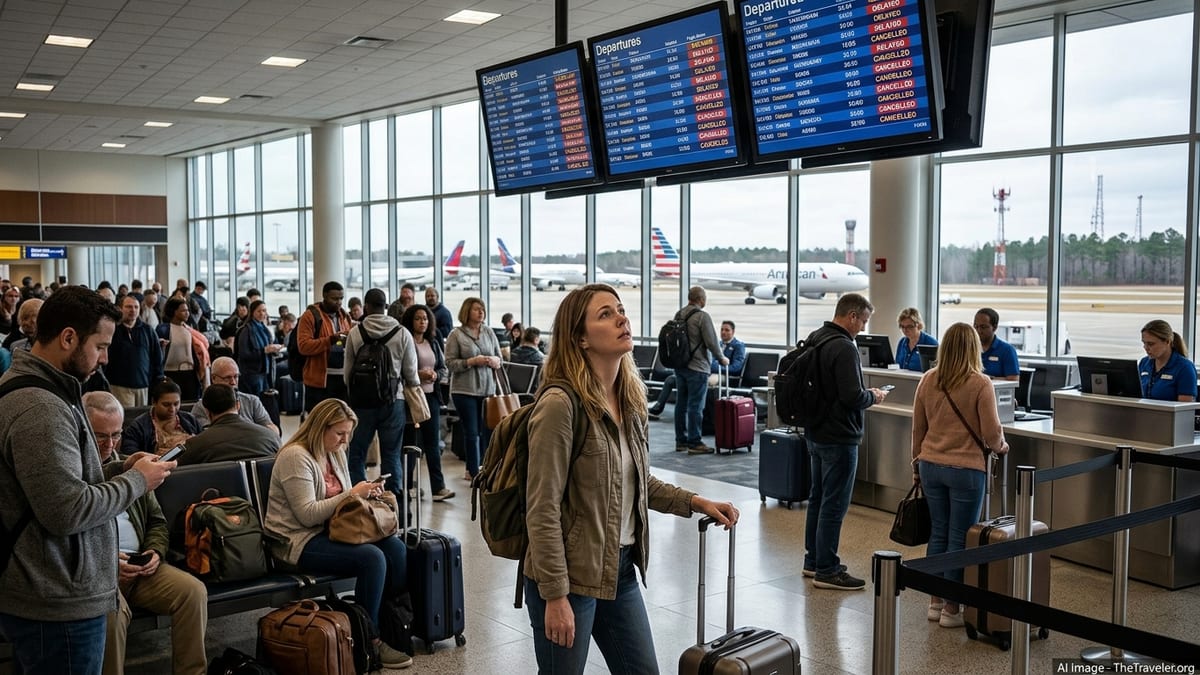
How a Single Router Triggered a Nationwide Slowdown
According to officials briefed on the ongoing investigation, the disruption originated at an FAA radio communications site near El Dorado, Arkansas, where the agency’s network contractor L3Harris was in the process of upgrading legacy copper-based circuits to fiber and installing a new Juniper router. Shortly after the router was brought into service on Friday afternoon, it began sending an unusually high volume of data into the FAA’s air traffic communications network. That traffic quickly overwhelmed older routers in the chain and created gaps in both radar feeds and voice communications used by controllers to manage aircraft.
FAA Administrator Bryan Bedford has said preliminary findings indicate that the Arkansas router was configured in a way that caused it to repeatedly initiate large numbers of connections across the network rather than throttling or aggregating the data for distribution. As a result, controllers at more than half of the United States’ 22 Air Route Traffic Control Centers began experiencing intermittent outages in the systems they rely on to track aircraft and relay instructions to pilots. While the core radar and radio hardware did not physically fail, the network congestion and instability were severe enough that the FAA issued a nationwide ground stop for departing flights while specialists worked to isolate the faulty device.
Flights already in the air were allowed to continue to their destinations, and international arrivals were handled individually as they approached U.S. airspace. Even so, the short nationwide halt and subsequent flow-control measures at busy hubs rippled through airline schedules for the rest of the day, leading to delays and cancellations across the domestic network. Early estimates from industry trackers and flight data services suggest that several thousand flights experienced at least some disruption before traffic levels returned closer to normal later that evening.
What Investigators Have Confirmed So Far
Transportation Secretary Sean Duffy and FAA leaders have stressed that the investigation remains active, but the broad outline of events is now relatively clear. Officials say the router had been installed as part of a planned modernization project and that there is, at this stage, no evidence that a cyberattack or deliberate tampering played any role. Early tests at an L3Harris laboratory in Florida, where the Arkansas router has been shipped for detailed analysis, indicate that the device responded to the instructions it was given rather than malfunctioning spontaneously, which points investigators toward configuration or integration issues rather than a hardware defect.
The FAA has not publicly named the individual technician or team involved in the Arkansas work, but Secretary Duffy has said the probe is now focused on whether the outage stemmed from installer error, broader engineering or design shortcomings in how the router was added to the network, or a combination of both. Investigators are reviewing configuration files, change-control documentation and alarm logs to reconstruct exactly what commands were issued and what safeguards, if any, should have prevented the router from flooding the system. Separately, the Department of Transportation’s inspector general has opened an inquiry into the outage and the oversight of the modernization program that led to the upgrade.
Officials have emphasized that many key questions remain unresolved, including why the abnormal traffic from a single node was able to propagate so widely, why automated monitoring tools did not isolate the fault more quickly, and whether the system was operating with sufficient redundancy. The FAA has cautioned that it will likely take weeks before a full engineering analysis is complete and formal recommendations are issued. Until then, the agency is characterizing the current explanation as preliminary but consistent with the technical evidence collected in the days since the incident.
How This Ground Stop Compares With Past FAA System Failures
The Arkansas router incident is the latest in a small but growing list of technology failures that have led to large-scale disruptions in U.S. air travel. In January 2023, a corruption in the FAA’s Notice to Air Missions database caused a brief nationwide ground stop while technicians restored a key safety system that provides pilots with hazard and infrastructure information. That earlier outage was eventually traced to contract personnel who unintentionally deleted critical files while working on database synchronization, prompting the FAA to overhaul its maintenance procedures, backup strategies and change-control processes for the NOTAM system.
Despite those improvements, the current case underscores the vulnerability of other parts of the National Airspace System to single points of failure, particularly where older infrastructure is being linked with newer IP-based equipment. In this instance, the affected network was part of the backbone that distributes both radar data and voice traffic between remote radio sites and regional control centers. While the Arkansas facility serves just one portion of the system, the investigation suggests that misrouted or excessive traffic from its new router was able to propagate through interconnected routers and create instability far beyond the immediate region.
Industry analysts note that airlines themselves have also suffered high-profile technology breakdowns in recent years, from scheduling software failures to internal network outages that cascaded across national operations. Those events, combined with the FAA’s own problems, have drawn congressional scrutiny of how both government and private operators manage critical aviation IT infrastructure. The Arkansas incident is expected to feature prominently in upcoming hearings on the resilience of the air traffic control system and the pace and oversight of modernization programs.
Immediate Safeguards and Operational Changes for Travelers
In the days since the disruption, the FAA has imposed immediate safeguards intended to reduce the risk of a repeat event while the longer investigation continues. Secretary Duffy has stated that the specific broadcast functionality on similar air traffic routers has been disabled or constrained so that no single device can send unbounded traffic into the network. The agency has also ordered a pause on certain categories of router configuration changes during peak traffic periods and is requiring additional approval layers for any upgrades at sites that feed multiple control centers.
For travelers, these technical measures will be largely invisible, but they aim to ensure that controllers retain dependable communications and situational awareness even as equipment is replaced or reconfigured. Airlines and airports have reverted to well-practiced contingency routines for handling the backlog created by the ground stop, including prioritizing long-haul flights, protecting connections where possible and repositioning crews and aircraft overnight to restore schedules. Most major carriers reported that they were able to operate close to normal timetables within a day of the incident, although some passengers continued to encounter scattered delays as aircraft and crews returned to their usual rotations.
Consumer advocates point out that, unlike weather events, technologically driven ground stops typically raise more questions about accountability and compensation. U.S. rules do not require airlines to compensate passengers for delays or cancellations caused by FAA system failures, but some carriers may offer rebooking flexibility or travel credits on a case-by-case basis. Travelers affected by the Arkansas router disruption are being advised to retain boarding passes, receipts and notifications from airlines in case policy guidance evolves or individual carriers choose to extend goodwill measures after regulators and lawmakers complete their reviews.
What Flyers Should Watch For Next
The next major developments are likely to come from parallel investigations now under way at the FAA, the Department of Transportation and on Capitol Hill. The FAA has said it intends to release a more detailed technical summary once hardware and configuration analysis is complete, including any specific software or network architecture changes it plans to implement systemwide. Lawmakers have already signaled interest in public hearings that would require FAA leaders, contractors and outside experts to testify about what went wrong in Arkansas, how quickly it was detected, and what safeguards were lacking.
For travelers, practical questions center on whether there will be additional planned outages or traffic-management initiatives as the agency reinforces its networks. So far, the FAA has not announced any future ground stops or large-scale slowdowns tied to this work, but it has acknowledged that some nighttime or off-peak maintenance windows could modestly affect flight routings and sector capacities as equipment is retested and reconfigured. Airlines are expected to factor those constraints into seasonal schedules and to adjust day-of operations as needed, similar to how they manage temporary runway closures or radar maintenance at major hubs.
Passengers planning trips in the coming weeks may wish to monitor airline notifications closely and build extra time into tight connections, particularly when traveling through the country’s busiest hubs where any upstream constraint can quickly propagate. While a recurrence of a nationwide ground stop is considered unlikely as new safeguards come online, regulators and industry leaders alike have acknowledged that the Arkansas router failure has exposed weaknesses in how new technology is integrated into a complex, aging air traffic system. The findings and rule changes that emerge from this episode will shape how that modernization proceeds and how resilient the network will be for travelers in the years ahead.