


More news on this day
New York City has postponed the 100th Macy’s Thanksgiving Day Parade from Thanksgiving Day, November 26, 2026, to Saturday, November 28, because of an approaching storm with high winds and heavy rain, a first-of-its-kind schedule change that is forcing performers, visitors and broadcasters to rapidly rebook travel and extend hotel stays.
Get the latest news straight to your inbox!
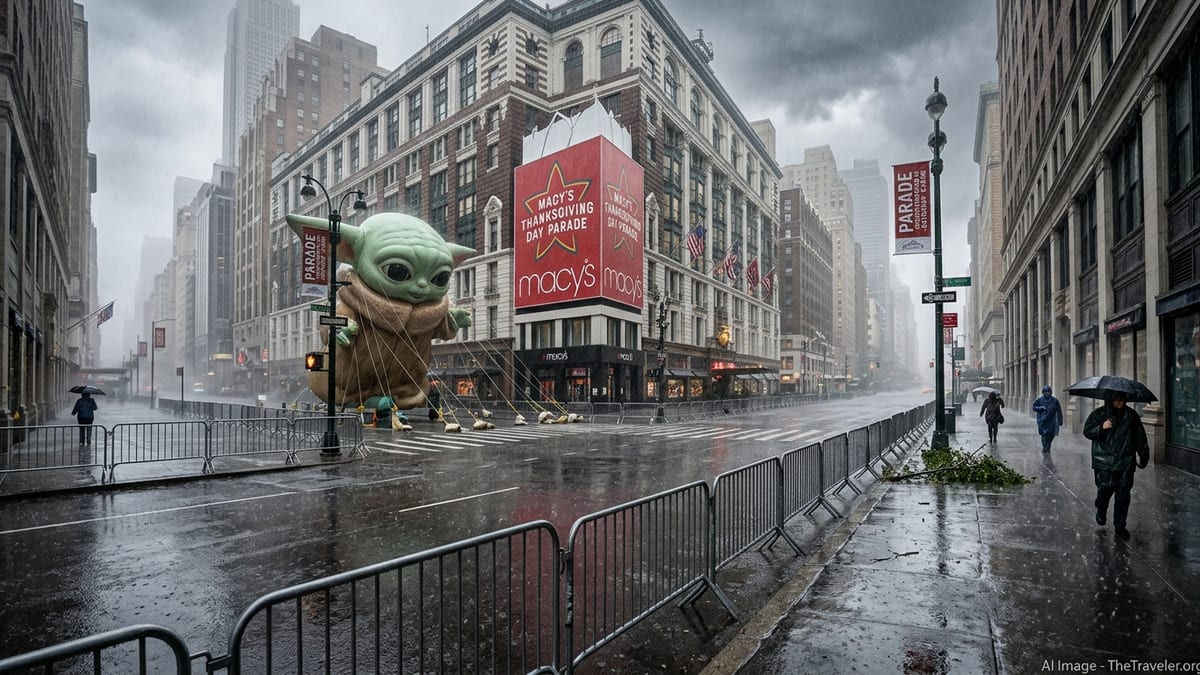
Safety concerns prompt first-ever postponement
The decision to move the parade off Thanksgiving Day was announced on Wednesday, November 25, after forecasters warned that a strong coastal storm would bring hours of steady rain, coastal flooding and potentially damaging wind gusts to the New York City area on Thursday. City regulations bar full-size parade balloons from flying if sustained winds exceed 23 mph or gusts top 34 to 35 mph, thresholds that forecasters said were likely to be met or exceeded during the original parade window. With some models indicating gusts could reach well above that level, city officials, Macy’s and broadcast partner NBC agreed that proceeding on Thursday would not be safe for participants or spectators.
In a joint statement, Macy’s and city officials framed the move as a safety decision taken after “close consultation” with municipal agencies and the National Weather Service. Weather alerts in place for Thursday into Friday include high wind and coastal flood warnings, and officials have warned of the risk of downed tree limbs and power lines. New York’s mayor, Zohran Mamdani, said at a Wednesday evening briefing that predicted gusts on Thanksgiving Day could be strong enough to cause power outages and hazardous conditions across the five boroughs, emphasizing that shifting the parade to Saturday was, in his view, the only responsible option.
The postponement affects not only the iconic helium balloons but also marching bands, floats, performance groups and the hundreds of thousands of spectators who had planned to line the traditional route from the Upper West Side to Midtown Manhattan. It is the first time in the parade’s roughly century-long history that the entire event has been moved off Thanksgiving Day rather than modified, shortened or run without balloons.
New Saturday schedule and what will change on the route
The rescheduled parade is now due to step off on Saturday, November 28, at 8:30 a.m. Eastern, following the same general route from Central Park West near West 77th Street down to Herald Square in front of Macy’s flagship store. City officials have indicated that street closures originally planned for Thursday will instead apply on Saturday, though some technical details, such as the exact timing of individual block closures or towing of parked vehicles, may vary and are being updated through city advisories ahead of the weekend.
Television coverage is expected to follow a similar pattern to the traditional Thanksgiving broadcast, but networks have had to rapidly update programming grids, on-air promos and streaming schedules. NBC, which holds national broadcast rights, has said it will televise the parade live on Saturday morning in place of previously scheduled weekend programming. Local affiliates in the New York area and across the country are adjusting their lineups to reflect the new date, and on-demand and streaming platforms that had planned to highlight the parade on Thursday are updating their schedules to carry the event two days later instead.
On the ground, the most visible change for visitors in Manhattan will be the absence of parade crowds and street closures on Thanksgiving Day, which typically sees dense early-morning lines along Central Park West and Sixth Avenue. Instead, those conditions are now expected on Saturday morning. Travelers staying in hotels along the route or in nearby neighborhoods may find that access restrictions, police checkpoints and crowding around viewing spots are shifted accordingly to the weekend. City transportation agencies have warned of potential bus detours and subway crowding around key viewing areas on Saturday during the morning and midday hours.
Logistical and financial strain for bands, performers and travelers
The sudden two-day delay is putting pressure on parade participants who had planned tightly scheduled trips around a Thursday performance and a swift return home. High school and college marching bands, many of which raised money for months to afford charter buses, flights and hotel stays in New York, now face the choice of extending their trips or canceling their in-person participation. Some ensembles and specialty groups have already indicated that they will not be able to remain in the city through Saturday because of prior commitments, school calendars or the cost of rebooking travel, meaning the rescheduled parade is likely to feature a somewhat different roster than originally promoted.
A Macy’s spokesperson told local media during the city’s Wednesday night security briefing that the company is still working through details with bands and performers on how to handle the added expenses associated with the new date. Those costs can include extra nights of hotel accommodation, additional meals and change fees or fare differences for flights and long-distance trains. The spokesperson did not specify whether Macy’s would directly reimburse any of those expenses, provide partial assistance or leave the matter to individual groups to resolve, saying only that organizers are in active conversation with participants and focused on delivering a safe and successful 100th parade.
Individual accounts shared by participants and visitors indicate a patchwork of outcomes. Some travelers have been able to shift flights to later in the weekend at little or no cost, particularly if their original trips were already scheduled to extend into Friday or Saturday. Others are facing higher fares for rebooking into busier post-holiday travel windows. Families who planned quick one- or two-night visits to coincide precisely with the Thursday event may find that extending their stay through Saturday is not feasible, forcing them either to depart before the parade or to absorb additional hotel and meal costs at a busy time in the city’s tourism calendar.
Health, safety and security adjustments around the storm
The nor’easter responsible for the schedule change is forecast to affect a wide swath of the Eastern Seaboard, with heavy rain and winds complicating road, rail and air travel over the Thanksgiving period. The National Weather Service has highlighted the potential for coastal flooding in low-lying areas, reduced visibility on highways and turbulence and delays at major airports from the Carolinas through New England. New York City’s three main airports, along with regional hubs such as Newark Liberty and LaGuardia, are bracing for weather-related disruptions on Thanksgiving Day itself, although operations are expected to be closer to normal by Saturday when the parade takes place.
City officials have said that rescheduling the parade also allows police, sanitation crews, medical teams and transit agencies to focus on storm response on Thursday rather than managing both severe weather and a large-scale outdoor event simultaneously. At the Wednesday briefing, Mayor Mamdani noted that some on-the-ground planning and security deployments would now shift to Saturday, when calmer conditions are expected. The New York Police Department has indicated that the security perimeter, bag checks and observation posts planned for Thursday will be replicated for the weekend date, with no reduction in screening or counterterrorism measures despite the change in timing.
The mayor also disclosed that he will not attend the rescheduled parade on Saturday because of medical guidance, saying that the new date conflicts with health-related restrictions that prevent him from joining large outdoor events over the weekend. He did not specify the exact nature of those restrictions but stressed that his absence does not change the level of city support or preparedness for the event. Other senior officials are expected to represent the city along the route and at the reviewing stand in Herald Square.
What travelers and attendees should do next
For visitors who had already arrived in New York by Wednesday night, the main decision now is whether to extend their stay through Saturday morning to see the parade in person or to watch the event from home on television or online. Travelers with flexible return dates and accommodation arrangements may find that staying on is straightforward, though they should confirm any change in nightly rates with their hotel and verify whether Saturday’s parade crowds or road closures could affect airport transfers. Those facing inflexible work, school or financial constraints may decide to keep their original departure plans, in which case they can still view the broadcast from wherever they will be on Saturday.
Participants and spectators planning to travel into the city on Friday or early Saturday should monitor updated weather forecasts, as lingering impacts from the nor’easter could still produce pockets of heavy rain or wind-related delays in the broader region. Even if conditions in Manhattan are expected to improve significantly by Saturday morning, connecting flights, intercity trains and highways elsewhere along the East Coast may still be working through backlogs from Thanksgiving Day disruptions. Travelers should check directly with airlines, rail operators and bus companies for the latest schedule information, and allow extra time to reach viewing points along the route before the 8:30 a.m. start.
All attendees, whether local or visiting, should watch for updated guidance from the city and from parade organizers regarding street closures, security rules and the list of participating bands and performers, which may change as groups confirm or decline their ability to appear on Saturday. Information about whether any elements of the original lineup will be altered, reduced or pre-recorded for broadcast is still emerging, and officials have acknowledged that some logistics, particularly around cost-sharing with performers, remain under discussion. Until those details are finalized, travelers are advised to focus on confirmed information: the new Saturday date, the unchanged route, the early start time and the expectation that conditions will be notably safer than the stormy weather predicted for Thanksgiving Day itself.