


More news on this day
Residents aboard a long-term “endless cruise” in Asia describe a stark gap between the marketed promise of all-inclusive luxury and the tightening reality of dwindling food, rising fees and mounting uncertainty that unfolded long before their ship was suddenly laid up for lack of fuel.
Get the latest news straight to your inbox!
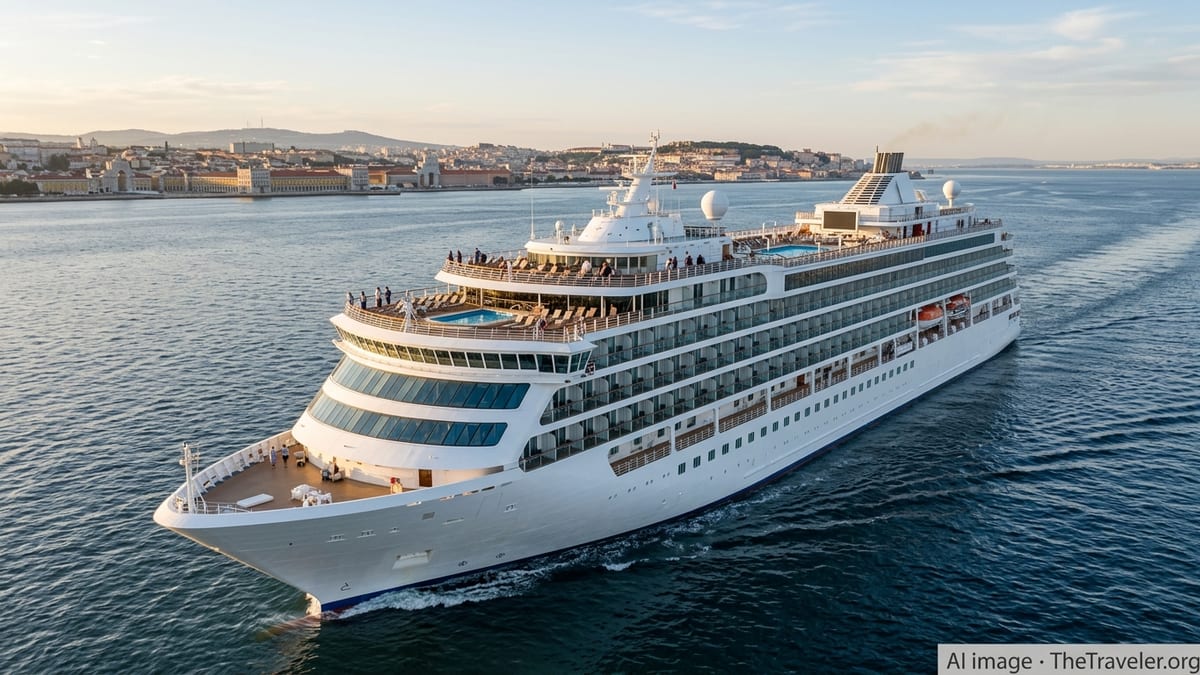
From floating utopia to stranded community
The vessel at the center of the latest residential cruise controversy is the Villa Vie Odyssey, a former conventional cruise ship repositioned as a floating apartment block offering multi-year and even lifetime stays. Marketing materials promoted a 15-year “perpetual” world voyage, with cabins sold on long leases and lifetime contracts that allowed residents to effectively swap land-based housing for a home at sea.
According to publicly available information on the product, entry prices ranged from multi-year arrangements starting in the tens of thousands of dollars to “for life” residency contracts in the hundreds of thousands, with ongoing monthly charges for food, fuel and services calibrated more like condominium dues than traditional cruise fares. Some residents reported selling homes, vehicles and the bulk of their possessions to fund the move, leaving them financially and emotionally committed to life aboard.
The concept initially attracted retirees, digital workers and travel-focused couples drawn by the idea of waking up to a new destination every few days without ever packing a suitcase. Early coverage of the Odyssey’s global itinerary, which included plans to circle all seven continents, presented it as part of a new generation of residential ships that blend housing, hospitality and travel in a single product.
By late October 2026, however, the dream had unraveled in the Cambodian port of Sihanoukville. The company behind the ship announced that sharply higher fuel costs in regional waters had made the operation unsustainable, ordered residents to disembark and suspended the voyage, leaving roughly 200 people scrambling for accommodation and onward travel in a country that was not their home.
“No food” and shrinking services before the shutdown
Accounts compiled from blogs, social media posts and independent reporting indicate that the crisis did not arrive overnight. Passengers described months of cutbacks in services as operators wrestled with rising operating costs. Internet speeds reportedly slowed, entertainment programs thinned and, crucially for a product sold as all-inclusive, food quality and availability came under pressure.
Some resident reports referenced tightened provisioning and reduced variety in dining rooms, with complaints ranging from repetitive menus to a sense that the kitchen was stretching ingredients further than before. In online diaries documenting life aboard, residents noted that calls for additional resident contributions often coincided with concerns about supplies, creating an atmosphere in which rumors about “no food” or looming shortages traveled quickly through the ship’s corridors.
Public posts from passengers described being asked repeatedly to contribute extra money specifically for fuel and other operational expenses. These appeals, framed as necessary to keep the global voyage moving, appeared alongside visible belt-tightening that residents experienced firsthand in the dining venues and bars that were marketed as a central part of the residential-lifestyle promise.
While there is no indication that the ship literally ran out of provisions, the perception of scarcity matters on a vessel that functions as both home and grocery store. Residents who had paid substantial sums for what they believed would be stable, predictable living costs at sea found themselves worrying about meal options, future provisioning and whether the next port call would bring normal service or further reductions.
Seven hours to leave and a scramble ashore
The turning point came in the final week of October 2026, when residents say they received written notice that the voyage was being suspended and that they would need to leave the ship within hours. Reports indicate that the message, circulated on board and later shared publicly, cited a failure to secure affordable fuel and signaled that the company would explore restructuring and recapitalization over the following two months.
Passengers interviewed in published coverage describe being given about seven hours to pack, clear their onboard accounts and move ashore in Sihanoukville. Many had no pre-arranged housing on land, no local bank accounts and limited access to longer-term funds tied up in the residential contracts they had signed. With the ship serving as their primary home, disembarkation meant more than the end of a vacation; it meant sudden displacement.
Publicly available reporting from Cambodia and international outlets notes that, at least initially, many residents booked nearby hotels at their own expense while they tried to understand their legal and financial position. Some coverage cites efforts by the operating company to help arrange onward travel and explore options for charter flights, but also highlights passenger complaints that support was limited compared with the magnitude of their predicament.
The contrast between the marketing of a secure, turnkey life at sea and the reality of residents queuing at ATMs in an unfamiliar port, searching for short-term rentals and worrying about the fate of belongings still aboard the ship, has become a central image of the Odyssey’s abrupt halt.
Why residential cruise economics are so fragile
The Odyssey incident has drawn attention to the complex economics underpinning residential cruise concepts. Unlike conventional cruises, where passengers book discrete sailings and lines can adjust prices and itineraries rapidly, residential ships bundle housing, hospitality and long-distance travel into multi-year commitments. This gives operators predictable revenue on paper but can expose both companies and residents to shocks in fuel costs, port fees and maintenance.
Fuel prices in particular have been cited in multiple reports as a critical factor in the Odyssey’s suspension. Operating a mid-sized ship on a near-continuous global route requires substantial fuel purchases, often in regions where prices are volatile. When fuel costs rise faster than anticipated, companies that have locked in fixed monthly charges for residents may face a squeeze that is difficult to resolve without seeking extra contributions or trimming services.
Industry observers note that successful residential vessels, such as ultra-luxury ships where apartments are sold to high-net-worth buyers, often rely on owners with significant financial cushions who can absorb higher operating assessments. In contrast, more affordable residential products aim to attract middle-class residents by promising that life at sea can cost roughly the same as, or less than, maintaining a home on land, leaving less room to maneuver when expenses spike.
In the Odyssey’s case, public documents and marketing archived before the shutdown show monthly charges covering not only food and utilities but also staffing, port calls, maintenance and entertainment. If those underlying costs escalate faster than anticipated, the operator must either ask residents to pay more, cut services or both, each of which can undermine confidence in the long-term viability of the project.
Lessons for would-be residents at sea
The collapse of the Odyssey voyage has prompted renewed scrutiny of residential cruising as a housing strategy. Guides and commentaries that once framed such arrangements as a creative lifestyle choice now emphasize the risks of tying one’s primary residence and financial future to a single, privately run vessel that can change course, alter services or cease operations entirely.
Consumer advocates and travel-law specialists quoted in earlier coverage of residential cruise schemes have long urged potential buyers to examine contracts carefully, paying particular attention to refund policies, protections if a voyage is shortened or cancelled, and the legal jurisdiction in which disputes will be resolved. The events in Cambodia have reinforced those points, illustrating how residents may find themselves far from home if an operator runs into financial trouble.
For current and prospective residents, the “no food” anxieties reported from life aboard the Odyssey before its shutdown carry a broader lesson. On a ship marketed as home, signs such as repeated requests for additional fuel payments, visible cost-cutting in dining and entertainment, or unexplained itinerary changes can all be early indicators of strain behind the scenes. Paying attention to those signals and seeking independent financial and legal advice may help residents make more informed decisions about whether to stay the course.
While the idea of a permanent address at sea retains its allure for some, the Odyssey episode demonstrates how quickly that vision can be upended when the economics no longer add up. For the hundreds of people now adjusting to life back on land sooner than planned, the memory of watching services erode and support fray, right down to worries about basic provisions, is likely to shape the next chapter of the residential-cruise experiment.