


More news on this day
Operations at Austin–Bergstrom International Airport experienced significant disruption today, with publicly available data indicating 89 delayed flights and six cancellations affecting services operated by SkyWest, Endeavor Air, United Airlines and other carriers across major domestic routes.
Get the latest news straight to your inbox!
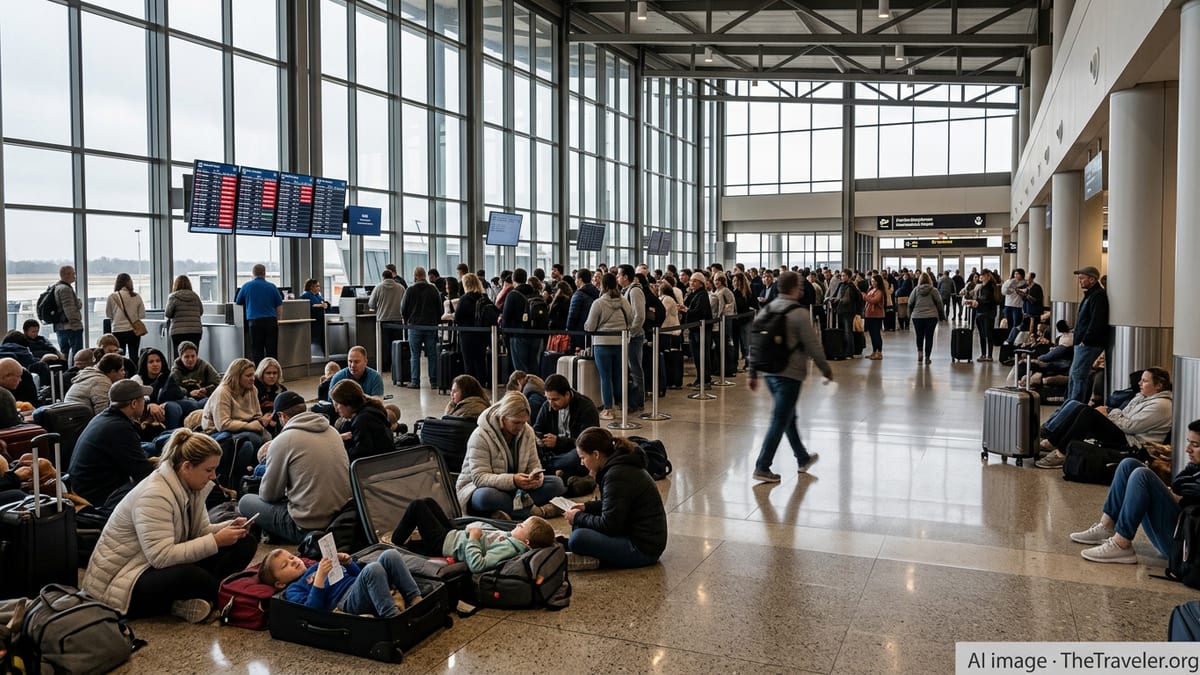
Delays Ripple Across Austin’s Busy Domestic Network
The disruption at Austin–Bergstrom International Airport comes on a day of wider operational strain in the United States, with industry trackers showing elevated delay levels across multiple hubs. Within Austin, delay counts reached 89 departures and arrivals, while six flights were canceled outright, affecting passengers on a range of short and medium haul services.
Los Angeles, Orlando and Phoenix, which rank among Austin’s busiest domestic destinations, saw particularly noticeable knock-on effects. Flight boards through the day reflected rolling pushbacks in scheduled departure and arrival times, with some services shifted by more than an hour as aircraft and crews were repositioned.
Although the precise causes of each delay vary by flight, patterns seen in national aviation data suggest a mix of air traffic constraints, weather influences along certain corridors and late arriving aircraft. These factors can compound quickly at a fast-growing airport like Austin, where a tight schedule and heavy reliance on regional feeder services can leave limited slack when problems arise.
The disruption comes at a time when Austin’s air service has been expanding, adding pressure to infrastructure and operations. Recent planning documents from the city highlight growing passenger volumes and an increasingly dense web of domestic connections to major hubs across the West Coast, Midwest and Southeast.
SkyWest, Endeavor Air and United Among Affected Carriers
Regional operators SkyWest Airlines and Endeavor Air featured prominently among the affected flights, reflecting their role as key feeder carriers for major US airlines. Publicly available consumer reports compiled from federal transportation data show that both airlines typically maintain on time performance in the high seventies to mid eighties as a percentage of total operations, but are highly exposed to cascading delays when partner networks come under stress.
SkyWest operates flights on behalf of multiple large carriers, including United Airlines, using United Express branding on many routes that serve Austin. When network conditions deteriorate, any disruption to these regional services can reduce connection options for passengers traveling onward through major hubs such as Denver, Houston, Los Angeles or Chicago.
Endeavor Air, a regional specialist tied closely to Delta Air Lines, has a smaller footprint at Austin but still contributes to the pattern of delays, particularly on flights feeding Delta’s network. Published federal metrics on cancellation and delay causes emphasize that the majority of disruptions in this segment are typically triggered by air carrier factors, national aviation system constraints or weather, with technical issues and crew availability featuring regularly.
United Airlines, one of Austin’s significant carriers, also saw its schedule pressured. Real time tracking tools showed selected United mainline and United Express services between Austin and other US cities operating behind schedule, illustrating how problems at one spoke in the network can radiate across multiple time zones.
Los Angeles, Orlando and Phoenix Routes Hit Hard
Among the routes most visibly affected were flights linking Austin with Los Angeles, Orlando and Phoenix, all of which rank as high volume markets in the airport’s domestic portfolio. Recent traffic summaries from Austin–Bergstrom list Los Angeles and Phoenix among the top Western US destinations by passenger count, while Orlando remains a leading leisure market for Central Texas travelers.
On the Austin to Los Angeles corridor, delays created challenges for both business and leisure travelers relying on same day connections along the West Coast. Some evening services were reported operating well behind schedule, creating knock on effects for passengers planning to connect onward through Los Angeles area airports.
Orlando bound flights faced similar issues, adding strain to one of the country’s busiest tourism corridors. Travel advocacy organizations note that flight disruptions in and out of major leisure destinations can quickly build visible crowds at gates and customer service desks, as families and groups attempt to rebook or secure hotel accommodations when itineraries fall apart.
Phoenix services, which link Austin to a key desert hub with onward access to the Mountain West and West Coast, also experienced schedule pressure. Publicly available airport data and third party trackers showed several Phoenix flights operating later than planned, reflecting the broader pattern of rolling delays across the domestic network.
Part Of A Wider Day Of US Flight Disruptions
The difficulties at Austin are part of a wider picture of operational stress across the United States. Data compiled by air passenger rights organizations for today indicate more than one hundred cancellations and well over two thousand delays nationally by the middle of the day, suggesting that Austin’s problems are linked to systemwide constraints rather than a purely local issue.
In practice, this means that flights operating into Austin from other affected hubs may already be running late before they depart, immediately placing subsequent return legs behind schedule. When combined with crew duty time limits and busy air traffic corridors, this situation can quickly lead to a cluster of delayed departures and a small number of cancellations when schedules can no longer be recovered.
National statistics from the US Department of Transportation highlight how air carrier delay, late arriving aircraft and congestion in the national aviation system consistently rank among the leading contributors to disruption. SkyWest, Endeavor Air and United all operate within this environment, making them susceptible to the same structural pressures that shape performance across the wider industry.
Travel analysts note that as traffic volumes continue to grow, airports like Austin that have rapidly expanded over the past decade are likely to see more days where operational resilience is tested by weather systems, traffic management programs or technical issues in other parts of the network.
What Passengers Can Expect When Disruptions Mount
For travelers passing through Austin during days of elevated disruption, the experience typically involves longer waits at gates, more crowded departure areas and increased competition for alternative routings. Public guidance from airlines and aviation regulators generally encourages passengers to monitor flight status closely, use mobile apps where available and build additional buffer time into connections when possible.
Consumer advocacy groups emphasize that options available to passengers often depend on the cause of the delay, the airline operating the flight and the specific terms of each carrier’s customer service policies. While US regulations require airlines to provide prompt information on flight status and refund options when flights are canceled, compensation for delays remains governed by individual carrier commitments rather than a single national standard.
In cases where weather or national airspace constraints are the primary drivers of disruption, airlines may focus on rebooking travelers on the next available flights once conditions improve. When problems are within a carrier’s control, such as crew or mechanical issues, some airlines provide additional vouchers or hotel support, although policies can differ significantly between mainline operators and their regional partners.
With Austin–Bergstrom’s role in the national network continuing to grow, observers expect that the airport’s performance on high traffic days will remain a closely watched indicator of how well US carriers, including SkyWest, Endeavor Air and United, are adapting to a busier and more complex operating environment.