


More news on this day
Hundreds of thousands of travelers across Asia and the Middle East faced rolling disruption today as aviation tracking data and regional media tallies indicated around 530 flights cancelled and at least 3,700 more delayed at major hubs including Shanghai, Chengdu, Tokyo, Bengaluru, Jeddah and Amman, affecting operations at carriers such as Batik Air, China Eastern, All Nippon Airways, Akasa Air and several Gulf and regional airlines.
Get the latest news straight to your inbox!
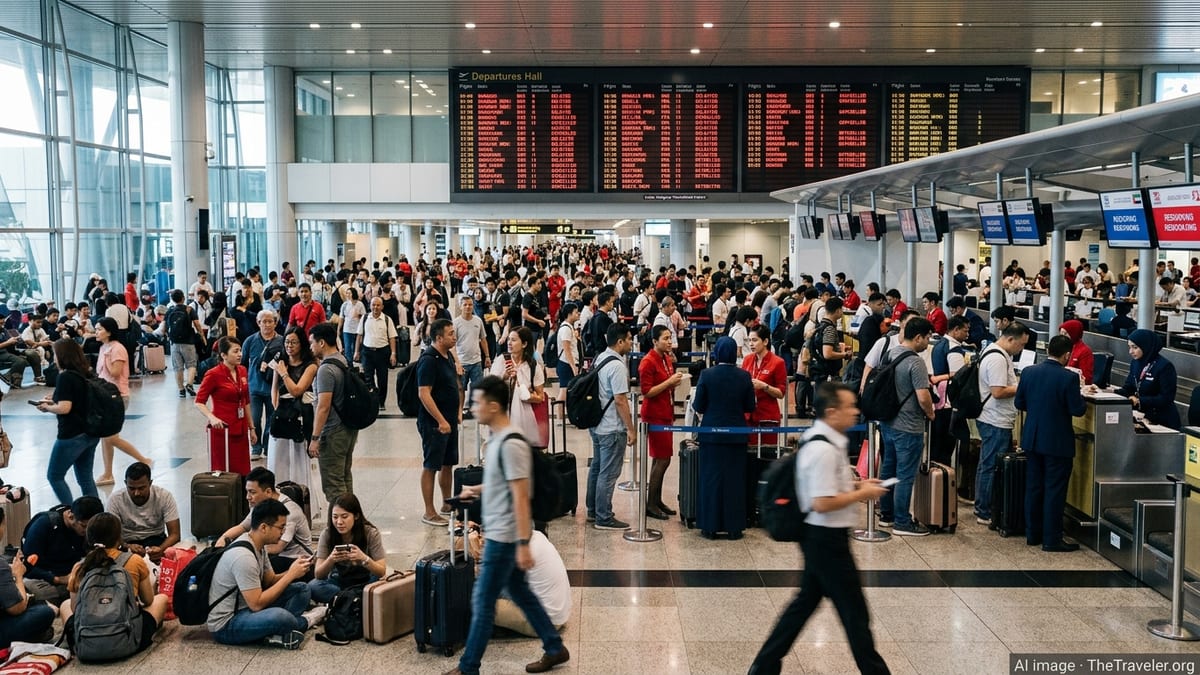
Widespread Disruptions From East Asia To The Gulf
Publicly available flight tracking dashboards and regional travel coverage point to an exceptionally strained operational day across multiple Asian and Middle Eastern air corridors, with cancellations and delays rippling far beyond any single country or airline. Aggregated counts from airport status pages and aviation analytics platforms show roughly 530 flights cancelled and 3,700 plus delayed within a 24 hour window, a level of disruption that significantly exceeds typical off-peak variance for late May.
China’s busiest hubs, particularly Shanghai Pudong and Shanghai Hongqiao, recorded elevated levels of schedule changes as domestic and international carriers adjusted rotations amid congestion and tighter aircraft and crew availability. Industry-focused publications in recent weeks have already highlighted a pattern of stepped up tactical cancellations by mainland airlines in response to higher fuel costs and tight capacity, and today’s figures suggest that this strategy is now intersecting with localized weather and operational bottlenecks.
The wave of disruption extended northeast into Japan, where Tokyo’s Haneda and Narita airports saw knock-on delays on regional services to China, Korea and Southeast Asia, as well as selected long haul departures. In South Asia, India’s Bengaluru Kempegowda International Airport was among the facilities reporting a higher number of late running domestic and connecting flights, compounding pressure on carriers trying to maximize fleet utilization ahead of the region’s peak summer travel surge.
Farther west, Saudi Arabia’s Jeddah and Riyadh and Jordan’s Amman Queen Alia airport experienced their own spikes in schedule changes, with regional media tracking an uptick in both cancellations and extended departure holds. With Gulf and Levantine hubs acting as bridges between Asia, Europe and Africa, disturbances in these nodes added yet another layer of complexity for passengers attempting to transit between continents.
China Eastern, ANA, Batik And Akasa Among Affected Carriers
Among the airlines most visibly caught in today’s turbulence were China Eastern, All Nippon Airways, Indonesia’s Batik Air and India’s Akasa Air, alongside a mix of Gulf and regional operators. Real time airline performance dashboards for China Eastern on the day showed a higher than usual proportion of flights either cancelled outright or operating late, reflecting both domestic constraints and the knock-on effect of earlier disruptions within its network.
On Japan routes, All Nippon Airways managed to operate the majority of its long haul schedule, but regional observers noted a series of staggered delays and selective cancellations on services linking Tokyo with secondary Chinese and Southeast Asian cities. These adjustments fed into wider congestion at Tokyo, where slot discipline leaves carriers with limited room to recover once morning or early afternoon waves fall out of alignment.
In Southeast Asia, Batik Air’s operations at busy gateways such as Jakarta, Kuala Lumpur and connecting points into China and Japan were reported to have suffered schedule stretches, with some short haul sectors scrubbed to protect longer routes and to free up aircraft. Similar patterns emerged in India, where fast growing Akasa Air and other domestic carriers at Bengaluru and Mumbai reportedly trimmed or retimed frequencies to ease pressure on crews and ground handling resources.
While the exact breakdown of the 530 cancellations and 3,718 delays varies by source and hour, the overall picture is of a multi-operator event, in which no single airline accounts for the bulk of disruption but many carriers contribute a smaller share of altered flights, cumulatively resulting in a major regional impact.
Shanghai, Chengdu, Tokyo And Bengaluru At The Heart Of The Gridlock
Shanghai once again emerged as one of the epicenters of disruption. Pudong International, the primary international gateway for the city, and Hongqiao, a critical domestic hub, both showed elevated cancellation percentages compared with recent averages. Aviation coverage in recent weeks has highlighted snowball effects at these airports when even modest early delays in the China domestic system cascade into missed connections and aircraft positioning challenges later in the day.
Chengdu, a rapidly expanding aviation center with strong links to both eastern China and overseas destinations, experienced its own share of pressure. While daily operations there typically include hundreds of flights, today’s conditions highlighted how quickly a handful of delayed departures can propagate through a network of tight turnaround times and high load factors, especially on routes feeding Shanghai and other coastal hubs.
In Japan, Tokyo’s dual-airport system of Haneda and Narita struggled to absorb irregular operations while maintaining packed international schedules to North America and Europe. Any delay on aircraft arriving from China or Southeast Asia can compromise subsequent long haul legs, which in turn affects crews, maintenance windows and arrival times at distant destinations. Travelers reported extended waits in terminal gate areas as airlines repeatedly revised estimated departure times.
Bengaluru, one of India’s fastest-growing international gateways, also figured prominently in the day’s tallies. Increased monsoon season preparedness, constrained runway slots and a tight domestic connection bank mean that when inbound flights run late, outbound waves are especially vulnerable. Data from flight status aggregators pointed to multiple delayed departures to other Indian metros and to Southeast Asian and Gulf destinations.
Knock-on Effects In Saudi Arabia, Jordan And Beyond
In the Gulf and Levant regions, disruptions at Saudi Arabia’s Jeddah and Riyadh airports, as well as Amman in Jordan, underlined how interlinked Asia’s air traffic flows have become. These airports function as important connectors for travelers from the Indian subcontinent and East Asia heading to Europe, North Africa and beyond, and any localized disruption can quickly morph into missed onward flights and forced overnight stays.
Airlines operating in these markets, including national carriers and regional low cost operators, were reported to have cancelled a portion of their short and medium haul sectors or instituted rolling delays on select routes. Capacity constraints on alternative flights and high seasonal demand limited rebooking options, leaving some passengers facing lengthy waits before the next available seat.
The situation also exposed the vulnerability of itineraries that depend on tight transfer windows in hub-and-spoke networks. When an inbound segment from Asia arrives significantly behind schedule at Jeddah or Amman, there are often few immediate backup options, particularly late in the day, leading to an accumulation of stranded passengers at customer service counters and transit hotels.
Industry analysts note that while today’s event was scattered across a wide geography, its impact was amplified because so many affected airports serve as primary connectors for multi-leg journeys. Compared with disruptions that are confined to a single country, multi-hub disturbances can generate far more complex rebooking chains as airlines attempt to realign passengers with both aircraft availability and immigration or visa constraints.
Travelers Face Longer Journeys And Renewed Calls For Flexibility
For passengers, the immediate consequences of the cancellations and delays were longer travel days, missed events and the logistical challenge of rearranging hotels, ground transport and connecting flights. Reports from social media and traveler forums described groups of passengers camping near boarding gates, making repeated calls to airline contact centers and queuing at ticket counters in Shanghai, Tokyo, Bengaluru, Jeddah and other hubs affected by the disruptions.
Consumer advocates and frequent flyer communities have been renewing calls for clearer communication and more flexible rebooking and refund policies when large-scale operational disruptions occur. In particular, travelers transiting through multiple jurisdictions often struggle to determine which rules apply to compensation, overnight accommodation or alternative routing once their original flight plan has broken down.
Operationally, today’s figures add to a growing body of evidence that Asia’s aviation recovery, while robust in terms of demand, remains fragile in terms of resilience. Airlines are operating close to the limits of available aircraft, crew and ground handling resources, leaving little slack to absorb unexpected weather events, technical issues or airspace constraints without resorting to cancellations and rolling delays.
With summer peak travel only weeks away for many Asian and Middle Eastern markets, analysts suggest that travelers may wish to build in longer connection times, favor earlier departures in the day and monitor flight status more closely in the days leading up to departure. The scale of today’s 530 cancellations and more than 3,700 delays highlights how quickly the region’s interconnected hubs can experience cascading disruption when conditions align unfavorably.