


More news on this day
Rail passengers in Stratford faced significant disruption after a fire beside the tracks prompted the closure of the busy interchange station and halted multiple train services.
Get the latest news straight to your inbox!
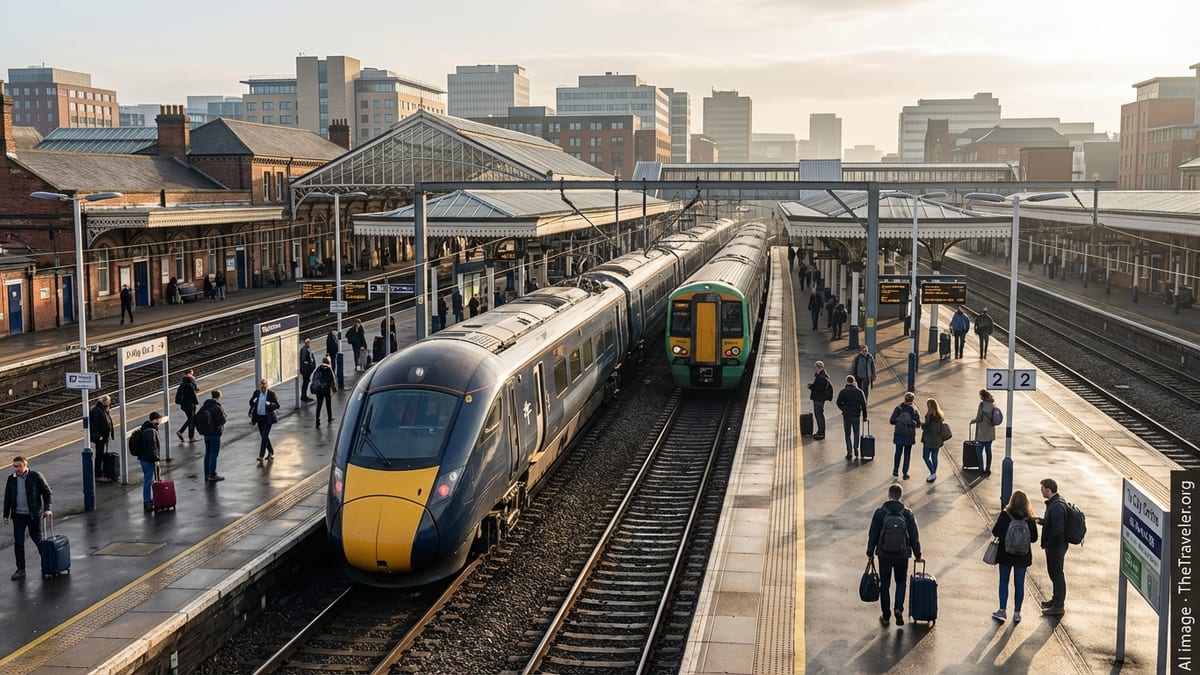
Fire beside tracks triggers sudden shutdown
Reports from London on July 10 indicate that a fire broke out in vegetation and lineside material near the railway tracks at Stratford, one of the capital’s key rail and Underground interchanges. The incident occurred close enough to the running lines that rail operators suspended movements through the station while emergency services dealt with the blaze.
Publicly available information from live service boards and passenger updates points to the fire developing beside the approach tracks rather than within the station buildings themselves. Images and descriptions shared by commuters describe smoke visible from platforms and trains being held outside the station before services were turned back or diverted.
As a precaution, access to Stratford station was restricted and then fully closed while the incident was brought under control. Trains on affected lines were either held at previous stops, rerouted where possible, or cancelled altogether, creating delays that extended well beyond the immediate area.
Initial indications suggest the fire may have involved grass, shrubs or other trackside material, a type of incident that has become more common during recent warm and dry spells. Investigations into the precise cause are expected to focus on possible ignition sources such as discarded items, track-side equipment or passing train operations.
Major hub brought to a standstill
Stratford is one of the busiest transport hubs in the United Kingdom, serving National Rail, London Underground, London Overground, the Docklands Light Railway and the Elizabeth line, as well as being a gateway to major retail and leisure developments. The decision to close the station therefore had an immediate impact on regional and local travel.
Real-time journey information showed multiple operators reporting disruption, with some mainline trains from the east of England terminating short at stations such as Shenfield rather than continuing to Stratford. Passengers heading into London were advised to change to alternative routes or wait for rail replacement options where these could be arranged at short notice.
On the London Underground network, reports indicated that services on at least one line were suspended through Stratford, with severe delays on remaining sections of the route. Crowding built up at neighbouring stations including West Ham and Leyton, as travelers attempted to re-route using other Underground or rail lines.
Given Stratford’s role as a key interchange, the closure also affected longer-distance journeys, with missed connections and extended journey times rippling across the network. Passengers bound for destinations such as Canary Wharf, central London and regional rail services experienced extended travel times and, in some cases, abandoned trips.
Passenger disruption and travel advice
Throughout the morning, journey planners and operator alert systems urged passengers to check live updates before travelling and to allow significant extra time. Those already on the move encountered trains being held on the approaches to Stratford, before being instructed to return to earlier stations or to disembark at alternative stops once a safe point for unloading was reached.
Some travelers reported being evacuated from trains that had come to a standstill near the affected section of track, with staff guiding passengers along the train or platforms once clearance had been given. Others found their services abruptly terminated at outlying hubs, requiring unfamiliar detours through different parts of the network.
Rail operators advised customers that tickets would be accepted on reasonable alternative routes, including other rail franchises and local transport where inter-operator agreements were in place. However, capacity constraints and the short-notice nature of the disruption meant that many replacement routes were quickly crowded.
Travel information services recommended that passengers with flexibility postpone non-essential journeys into the Stratford area while the incident continued to affect services. For those needing to travel, suggestions included using alternative interchange points in east London or heading to central London termini and transferring from there.
Safety procedures and infrastructure concerns
Incidents involving fire near rail infrastructure are treated with particular caution, as heat and smoke can affect not only the running lines but also signalling equipment, cabling and overhead power systems. Publicly available safety guidance indicates that even relatively small fires can cause damage that requires detailed inspection before services can resume at normal speeds.
In this case, services through Stratford remained suspended while the affected area was checked for structural or electrical damage. Once the fire was fully extinguished, inspection teams were expected to examine sleepers, ballast and cable runs, as well as any trackside equipment exposed to heat or flames.
Lineside fires are often linked to seasonal conditions, with dry vegetation becoming highly flammable during warm, dry weather. In recent years, rail operators across the United Kingdom have increased emphasis on vegetation management and proactive inspections in a bid to reduce the likelihood and impact of such events.
The Stratford disruption adds to a wider pattern of heat and fire related incidents affecting rail corridors in several countries, underlining the challenges transport networks face in maintaining reliability as weather conditions become more volatile. For passengers, the episode serves as a reminder of how quickly localised incidents can cascade into system-wide disruptions.
Gradual recovery and ongoing checks
By later in the day, information services suggested that the immediate fire risk at Stratford had been contained, allowing discussions to begin on reopening the station and restoring services. Any return to normal operations was expected to be phased, with limited trains running at reduced speeds before a full timetable could be reinstated.
Passengers were advised that residual delays and cancellations would likely continue beyond the physical reopening of the station, as trains and crew were returned to their scheduled positions. Knock-on effects such as out-of-place rolling stock and missed maintenance slots typically take several hours, and in some cases the rest of the operating day, to resolve.
Looking ahead, attention is likely to focus on whether additional preventive measures are required along busy urban corridors such as those serving Stratford. That discussion may include vegetation management, infrastructure resilience, and the speed at which control centres can reroute traffic and communicate with passengers when an incident develops beside the tracks.
For now, travelers planning to pass through Stratford are being encouraged to verify the status of their specific service close to departure, as timetables continue to adjust in the aftermath of the lineside fire and associated station closure.