


More news on this day
Travel across key India and Middle East routes faced fresh turmoil as operational data and published coverage pointed to 17 delayed and three cancelled services involving Air Arabia, IndiGo and Air India Express at Sharjah Airport, sharply disrupting journeys between the emirate and cities including Delhi, Kochi and Cairo.
Get the latest news straight to your inbox!
Ripple Effects Across Sharjah’s Busy Regional Network
Sharjah International Airport has been operating under sustained strain in recent weeks as the wider UAE aviation system adjusts to regional airspace challenges and a compressed flight schedule. Operational snapshots for Sharjah show banks of early-morning and overnight flights bunched closely together, particularly on high-demand routes linking the emirate to Indian cities such as Delhi, Kochi, Kozhikode and Thiruvananthapuram, as well as to Cairo and other Middle Eastern and African destinations.
Within this tightly packed schedule, publicly available tracking data and aggregated disruption tallies indicate that 17 flights operated by low cost and regional carriers, including Air Arabia, IndiGo and Air India Express, have incurred significant delays alongside three outright cancellations. The delays range from moderate hold-ups on departure to lengthy late arrivals at destination airports, creating missed connections, extended waits in transit and last-minute itinerary changes for passengers.
Reports from regional aviation trackers and travel industry outlets describe a network in recovery mode rather than outright shutdown. Carriers are flying trimmed schedules while attempting to clear backlogs created by earlier suspensions and capacity limits. This fragile balance leaves operations vulnerable, so even relatively small timetable shocks can cascade into multiple late departures and missed rotation slots at Sharjah.
The result for travellers is a patchwork of outcomes: some flights depart close to schedule, others leave hours late, and a minority are cancelled or rerouted. For those caught on the wrong side of the statistics, the experience translates into overnight stays, repeated rebookings and uncertainty over when they will actually reach their final destination.
Air Arabia Feels the Strain on Core India and Egypt Routes
As Sharjah’s home-based low cost carrier, Air Arabia sits at the centre of these disruptions. The airline’s schedule from Sharjah includes dense early-morning banks to India, with services to Kochi, Kozhikode, Chennai, Bengaluru, Delhi and other cities often departing within minutes of each other. Real-time arrivals boards for Sharjah and destination airports have shown multiple Air Arabia flights arriving outside their planned windows, underlining how tightly wound the operation has become.
Some of the most affected routes are those linking Sharjah to South Indian gateways that serve large expatriate communities. Flights to Kochi and Kozhikode have reported both rolling delays and isolated cancellations, while Sharjah to Cairo services have also seen rescheduling. Aviation blogs and independent travel advisories highlight that even when flights eventually operate, heavy delay on one leg can ripple into subsequent rotations, squeezing turnaround times and reducing the margin for handling weather or air traffic control constraints.
For passengers, the impact is highly practical. Families travelling between the Gulf and Kerala for school holidays or medical visits, as well as workers commuting between contracts in the UAE and home towns in India or Egypt, have faced last-minute gate changes, shifting departure estimates and difficulty securing timely rebookings. With many routes running at or near full load factors, alternative seats on the same day are often limited or unavailable.
Publicly available consumer guidance notes that travellers on delayed or cancelled services may be eligible for assistance such as meals, accommodation or re-routing, depending on the jurisdiction and ticket type. However, navigating airline rules and local regulations from a crowded terminal can be challenging, particularly when information screens and mobile apps update more slowly than passenger expectations.
IndiGo and Air India Express Caught in Cross-Border Bottlenecks
The disruption pattern is not confined to Sharjah’s home carrier. IndiGo and Air India Express, both prominent on India–UAE routes, have also been swept up in the operational bottlenecks. Flight-tracking portals and passenger reports reference delayed departures and sporadic cancellations on services linking Sharjah with Delhi and several Southern Indian cities, reflecting the broader squeeze on India–Gulf capacity.
These airlines are already contending with a constrained operating environment that includes tighter slot availability in parts of the UAE and heightened sensitivity to regional airspace changes. When late arrivals into Sharjah collide with limited overnight turnaround windows, the knock-on effects can quickly lead to schedule thinning, with some rotations dropped entirely to protect overall network reliability.
For Indian travellers, especially those originating from secondary cities that rely on single daily flights to the Gulf, the consequences are acute. A cancellation or long delay at Sharjah can strand passengers far from home or work, with limited options other than waiting for the next available service or backtracking to a larger hub. In some cases, travellers have turned to alternative routings through Dubai or Abu Dhabi, where capacity is also tight but more carriers are available.
Publicly available airline advisories emphasize flexible rebooking rules and encourage passengers to verify the latest status of their flights before heading to the airport. Yet the pace of change means that a flight listed as on-time at check-in can slide into delay as upstream aircraft arrive late, leaving passengers feeling that official guidance lags behind reality on the ground.
Passengers Across Sharjah, Delhi, Kochi and Cairo Navigate Uncertainty
The cities most directly affected by the current round of disruptions share a common characteristic: they sit on some of the busiest labour and family travel corridors between the Gulf and the Indian subcontinent or North Africa. Delhi, Kochi and Cairo in particular see heavy point-to-point demand that peaks during holidays, exam seasons and contract turnover periods, magnifying the human impact of each delayed or cancelled flight.
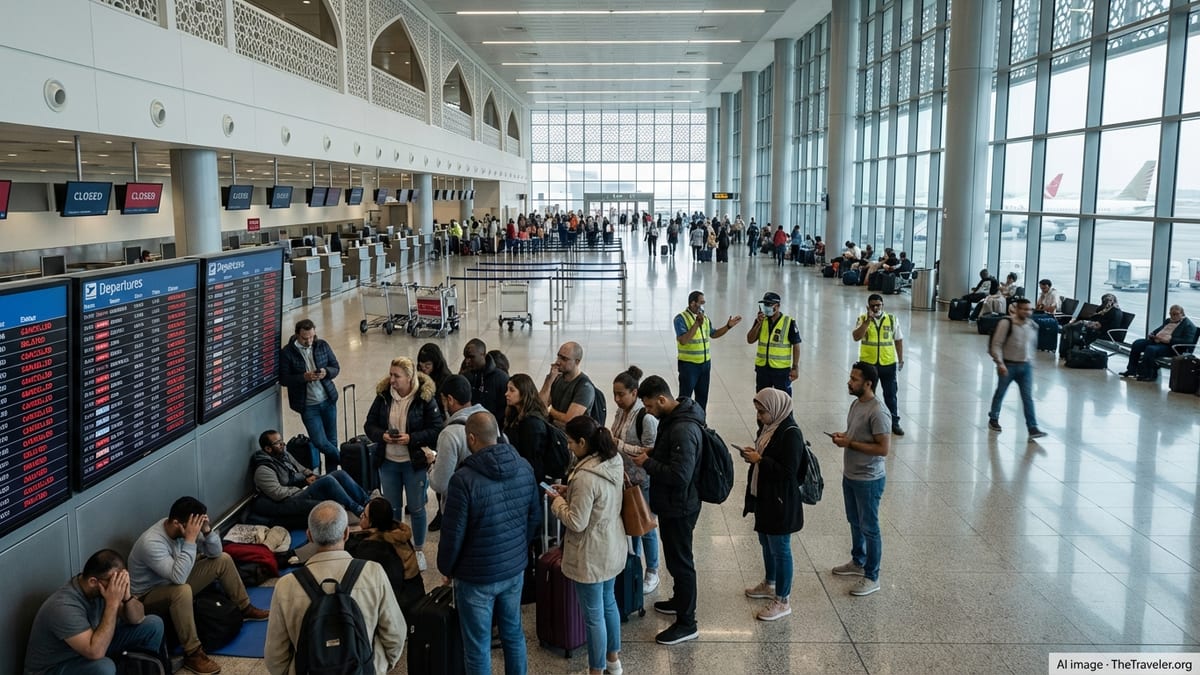
In terminals from Sharjah to Delhi, travellers have reported crowding around information screens, long queues at transfer desks and difficulty obtaining clear timelines for alternative options. Some have managed to switch to other carriers or nearby airports, while others have chosen to postpone trips altogether rather than travel amid uncertainty. For short visits or time-sensitive journeys, even a half-day delay can erase the value of the trip.
Travel industry commentary suggests that the disruptions are also affecting pricing. With aircraft and crew time tied up by irregular operations, available seats on remaining flights can command higher fares. Last-minute one-way tickets between the UAE and India have reportedly risen, particularly on days when cancellations compress demand into fewer departures.
At the same time, some passengers have found relative relief on less obvious routings, such as connecting via secondary Gulf or South Asian hubs that still have spare capacity. However, these workarounds often involve longer travel times and additional visa or transit considerations, complicating what are normally straightforward trips between Sharjah and major regional cities.
What Travellers Can Expect in the Coming Days
Published coverage of UAE aviation indicates that overall flight operations are gradually recovering from the most severe recent disruptions, but schedules remain vulnerable to further shocks. Airlines operating through Sharjah are attempting to rebuild network stability by adjusting timetables, consolidating underperforming flights and prioritizing key trunk routes such as those to Delhi, Kochi and Cairo.
Travel experts advising the public through news outlets and forums broadly recommend a cautious approach for anyone flying on Air Arabia, IndiGo or Air India Express from Sharjah in the near term. Suggested practices include building extra buffer time into itineraries, avoiding tight self-made connections, monitoring airline apps and airport boards frequently, and keeping flexible or refundable backup options in mind for critical trips.
Passengers already holding tickets on routes known to have seen delays and cancellations are encouraged by consumer advocacy groups and travel commentators to document any disruption, retain receipts for out-of-pocket expenses and review the specific conditions attached to their fare. Where applicable, certain jurisdictions may offer compensation or mandated assistance, although eligibility often depends on the exact route and airline involved.
For now, travellers moving between Sharjah and busy markets such as Delhi, Kochi and Cairo face a travel environment that is improving but not yet fully predictable. As regional airspace and capacity constraints evolve, the performance of carriers like Air Arabia, IndiGo and Air India Express through Sharjah will remain a key bellwether for the broader health of short-haul travel across the Gulf and its neighbouring regions.