


More news on this day
A freight train derailed near the east approach to Portland’s Steel Bridge on Friday, disrupting rail movements through one of the city’s key river crossings but, according to early reports, causing no injuries or hazardous material release.
Get the latest news straight to your inbox!
Derailment Near a Critical River Crossing
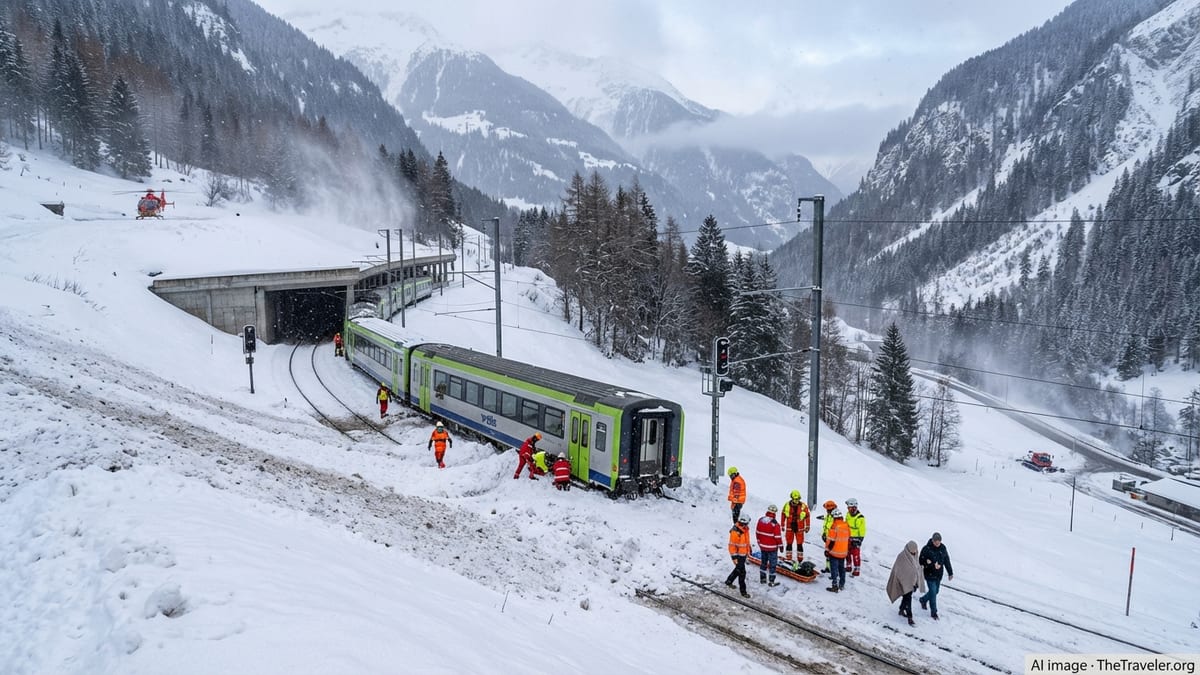
The incident unfolded near the northeast end of the Steel Bridge, where freight tracks curve toward the Willamette River and connect to rail corridors serving Portland’s central city and industrial districts. Images shared through public forums show several freight cars off the rails, tilted at sharp angles alongside the tracks but remaining largely upright.
Publicly available posts describing the scene indicate that the derailment occurred on a curved section of track that feeds trains toward the bridge structure. Early descriptions suggest multiple cars left the rails in what rail observers identify as a potential stringline derailment, a type of event that can occur when the forces on a long train pull lighter or empty cars inward on tight curves.
The Steel Bridge itself, a double-deck structure that carries both highway and rail traffic across the Willamette, has previously been affected by train incidents in the same general area. Background information on the crossing shows that the bridge is a vital link for regional passenger rail and Portland’s light rail system, as well as for freight movements into and out of the city center.
Initial imagery and accounts circulating locally do not indicate visible structural damage to the Steel Bridge, and the derailment appears to be confined to the approach tracks rather than the lift span over the river. Formal engineering assessments and rail inspections are expected to clarify whether any long-term repairs will be required.
Disruption to Rail Traffic and Commuter Patterns
The derailment has created a significant bottleneck for freight movements on the east side of the Willamette River. Observers report that at least part of the affected train remains stretched across the approach tracks, restricting other freight services that rely on the same corridor. The complex rail junctions around the bridge make it a critical pinch point for trains passing through the city.
Passenger impacts are still emerging, but the location near the Steel Bridge raises the likelihood of cascading delays. Portland’s light rail and intercity passenger services both utilize infrastructure connected to the crossing, and even incidents confined to freight trackage can require precautionary slow orders, alternate routing, or temporary holds while crews work in the area.
In past rail disruptions near the Steel Bridge, public transportation agencies have responded with service advisories, substitute routings, and alerts to riders about possible delays. A similar pattern is likely as rail operators assess the current blockage, determine safe access for work crews, and develop a removal plan for the derailed cars.
For local drivers, the main immediate effects appear to be indirect. At this stage, publicly available descriptions do not indicate that city streets adjacent to the bridge are completely closed, though intermittent traffic controls are possible as heavy equipment and personnel access the site from the riverfront and nearby rail yards.
Safety, Cargo and Environmental Concerns
Early information from the scene points to a relatively contained event with limited immediate public safety impacts. Available accounts do not reference fire, smoke, or visible chemical releases, and there are no early indications that the derailed cars were carrying hazardous materials. The cars seen in photos appear to be general freight equipment rather than tankers.
Even when hazardous cargo is not involved, derailments in dense urban areas raise understandable concerns about noise, debris, and the risk of damage to nearby infrastructure. Portland’s central eastside is a closely layered environment of rail lines, roadways, waterfront paths, and utility corridors, amplifying the potential consequences when a long train leaves the tracks.
Recent national events involving freight trains have heightened public awareness of derailment risks, particularly when trains operate near water or residential areas. In this case, the apparent absence of serious injuries and hazardous materials provides some reassurance, yet the incident underscores the importance of maintenance, slow-speed operations on tight curves, and ongoing investment in track and bridge monitoring technology.
Investigators examining the incident are expected to review train handling records, track conditions on the approach curve, and recent maintenance activity in the corridor. Outcomes from such reviews often inform future operating rules and infrastructure upgrades on similar urban freight routes.
Implications for Travelers and the Visitor Experience
For visitors in Portland, the derailment serves as a reminder that major rail corridors sit just steps from riverfront hotels, bike routes, and sightseeing paths. The Steel Bridge is a popular crossing for pedestrians and cyclists who use it to move between the Rose Quarter, the central city, and the Eastbank Esplanade, and any extended rail repair work in the area can alter the usual rhythm of travel along the waterfront.
Travelers arriving by intercity train may encounter service adjustments if passenger routes are temporarily slowed or rerouted while freight tracks are cleared and inspected. Past disruptions near the bridge have sometimes led to schedule changes and modified boarding procedures, and visitors are often advised to check for last-minute updates before heading to the station.
Within the city, light rail and bus networks typically absorb some of the pressure created by rail incidents, but knock-on effects can include crowded platforms, shifted transfer points, or minor detours near work zones. Travelers planning to walk or cycle across the Steel Bridge may also wish to allow additional time in case of short-term closures of ramps or paths linked to heavy equipment staging areas.
For many visitors, the close proximity of trains, bridges, and riverfront promenades is part of Portland’s appeal, offering dramatic views of the city’s industrial heritage. This derailment highlights how that same interconnected landscape requires careful coordination when unexpected events occur along the rails.
Ongoing Recovery and Focus on Resilience
Clearing derailed freight cars from a constrained riverfront approach is a complex operation, often requiring cranes, specialized rail equipment, and carefully sequenced movements so that work crews can restore track alignment without further damaging nearby structures. Recovery efforts in similar cases have sometimes stretched into multiple days, even when cars remain upright and the site is relatively contained.
Once the immediate cleanup is complete, attention typically shifts to reinforcing resilience at key junctions like the approaches to the Steel Bridge. Planners and engineers in the Portland region have previously highlighted the area around the bridge as a critical node for both freight and passenger systems, where relatively small disruptions can have outsized effects across the network.
As travel demand continues to grow across the Pacific Northwest, incidents such as this derailment are likely to feature in broader discussions about redundancy in rail routes, seismic readiness of bridges, and the balance between freight operations and urban waterfront development. For travelers, the event offers a window into the logistical complexity that underpins seemingly routine train movements in and out of the city’s core.
More detailed assessments of the derailment, including precise causes and timelines for full service restoration, are expected to emerge as rail operators and transportation agencies publish formal updates in the days ahead.