


More news on this day
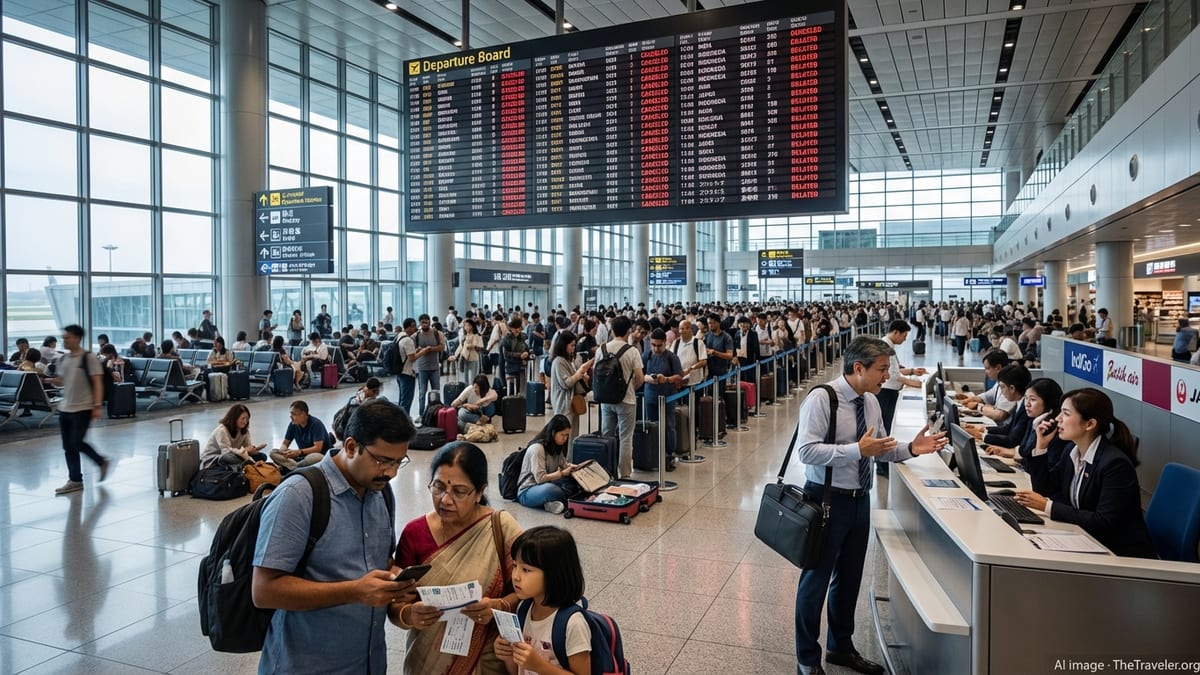
Air travel across Asia faced another day of heavy disruption as monitoring data showed 136 flight cancellations and 4,153 delays across major airports, underscoring the region’s continuing struggle to keep increasingly busy skies running on schedule.
Get the latest news straight to your inbox!
Single Day Surge Highlights Regional Vulnerabilities
The latest disruption spike, spanning dozens of large and mid sized airports, reflects how quickly operations can unravel when weather, air traffic constraints and technical problems converge. According to publicly available tracking dashboards that aggregate airport level performance, the tally of 136 cancelled flights and more than 4,100 delays was reached within a 24 hour period, placing the episode among the more severe disruption days logged in Asia this year.
While the figures remain below the most extreme disruption events reported in recent months, they add to a pattern of volatile operations across the region in 2026. Aviation analytics firms have noted several days where disruption totals crossed the 4,000 flight mark, affecting both domestic and international networks and forcing carriers to adjust schedules on short notice.
The latest wave appears to have been spread across multiple hubs rather than concentrated at a single airport. Large transfer gateways in Southeast and Northeast Asia experienced the heaviest congestion, but secondary airports also reported elevated delay levels as knock on effects rippled through route networks.
For passengers, the impact translated into long queues at check in and security, tight connection windows, and frequent last minute gate or timing changes. Many carriers urged travelers through their websites and mobile apps to arrive early and to monitor flight status throughout the day.
Weather, Airspace Limits and Technical Issues Combine
Recent disruption patterns in Asia point to a combination of structural and short term triggers. Seasonal storms and typhoons have repeatedly affected operations this year, with powerful systems forcing airline networks to ground or reroute flights across wide swaths of the region. Coverage from regional outlets has highlighted instances where more than 180 flights were cancelled or rescheduled around a single major weather system sweeping toward Taiwan and surrounding air corridors.
In parallel, intermittent airport closures linked to volcanic activity in Indonesia and parts of the Pacific have also forced reroutings and tactical cancellations. Public information from carriers serving Jakarta, for example, shows flights being cancelled or significantly delayed when ash clouds lead authorities to temporarily suspend operations at Soekarno Hatta International Airport, with knock on effects on connecting flights in the wider region.
Technological disruptions have added another layer of complexity. In 2024, a global IT outage tied to airline and airport systems caused widespread delays across multiple Asian hubs, and subsequent reports indicate that carriers and airports continue to harden their systems against similar shocks. Even smaller scale outages can rapidly cascade through dense schedules when aircraft and crew rotations are tightly planned.
Aviation observers note that constrained airspace over parts of the Middle East and ongoing rerouting of some Europe Asia corridors continue to add pressure, stretching block times and leaving less buffer to absorb unexpected weather or ground handling slowdowns at Asian gateways.
Major Hubs Bear the Brunt
Major Asian hubs, which function as transfer points for both regional and intercontinental traffic, remain the most exposed when disruption levels spike. Large airports in Hong Kong, Singapore, Seoul, Bangkok and Tokyo routinely handle waves of connecting passengers, meaning a disruption in one bank of arrivals can quickly ripple across departing flights.
Operational data reviewed by aviation analysts shows that when hubs experience temporary ground stops or runway closures, primary delays of 30 to 60 minutes on early morning or mid day banks can transform into multi hour disruptions for downline routes. Aircraft and crews arriving late into one hub frequently depart late to the next destination, compounding the problem across multiple time zones.
In recent months, regional media have reported episodes where dozens of outbound flights from single hubs were cancelled or delayed in response to strong typhoons, electrical storms or localized air traffic control restrictions. On those days, gate areas quickly fill up, immigration and customs processing slows, and airlines are forced to rebook large numbers of passengers across already crowded later departures.
The latest figures of 136 cancellations and over 4,100 delays appear to follow this pattern, with heavy strain concentrated at key connecting airports while secondary cities face follow on congestion as aircraft arrive out of position.
Passengers Face Longer Travel Days and Tighter Connections
For travelers, the practical effect of such disruption clusters is longer, less predictable travel days. Reports from recent events across Asia describe passengers facing multi hour waits during storm related ground stops, as well as missed connections that require overnight accommodation or complex re routing via alternative hubs.
Consumer advocacy groups in several markets have pointed out that compensation and care rules vary widely across Asia, leaving many passengers unsure of their entitlements when cancellations are caused by weather, airspace restrictions or third party IT failures. Airlines typically publish guidance on rebooking and hotel support during major disruption events, but the level of assistance can differ significantly from one jurisdiction to another.
Observers note that digital tools have mitigated some of the chaos. Airlines and airports increasingly use apps and push notifications to issue boarding time changes, gate moves and rebooking options, helping to reduce queues at service desks. At the same time, disruptions on the scale of thousands of delayed flights in a single day still strain call centers, chat systems and airport staffing.
Travel planners recommend that passengers crossing Asian hubs during periods of seasonal weather risk allow more generous minimum connection times, particularly when trips involve separate tickets or low cost carriers that may not automatically protect onward segments during irregular operations.
Airlines and Airports Reassess Operational Resilience
The continuing pattern of large scale disruption days is prompting airlines and airport operators across Asia to reassess their resilience strategies. Industry commentary points to growing use of scenario modeling, with carriers testing how schedules would respond to simultaneous shocks such as typhoons, temporary airspace closures and local IT issues at key hubs.
Some airlines have publicly signaled a willingness to trim peak schedules or add more turnaround time at vulnerable airports during high risk months, accepting slightly lower aircraft utilization in exchange for greater on time reliability. Others are investing in additional spare aircraft and crew capacity that can be deployed rapidly when operations begin to fray.
Airport operators, meanwhile, are focusing on expanding de icing capacity in northern climates, upgrading storm water management and lightning protection systems in tropical regions, and enhancing coordination between air traffic control, ground handling companies and airline operations centers. The goal is to reduce the time required to restart normal flows after a storm cell, ash cloud or technical fault clears.
Analysts suggest that with Asia’s passenger numbers projected to keep rising over the next decade, disruption metrics like the 136 cancellations and 4,153 delays recorded in a single day are likely to remain a recurring feature of the travel landscape. The challenge for the region’s aviation sector will be to ensure that such spikes become less disruptive to travelers, even as overall traffic continues to grow.