


More news on this day
Flight disruption data for early September 2026 shows hundreds of cancellations and thousands of delays rippling across Asia’s biggest air hubs, as weather, congestion and wider airspace rerouting combine to snarl schedules for tens of thousands of travelers.
Get the latest news straight to your inbox!
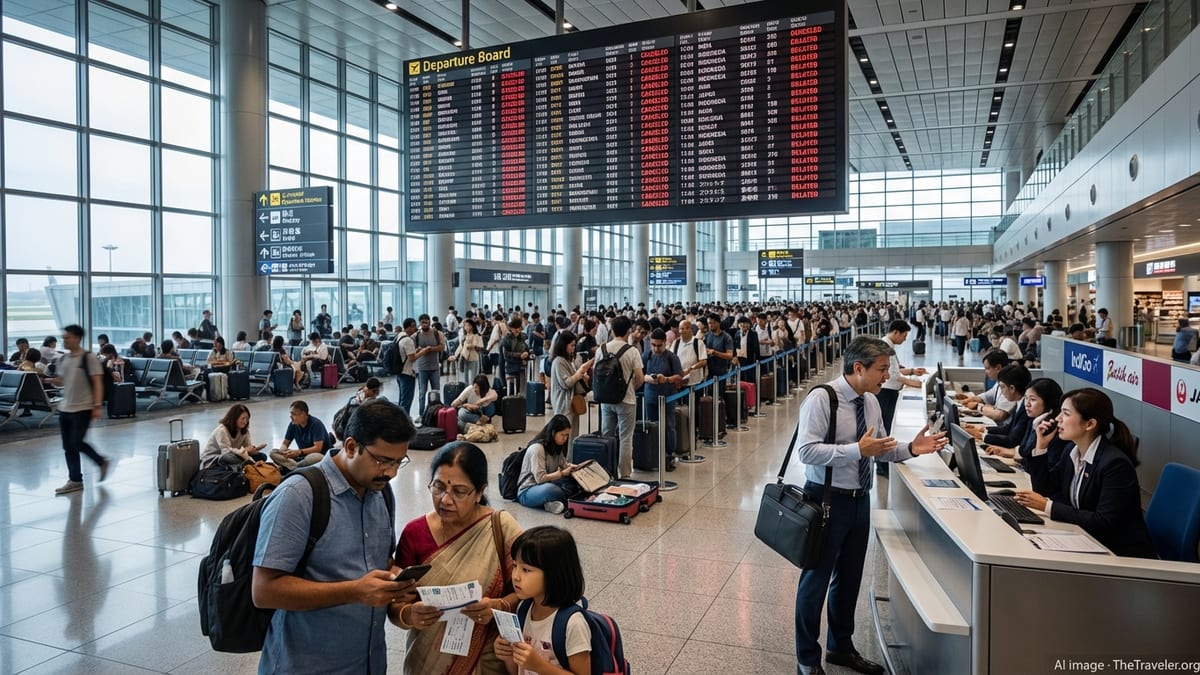
Hundreds of Flights Scrubbed as Disruption Spreads
Real time aviation dashboards tracking Asia’s airports point to a concentrated wave of disruption, with publicly available snapshots for September 1 and 2 indicating more than 3,600 delayed departures and just under 500 cancellations across 39 major airports in a single 24 hour window. These figures highlight how quickly routine operational pressures can escalate into regionwide schedule instability when several large hubs are under strain at the same time.
Data compiled from live disruption indices shows Beijing, Shanghai, Guangzhou, Jakarta and other primary gateways recording elevated delay ratios and clusters of scrubbed flights. Industry reporting notes that on some recent days Jakarta’s Soekarno Hatta International Airport alone has logged more than 200 delayed services and just over 50 cancellations, the highest cancellation count attributed to any single Asia Pacific airport in the current data set.
While overall operations continue, the pattern emerging in early September is one of persistent, high volume delays across a broad set of hubs, punctuated by pockets of heavier cancellation activity. For travelers connecting between Asia, Europe and North America, this combination increases the risk of missed onward flights and unplanned overnight stays, especially where transfer windows are tight.
Weather, Congestion and Airspace Changes Converge
Publicly available coverage of the disruptions draws a picture of multiple stress factors converging on Asia’s air network. Weather remains a direct trigger, with earlier snapshots of mainland China in July 2026 showing more than 6,700 delays and over 200 cancellations in a single day as storms slowed arrivals and departures at Guangzhou, Shanghai Pudong and Beijing Capital. Those same airports now appear again among the most congested, suggesting that seasonal patterns are amplifying underlying capacity strains.
Capacity constraints are another recurring theme. Analyses of on time performance trends for the region describe what some commentators refer to as “delay days,” where traffic has been added faster than runways, taxiways and air traffic control resources can be expanded. When already busy hubs such as Jakarta, Manila or Bangkok experience even modest weather or staffing challenges, delay ratios can climb quickly, turning minor schedule adjustments into rolling knock on effects across airline networks.
At the same time, broader geopolitical developments continue to reshape long haul routings between Asia and Europe. Reports on the economic impact of this year’s Iran conflict and subsequent regional tensions describe sustained disruptions to key flight corridors over West Asia, prompting airlines to adopt longer, more northerly or southerly routings. While many Gulf airports have resumed operations following earlier closures, current travel advisories still point to episodic delays and selective cancellations at hubs linking South and Southeast Asia with Europe and the Middle East.
Gulf and Levant Gateways Face Renewed Strain
Recent travel advisories from the Gulf highlight ongoing schedule volatility at Dubai International Airport and Abu Dhabi’s Zayed International, both of which function as critical connectors between Asia, Europe and Africa. Publicly available airport information lists multiple delayed and cancelled flights across European, Asian and regional Middle Eastern routes, with some airlines warning that departure and arrival times may change at short notice as conditions evolve.
Similar patterns are visible in the Levant, where airports such as Amman’s Queen Alia International have reported cancelled services on select regional routes. While the absolute number of affected flights is smaller than at the major Gulf hubs, the impact on passengers can be magnified because many of these services feed into long haul departures operated by partner carriers. Missed short haul links can therefore cascade into lost transcontinental connections for travelers originating in secondary cities.
These developments follow an already turbulent year for aviation in the broader Middle East, where earlier closures and restrictions at several major airports forced carriers to reconfigure schedules, reallocate aircraft and reroute traffic flows. Even as many facilities have reopened, the continued need to monitor airspace restrictions and security advisories has left little margin for error in complex hub and spoke networks.
Mainland China and Southeast Asia Under Pressure
In East and Southeast Asia, mainland Chinese and Indonesian airports stand out in recent disruption tables. Live airport disruption indices for Asia show several Chinese gateways recording disruption scores consistent with minor to moderate operational problems, reflecting a mix of elevated delay shares, increased average waiting times and clusters of cancellations during peak periods. Guangzhou, Shanghai Pudong and Beijing Capital together handle a significant share of the region’s traffic, so any sustained operational friction at these hubs quickly reverberates through domestic and international networks.
In Southeast Asia, Jakarta’s Soekarno Hatta International has emerged as a particular hotspot in the latest data snapshot. Published summaries indicate that Jakarta alone has recently accounted for more than 200 delayed flights and just over 50 cancellations in a 24 hour period, placing additional strain on airlines that rely on the Indonesian capital as both a domestic and regional connector. Downline airports in Bali, Surabaya and Makassar, along with international destinations in Singapore and Kuala Lumpur, can all be affected when banks of Jakarta departures are significantly delayed.
Elsewhere in the region, smaller but still important hubs such as Manila, Hanoi and Ho Chi Minh City periodically move into higher disruption bands on real time dashboards, especially during bursts of convective weather. While the absolute number of cancellations at these airports tends to be lower than at the largest Chinese or Indonesian gateways, a high proportion of delayed departures still poses challenges for passenger itineraries that involve tight domestic to international connections.
What Travelers Can Expect in the Coming Days
With disruption indices across multiple Asian hubs elevated at the same time, publicly available guidance consistently urges travelers to anticipate longer journeys and greater schedule uncertainty in the near term. Past on time performance statistics underscore the structural nature of the issue, with Asia Pacific having accounted for more than half of global cancellations in several historical months even before this year’s geopolitical and weather related complications.
For passengers already booked to travel through the affected airports, real time flight tracking tools and airline apps remain the primary means of staying ahead of last minute schedule changes. Travel advisories emphasize the importance of checking flight status repeatedly in the 24 hours before departure, leaving additional time for connections where possible, and being prepared for rebookings or reroutes, particularly on journeys that involve tight transfers through Gulf or Northeast Asian hubs.
Looking ahead into the rest of September, the combination of seasonal storms, ongoing airspace adjustments and sustained demand on key Asia Europe and intra Asian routes suggests that elevated disruption levels may persist, even if day to day figures fluctuate. While airports and airlines across the region continue working to absorb the shocks and restore more predictable operations, current data indicates that Asia’s flight networks remain in a fragile, high utilization state where relatively small disturbances can still trigger outsized impacts for travelers.
https://www.flightradar24.com/data/airport-disruption?continent=asia
https://www.thetraveler.org/asia-flight-disruptions-hit-39-airports-4-000-flights-affected/