


More news on this day
Air travel across Asia experienced significant disruption today as 584 flight cancellations and 2,927 delays were recorded at major airports, according to live operational data from aviation tracking platforms.
Get the latest news straight to your inbox!
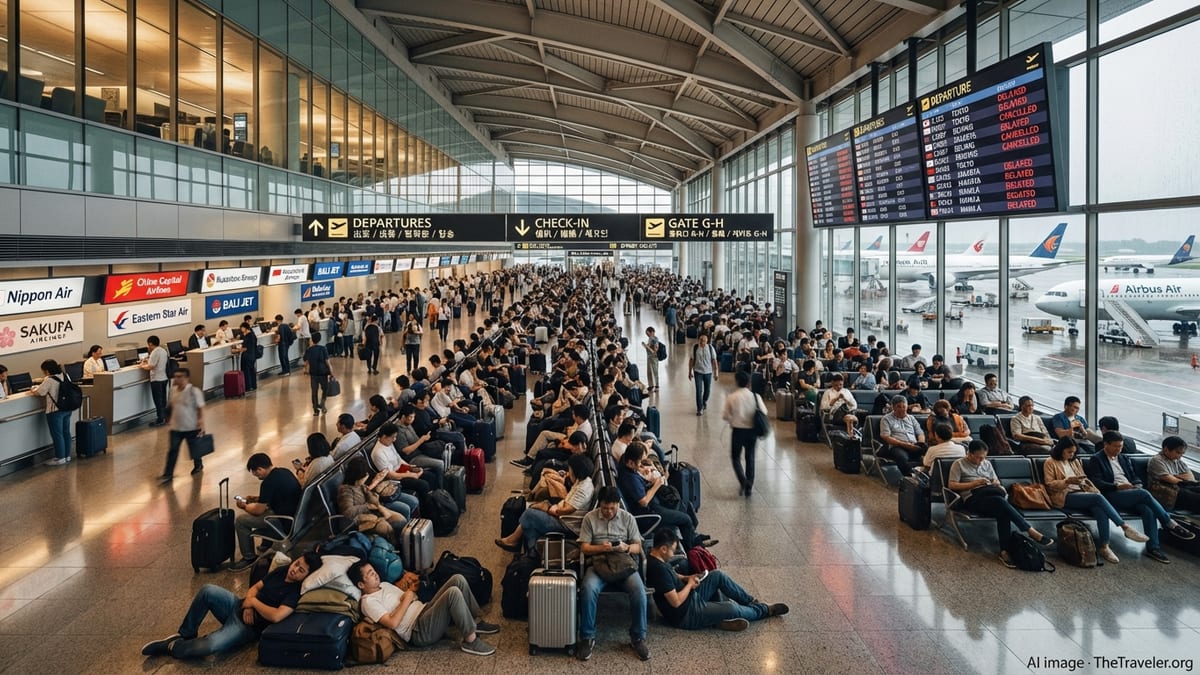
Major Asian Hubs See Elevated Disruption Levels
Tracking platforms that aggregate airline and airport performance show an unusually high volume of irregular operations across Asia today, with nearly 3,500 flights either canceled or delayed. Publicly available disruption maps for the region highlight clusters of operational strain at large international hubs that handle substantial domestic and long haul traffic.
Data from live airport disruption indices indicates that airports such as Jakarta Soekarno Hatta, Tokyo Haneda, Delhi Indira Gandhi, Istanbul, and several major Southeast Asian gateways are reporting above average levels of delays and cancellations compared with a typical day. These airports act as critical transfer points for both regional and intercontinental networks, amplifying the impact of local issues on wider schedules.
The elevated disruption figures place Asia among the most affected global regions today, based on comparison with aggregate statistics from flight status services that track cancellations and delays worldwide. While operations remain far from a full shutdown, the scale of irregularities is large enough to create missed connections, extended ground times, and rolling knock on effects into the late evening.
Operational dashboards used by travelers and industry observers show that the cancellation tally alone represents hundreds of aircraft rotations removed from schedules, while the delay count reflects thousands of departures and arrivals running behind planned times. Together, the numbers signal a challenging operating day for airlines, airports, and passengers across the region.
Weather, Congestion and Staffing Combine to Slow Operations
Publicly available disruption maps and regional weather charts suggest that a combination of seasonal weather, airspace congestion, and operational constraints is contributing to today’s irregular operations. Several major Asian hubs are currently managing periods of heavy rainfall, thunderstorms, or low visibility, conditions that routinely prompt spacing restrictions and slower arrival and departure rates.
In large metropolitan areas, peak traffic volumes around morning and evening banks of flights appear to be intensifying congestion. When arrival and departure demand exceeds what air traffic control and airport infrastructure can process, aircraft may be held on the ground or in holding patterns, leading to cascading delays that accumulate over the day.
Industry performance data published in recent years has also highlighted the role of staffing and ground handling capacity in amplifying disruption once it begins. If crews, maintenance teams, or ramp staff are stretched, recovering from weather or airspace constraints can take longer, increasing the likelihood that an initial delay turns into a cancellation or into a wider schedule re timing across multiple routes.
Today’s pattern in Asia reflects these known dynamics, with flight status boards at several airports showing clusters of delayed departures around the same time windows, followed by pockets of cancellations where schedules could not be recovered. Disruption indices that synthesize cancellations, delay percentages, and average delay lengths show some airports moving into higher risk categories for parts of the day.
Impact on Passengers Across Domestic and International Routes
The disruptions are affecting both domestic and international travelers. At large Asian hubs, domestic services feed long haul flights to Europe, the Middle East, North America, and Oceania, creating a tight dependency between local punctuality and global connectivity. When a domestic leg is canceled or heavily delayed, passengers may miss onward connections, even if the long haul flight departs close to schedule.
Live statistics on delays by origin and destination suggest that some of today’s longest waits are tied to connecting itineraries, where travelers are rebooked onto later flights or rerouted through alternate hubs. For those with non changeable or tightly scheduled plans, such as business trips, events, or tours, even moderate delays can require last minute adjustments.
Passengers already in transit face crowded customer service desks, limited rebooking options on popular trunk routes, and pressure on hotel availability near airports when long delays extend into overnight stays. Online tracking tools show an increase in searches for alternative flights and airports in the region as travelers attempt to bypass the most congested hubs.
For airlines, the operational impact includes repositioning crews, reallocating aircraft, and managing duty time limits when flights run hours behind schedule. Carriers also contend with higher fuel consumption from extended taxi times and rerouted flights, as well as increased costs linked to care and assistance obligations in some jurisdictions when delays become severe.
Operational Metrics Highlight Scale of Today’s Strain
Aggregated cancellation and delay statistics compiled by global tracking services provide context on the scope of today’s disruption in Asia. Platforms that monitor flight status in real time show that the region’s 584 cancellations and 2,927 delays represent a substantial portion of worldwide irregular operations for the day, even though Asia accounts for only a share of global scheduled departures.
Airport level disruption indices offer additional detail, combining the number of delayed and canceled flights with average delay durations into a single metric. On these scales, some Asian hubs today are posting values that indicate a sustained period of elevated operational stress, rather than a brief, isolated spike around a single storm or airspace closure.
Comparisons with historical performance metrics released by aviation regulators and statistical agencies suggest that the current figures sit above long term averages for on time performance, at least for some of the hardest hit airports. While individual days with high disruption are not unusual, the clustering of cancellations and delays across multiple large hubs on the same day magnifies the operational challenge.
These metrics are watched closely by airlines, airports, and travel planners because they can influence scheduling strategies, buffer times, and contingency planning. Persistent periods of elevated disruption can prompt adjustments in block times, crew rostering, and slot usage to create more resilience for future peak travel days.
Travelers Urged to Monitor Flights and Build in Flexibility
With disruptions spread widely across the region today, travel experts and publicly available advisories emphasize the importance of active monitoring and flexibility for anyone flying to, from, or within Asia. Flight tracking services and airline apps provide near real time updates on departure and arrival times, gate changes, and equipment swaps, which can be critical when schedules are shifting throughout the day.
For travelers yet to depart, reviewing itineraries that rely on tight connections through heavily affected hubs can help identify potential weak points. Building in longer connection windows, considering alternative routings, or choosing flights outside known peak congestion periods may reduce exposure to cascading delays when disruption levels are high.
Those already at the airport may benefit from checking both airline channels and airport information displays regularly, as estimated departure times can change rapidly once weather conditions improve or airspace restrictions ease. Where possible, travelers are often advised to remain within easy reach of their departure gates, since boarding can begin quickly when an operational window opens.
Given today’s scale of irregular operations in Asia, passengers with non essential trips may also consider whether rebooking to a different day with lower disruption indicators is feasible. As live data tools have become more widely available, monitoring regional cancellation and delay statistics is increasingly part of advance trip planning for both leisure and business travelers.
Sources: FlightAware global cancellation and delay statistics, Flightradar24 Asia airport disruption map, Flightradar24 global airport disruption overview, FlightAware regional cancellation statistics