


More news on this day
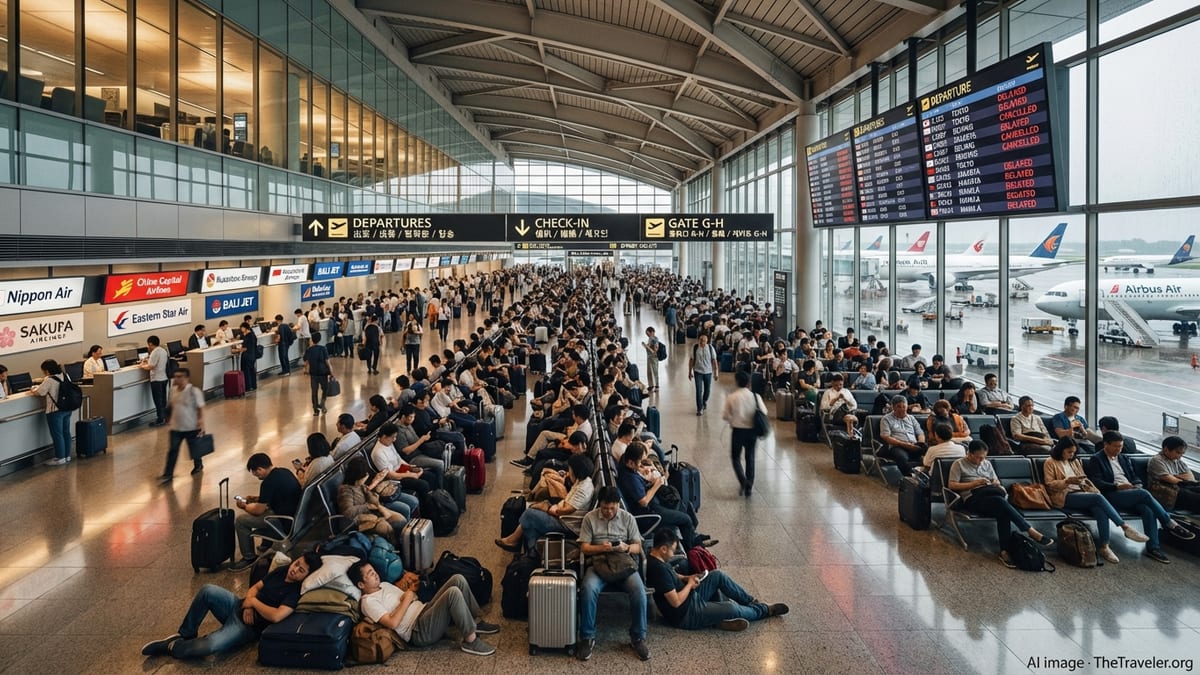
Asia’s aviation sector is grappling with a new wave of disruption in 2026, with 6,951 flight delays and 472 cancellations reported across major markets as carriers struggle to match intense seasonal demand with constrained capacity and volatile weather.
Get the latest news straight to your inbox!
Regional Disruptions Converge Into a Single Bad Week
The latest disruption figures, compiled from real time flight tracking data and regional aviation authority updates, point to a particularly difficult spell for air travel across Asia’s busiest corridors. The tally of 6,951 delays and 472 cancellations reflects knock on effects across multiple countries rather than a single isolated incident, underscoring how tightly interconnected the region’s air networks have become.
Operational data for June and early July 2026 shows that hubs in East and Southeast Asia have been especially exposed. Weather related bottlenecks, reduced airspace flexibility on some long haul routes and late arriving aircraft have combined to push delay rates well above seasonal averages in several markets. Passengers on regional routes linking secondary cities have often been hit hardest, with fewer alternative connections available when schedules unravel.
Industry observers note that the disruption spike comes at a time when many Asian carriers are still fine tuning post pandemic capacity plans. While overall demand growth has moderated compared with the sharp rebound of 2023 and 2024, the pattern of travel has shifted toward concentrated holiday peaks, placing additional pressure on airlines and airports during specific weeks of the year.
Vietnam’s Summer Peak Shows Strain on Short Haul Networks
Vietnam has emerged as one of the clearest examples of how seasonal demand is stretching operations. According to data from the Civil Aviation Authority of Vietnam, local airlines operated 25,613 flights in June 2026, of which 19,382 departed on time. That equates to an on time performance rate of 75.7 percent, meaning almost one in four departures left late during the height of the country’s summer travel season.
Regulatory statistics indicate that late arriving aircraft were the single largest driver of Vietnam’s delays, followed by air traffic management constraints and airline specific operational issues. These patterns mirror trends seen elsewhere in Asia, where dense schedules and tight aircraft utilization leave carriers with limited margin to recover from early morning disruptions.
Although some Vietnamese airlines managed strong performance with limited or no cancellations, the broader network effect has been visible to travelers transiting through Ho Chi Minh City, Hanoi and Da Nang. Even modest hold ups at one end of a route can cascade through later rotations, contributing to the wider regional total of 6,951 delays.
China and Northeast Asia Balance Demand and Capacity
Across Northeast Asia, the picture is more nuanced. International Air Transport Association data for May 2026 indicates that Asia Pacific airlines recorded year on year passenger growth but also faced pockets of weakening domestic demand in China. Analysts suggest that softer internal traffic, driven in part by fare sensitivity and shifting holiday calendars, has not translated into a proportionate reduction in operational strain.
Carriers in China, South Korea and Japan are operating complex networks that blend dense short haul shuttles with long haul services into Europe and North America. Any disruption on intercontinental sectors, including rerouting around constrained airspace, can ripple back into regional timetables and contribute to higher delay counts within Asia.
Publicly available flight performance data from several Northeast Asian hubs in recent weeks shows elevated rates of minor delays rather than widespread cancellations. This pattern indicates that airlines are generally prioritizing keeping flights operating, even if they depart late, to avoid stranding passengers and to protect market share on key routes.
Weather, Airspace Constraints and Operational Fragility
Weather volatility has been another significant factor in the 2026 disruption picture. The onset of the rainy season in parts of Southeast Asia, combined with thunderstorms around major hubs, has triggered frequent flow control measures by air navigation service providers, leading to holding patterns, ground delays and missed connection windows.
In parallel, aviation industry publications have documented how airspace closures and conflict related advisories on certain long haul corridors between Europe and Asia have forced airlines to adjust routings and schedules. These reroutes can lengthen block times and tighten turnaround windows at Asian gateways, leaving less slack in the system to absorb routine disruptions.
Operational fragility is further exposed when staffing schedules, maintenance slots and gate availability are planned around optimistic assumptions of on time performance. Once the first wave of flights is pushed behind schedule, delays can accumulate through the day, eventually contributing to cancellation decisions when crews time out or aircraft cannot be positioned where they are needed.
Passengers Face Longer Journeys and Tighter Connections
For travelers, the 6,951 delays and 472 cancellations recorded across Asia this year translate into longer journeys, missed connections and additional nights in transit hotels. Consumer forums and travel advisories have highlighted difficulties for passengers trying to rebook multi leg itineraries during peak weeks when spare seats are limited.
Publicly available information from airline and airport channels suggests that carriers are increasingly encouraging passengers to allow more generous connection times on regional itineraries and to monitor flight status closely in the 24 hours before departure. Some frequent travelers are adjusting by choosing earlier departures in the day, when knock on disruption is often less pronounced.
Despite the challenges, industry data does not point to a fundamental collapse in reliability, but rather to a network under stress at specific times and locations. As the busy summer season continues, the scale of the recent disruption episode across Asia is likely to sharpen focus on schedule realism, weather resilience and airspace planning, with travelers watching closely to see whether the numbers of delays and cancellations fall back toward historical norms.