


More news on this day
Air travelers across East Asia are facing mounting disruption as Typhoon Dolphin nears the coast of eastern China, colliding with already congested regional airspace and prompting airlines to adjust summer schedules at some of the region’s busiest hubs.
Get the latest news straight to your inbox!
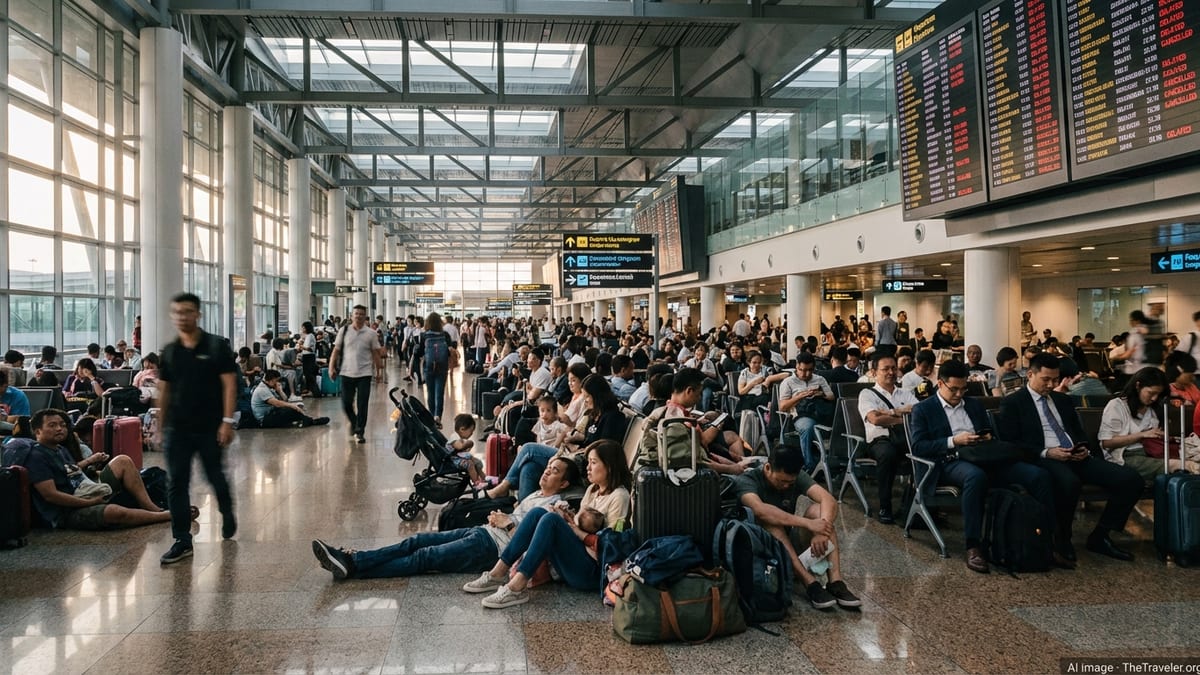
Typhoon Dolphin Grounds Flights and Closes Airports
Typhoon Dolphin has swept across Japan’s southern islands and is tracking toward landfall near China’s eastern seaboard, producing strong winds and heavy rain across key aviation corridors. Published coverage indicates that operations at Okinawa’s main airport were halted as the storm passed over the Ryukyu island chain, with all flights in and out suspended while local authorities curtailed transport and other services.
Forecasts show Dolphin moving west-northwest through the East China Sea and into coastal provinces of eastern China, including areas served by major airports such as Wenzhou and Shanghai. Travel forums and airline advisories describe rolling waves of cancellations and diversions as carriers reroute aircraft around the core of the storm and extend minimum connection times for affected itineraries.
Several international airlines have issued temporary change-fee waivers for flights touching airports in the typhoon’s projected path, allowing passengers to move their travel dates by several days without additional charges. Publicly available advisories highlight departure windows from early to mid-August for routes linking North America, Japan, Taiwan, and coastal China, signaling that knock-on disruption is likely to persist after the center of the storm comes ashore.
Travelers departing from or transiting through the region this weekend are being advised, through airline and airport statements, to monitor flight status closely and allow extra time at the airport. Social media posts from passengers in Shanghai, Taipei, and Okinawa describe long lines at check-in and security as carriers work through backlogs created by the temporary shutdowns.
Congested East Asian Airspace Amplifies Weather Impacts
The storm is hitting a regional aviation network that was already operating close to capacity. Recent updates from global industry bodies show that Asia-Pacific traffic in mid-2026 has recovered to, and in some markets surpassed, pre-pandemic levels, with summer peaks around school holidays and major festivals driving additional pressure on seat availability and airport infrastructure.
Technical documents from regional and international aviation organizations highlight long-standing congestion in Northeast Asian airspace, particularly over parts of China, Japan, and the Korean Peninsula. These reports describe dense flows of traffic between East Asia and Europe, as well as heavy use of key oceanic and overland routes that leave little room to absorb sudden weather diversions without creating wider delays.
Restrictions and re-routings linked to geopolitical tensions and earlier airspace closures in other parts of the world have funneled more long-haul flights into a limited number of corridors over East Asia. Analysts note that this has increased average flight times on some intercontinental routes and reduced flexibility for controllers to tactically separate aircraft during storm events such as Dolphin.
Research on network-wide delay patterns in China and neighboring states indicates that bottlenecks in en-route sectors can quickly ripple into airport operations, extending turnaround times and leading to missed slots even at airports unaffected by the direct impacts of a storm. This backdrop helps explain why passengers in cities far from Dolphin’s immediate path are reporting delays and equipment changes as airlines reshuffle their fleets.
Schedule Adjustments at Major Hubs Across the Region
In parallel with short-term cancellations, airlines across Asia have been reshaping their published schedules for the late summer period. Route and timetable updates tracked by industry databases show capacity tweaks by carriers based in Japan, Korea, and Southeast Asia, including changes to frequencies on China and Japan routes and retimed overnight services designed to align with revised slot allocations and crew duty limits.
Some full-service airlines have trimmed off-peak flights on secondary city pairs to free aircraft and crews for more resilient operations on core trunk routes, particularly those linking Tokyo, Seoul, Hong Kong, Taipei, and major mainland Chinese hubs. Low-cost carriers serving leisure destinations in Thailand, the Philippines, and Indonesia appear to be maintaining high-frequency schedules, but observers note that these point-to-point networks can be vulnerable when typhoons force multiple turnbacks in a single day.
Airport operators in Hong Kong, Singapore, and other key hubs have recently highlighted strong passenger volumes and high aircraft movements in their midyear traffic bulletins. While these hubs have not faced direct closures from Typhoon Dolphin, flows to and from impacted airports in Japan, Taiwan, and eastern China are creating localized surges at transfer banks, with longer queues reported at immigration and security screening during peak hours.
Public timetables for August show that some carriers are extending block times on routes skirting the East China Sea, reflecting the expectation of slower routings and occasional holding patterns as controllers sequence traffic around storm cells. Aviation analysts suggest that these schedule adjustments are intended to reduce the number of missed connections and last-minute cancellations that would otherwise occur when flights consistently arrive late.
Peak Summer Demand Leaves Little Slack for Recovery
The timing of Typhoon Dolphin coincides with one of the busiest travel windows of the year for East Asia. Recent updates from major Japanese carriers on bookings for the Obon holiday period in August point to high load factors on both domestic and international routes, particularly those linking Tokyo and Osaka with resort destinations in Okinawa, Hokkaido, and Southeast Asia.
Industry data for June and July show that Asia-Pacific airlines have experienced modest year-on-year growth in passenger demand, even as some other regions see flat or declining domestic traffic. This growth, layered on top of already strong rebound-driven demand, has pushed some airports close to their declared capacity at peak times, making recovery from weather disruptions more complex.
At the same time, climate and meteorological agencies in China, Japan, and Korea have issued seasonal outlooks calling for a hot, active summer with elevated risks of extreme weather in parts of East Asia. For aviation, this translates into a higher probability of convective storms, typhoons, and associated low-visibility conditions across multiple hubs during a period when airlines traditionally bank on high utilization of aircraft and crews.
Passengers traveling during this peak season are encountering a tight system that leaves limited slack for reaccommodation when flights are canceled. Commenters on regional travel forums describe situations where alternative same-day options are scarce, particularly on routes served by only one or two daily flights, reinforcing the importance of proactive planning in storm-affected weeks.
What Travelers Can Expect in the Coming Days
With Typhoon Dolphin expected to complete landfall along China’s eastern coast within the next 24 to 36 hours, forecasters anticipate continued heavy rainfall and gusty winds in coastal provinces, followed by lingering showers further inland. As the system weakens over land, the direct safety-related constraints on flying are likely to ease, but aircraft and crew displacements will continue to affect timetables well into the week.
Publicly available flight-tracking data and traveler reports suggest that short-haul services within Japan, Taiwan, and coastal China are among the first to restart as conditions permit, often with substituted aircraft types and revised departure times. Long-haul flights to Europe and North America tend to recover more slowly, as airlines must reestablish regular rotations and ensure that crews are back in position after unplanned layovers.
Aviation experts point out that storms of Dolphin’s intensity can expose structural vulnerabilities in a region’s air traffic system, particularly where airspace is already crowded and ground infrastructure is aging or under expansion. Discussions in professional and policy forums indicate growing interest in measures such as dynamic airspace management, enhanced weather prediction tools, and additional runway capacity at key hubs to make the network more resilient.
In the short term, travelers heading to or through East Asia are likely to face continued schedule changes, longer journey times, and sporadic cancellations, especially on routes crossing the East China Sea and connecting to airports in eastern China and southern Japan. While airlines are working to restore normal operations, the combination of typhoon season, airspace congestion, and peak summer demand suggests that Asia’s skies will remain challenging for passengers over the days ahead.