


More news on this day
XiamenAir, China Eastern and ten other Asian carriers have suspended a combined 155 flights across China, Indonesia, Thailand, India and Taiwan in 2026, reflecting a broader bout of capacity trimming and route consolidation as the region’s aviation sector adjusts to higher fuel prices, shifting demand patterns and a more volatile geopolitical backdrop.
Get the latest news straight to your inbox!
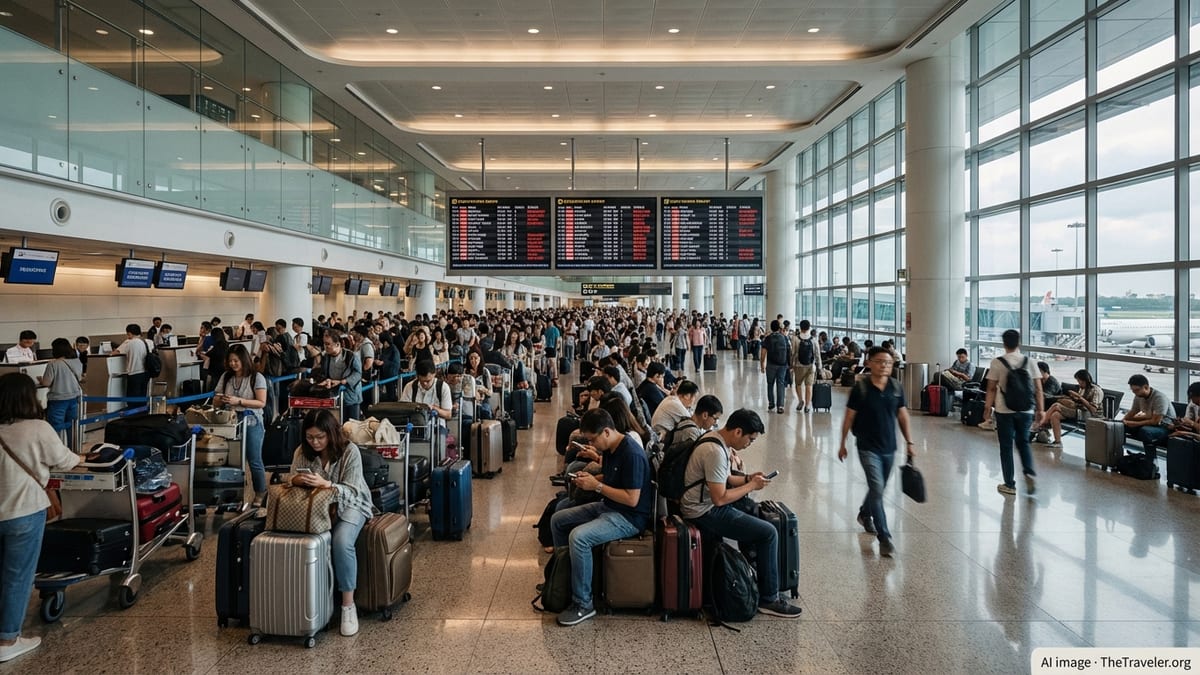
Targeted Suspensions Across Key Asian Markets
Publicly available schedule data and industry analyses for the 2026 summer and winter seasons indicate that the suspensions are concentrated on short and medium haul routes linking mainland China with Southeast and South Asia. The affected 155 flights include both outright cancellations and frequency cuts, typically on secondary city pairs where demand has cooled or where airlines are redeploying aircraft to more profitable corridors.
XiamenAir is identified in schedules as one of the carriers trimming services between Chinese coastal hubs and leisure destinations in Indonesia and Thailand, including reductions on routes from Xiamen and Fuzhou to Bali and Phuket. In several cases, daily flights have been reduced to a few weekly services, or consolidated into single-stop itineraries via larger hubs, leaving fewer nonstop options for holidaymakers.
China Eastern’s network adjustments in 2026, highlighted in timetable filings and aviation market reports, show a similar pattern. While the airline is boosting overall capacity for the 2026 summer and autumn season, it has simultaneously pared back select regional links, particularly lower yielding services to Southeast Asia and India, as it channels more aircraft into trunk routes with stronger demand.
The remaining suspended flights are spread across ten other carriers in China and the wider region, including smaller Chinese airlines and low cost operators in Southeast Asia that have been recalibrating their networks throughout 2026. These cuts are most visible on routes that had seen rapid post pandemic expansion and where competition has intensified, eroding yields and prompting airlines to pull back.
Fuel Prices, Geopolitics and Demand Shifts Drive Cuts
Aviation analysts note that the 2026 suspensions come against a backdrop of higher jet fuel costs and lingering geopolitical uncertainty, both of which are squeezing margins on marginal routes. Industry coverage of the Asia Pacific market points to rising operating costs since late 2025, with airlines that lack extensive fuel hedging strategies especially exposed to price spikes and forced to trim less profitable flying.
Regional assessments of airline schedules for May through October 2026 show that Chinese carriers as a group have already reduced capacity to Southeast Asia by more than 10 percent compared with initial plans, with one widely cited analysis putting the cut at roughly 14 percent for flights from China to neighboring markets. These reductions include the 155 flights suspended by XiamenAir, China Eastern and their peers, as operators seek to match supply more closely with ticket sales.
At the same time, shifting travel flows within Asia are reshaping which routes make commercial sense. Ongoing diplomatic tensions and travel advisories affecting certain North Asian markets have redirected some Chinese outbound demand toward Southeast Asia and domestic tourism, while political instability and airspace concerns in parts of the Middle East have complicated long haul routing for Asian carriers. Airlines are responding by consolidating frequencies, prioritizing routes with resilient corporate or visiting friends and relatives traffic, and shelving more discretionary leisure services.
Industry briefings from global airline groups in 2026 also highlight infrastructure and airspace constraints that limit how flexibly airlines can reassign aircraft. In some cases, carriers are using suspensions to create buffers in their schedules, improving on time performance and resilience to disruption even as total flight numbers fall.
Country by Country Impact for Travelers
Within mainland China, the bulk of the 155 suspended flights involve departures from coastal and central hubs toward Southeast and South Asia. Domestic networks are generally expanding under the 2026 summer schedule, according to data from China’s civil aviation regulator, but international links that had been restored aggressively after border reopenings are now being fine tuned. Travelers booking from second tier Chinese cities to Indonesia, Thailand and India are more likely to find one stop options via Shanghai, Guangzhou or Kunming replacing previous nonstops.
In Indonesia and Thailand, schedule summaries show noticeable adjustments on routes catering to Chinese group tours and budget conscious leisure travelers. Certain Chinese carriers and regional low cost airlines have pulled back from smaller Thai and Indonesian airports, concentrating instead on major gateways such as Bangkok, Phuket, Jakarta and Bali where demand remains steadier and connectivity is stronger.
India is seeing a subtler impact, with a handful of flights cut on services linking its major metros to secondary Chinese cities. Reports on the South Asia market suggest that Indian carriers are in some cases backfilling reduced Chinese capacity with their own additions, particularly on Mumbai and Delhi routes, softening the impact for passengers while still reflecting an overall rebalancing of cross border capacity.
Taiwan’s role in these changes is mostly visible through adjustments to cross strait and onward regional flights, where both Taiwanese and mainland carriers are trimming or re timing select services. Publicly available information points to a focus on maintaining core business routes while scaling back flights with weaker load factors, contributing a smaller but notable share of the 155 suspensions.
How Airlines Are Repositioning Capacity
While these 155 flights are being suspended, the broader picture for 2026 is not one of outright retreat by Asian airlines. China Eastern, for example, has announced plans to operate more than 3,000 daily flights in the 2026 summer and autumn season, including expanded service to Europe and additional frequencies on key domestic and regional routes. Similar strategies are visible at other major carriers, which are growing overall capacity but reallocating aircraft away from underperforming services.
Industry analyses indicate that some aircraft freed up by cuts to China Indonesia and China Thailand routes are being shifted toward longer haul markets where yields are higher, or to dense domestic corridors where demand remains robust. This pattern aligns with broader trends in 2026 in which airlines prioritize network resilience and profitability over a simple return to pre pandemic route maps.
Other carriers across Asia are adopting comparable tactics. Press statements and schedule filings from Indian and Southeast Asian airlines show a willingness to rationalize their own networks through late 2026, trimming thinner routes while protecting or even increasing flights on strategic city pairs. For passengers, this can translate into fewer direct options on niche routes, but more reliable service on major ones.
Low cost operators, which had rapidly expanded cross border flying between 2023 and 2025, are particularly active in consolidating frequencies. As competition intensifies and cost pressures rise, the decision to suspend flights that do not consistently fill seats is becoming more common, contributing to the tally of 155 flights cut by XiamenAir, China Eastern and their peers.
What Passengers Should Watch in 2026
For travelers planning trips across China, Indonesia, Thailand, India and Taiwan in 2026, the wave of suspensions underscores the importance of close monitoring of flight status and schedule changes. Airline websites and booking platforms have been updating timetables through the northern summer, and some carriers are providing rebooking or refund options when services are pulled or consolidated.
Travel industry commentary stresses that most of the affected flights are not the primary, flagship routes but rather secondary links added during the rapid recovery phase. Nonetheless, passengers who favor direct services between smaller cities may find that itineraries now require an extra connection, particularly when flying with XiamenAir, China Eastern or other Chinese and regional airlines involved in the 155 suspended flights.
Observers expect further, smaller schedule adjustments as airlines finalize their plans for the late 2026 and early 2027 seasons. While the overall trajectory for Asia’s aviation market remains one of gradual growth, the current round of suspensions shows that carriers are moving into a more disciplined phase of capacity management after several years of volatile demand and rapid expansion.
For now, the suspension of 155 flights across the five affected markets illustrates how even a growing region can see targeted pullbacks as airlines strive to protect profitability, adapt to new travel patterns and navigate a more complex operating environment.