


More news on this day
Super Typhoon Inday is intensifying over the western Pacific at the height of Japan’s summer travel season, prompting close monitoring of potential flight disruptions to Okinawa and raising fresh concerns for the islands’ tourism recovery in 2026.
Get the latest news straight to your inbox!
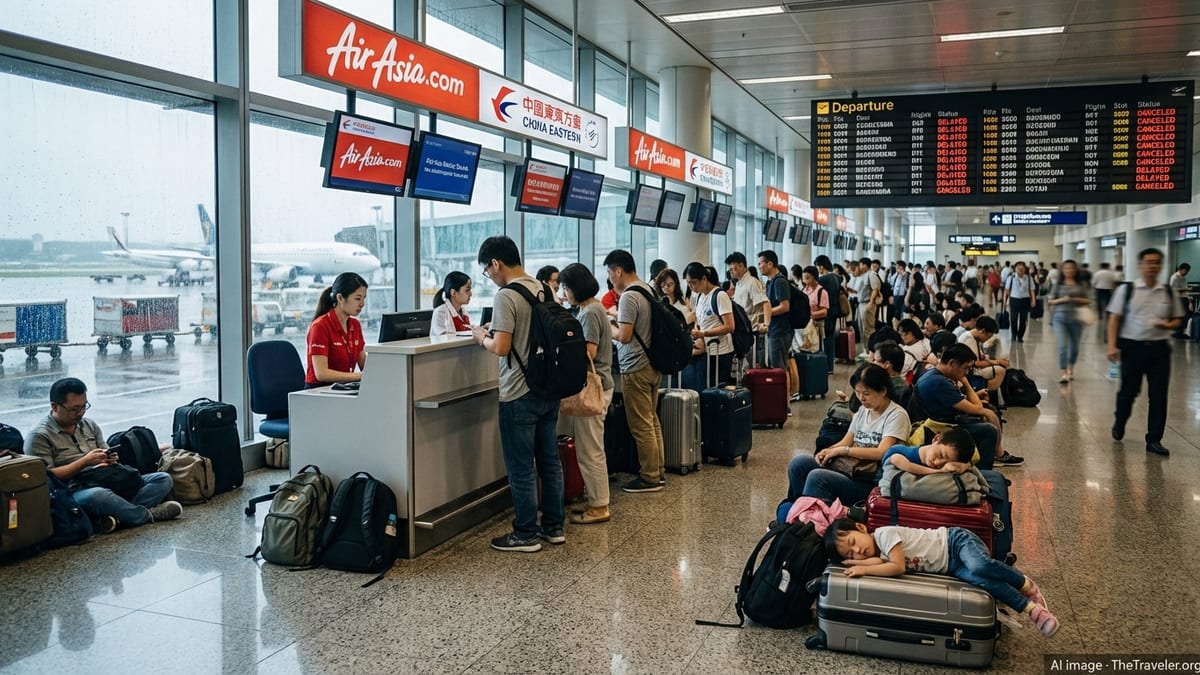
Storm Track Raises Concern for Japan’s Southern Islands
Regional weather agencies report that Typhoon Inday has reached super typhoon strength over the western Pacific, with a broad circulation influencing conditions across the Philippine Sea and approaching the wider Ryukyu island chain. Forecast discussions indicate that the cyclone is likely to remain powerful over the short term, even as longer-range track projections still show uncertainty around any direct impact on Japan’s main islands.
Outlooks from Philippine forecasters describe Inday as a strong system enhancing monsoon conditions over Luzon and nearby seas, while western North Pacific seasonal summaries note that ocean and atmospheric patterns this year have favored intense typhoon formation in mid-summer. Together, these factors point to a heightened risk window for maritime and aviation activity between the Philippine Sea and southern Japan, including the air corridors that serve Naha and resort-focused islands such as Miyako and Ishigaki.
For Okinawa, the storm arrives amid lingering memories of recent typhoons that brought cancellations, power interruptions and coastal damage in late May and early June. Local maritime advisories posted on Japanese coastal safety platforms on July 11 highlight rough seas and strong winds in parts of the Nansei island chain, underlining how quickly conditions can deteriorate for ferries and inter-island links when a strong system approaches the region.
Even if Inday ultimately curves away from a direct landfall, forecasters caution that peripheral effects such as high waves, gusty winds and temporary visibility reductions could still affect airports and ports across the Ryukyu arc, with knock-on consequences for visitors transiting through Okinawa’s main tourism gateways.
Japan Airlines and ANA Tighten Focus on Flight Operations
Japan Airlines and All Nippon Airways, the country’s two largest carriers, are closely tracking Inday’s evolution as they manage dense summer schedules that connect mainland cities with Okinawa and onward island destinations. Publicly available advisories from the airlines show a strong emphasis on real-time monitoring of tropical weather in the western Pacific, particularly during the June to October typhoon peak.
ANA’s customer information pages, updated in early July, outline its standing policy for weather-related travel waivers, allowing passengers booked on affected flights to change reservations or request refunds without handling fees when typhoons threaten specific airports. This framework, which has been applied in past systems impacting Naha and surrounding islands, provides a template the airline can activate quickly should Inday’s projected path bring hazardous conditions close to Okinawa’s key hubs.
Japan Airlines continues to publish rolling weather and flight status updates for international and domestic routes, with its latest international notices in July focusing primarily on other named systems and broader operational considerations. The structure of those advisories highlights the carrier’s usual approach of pairing route-specific updates with guidance on checking individual flight status, giving travelers a central reference point as storms evolve.
Industry observers note that both carriers have in recent seasons relied heavily on proactive cancellations and schedule consolidation when strong typhoons approach the Ryukyus, seeking to reduce last-minute disruptions and protect aircraft positioning. With Inday strengthening during a busy outbound period from Tokyo, Osaka and regional Japanese cities to Okinawa, a similar playbook is likely if forecast tracks place the storm closer to the islands in the coming days.
Peak Summer Travel Collides With Weather Uncertainty
The timing of Typhoon Inday is particularly sensitive for Okinawa’s tourism sector. The archipelago enters its core leisure season in July, when domestic families, international visitors and U.S. military community members converge on Naha, resort beaches and outer islands for diving, festivals and beach holidays. Airlines have ramped up capacity for the 2026 summer schedule, with ANA and Japan Airlines both highlighting expanded domestic and regional connectivity across their broader networks for the northern summer.
Travel demand into Okinawa rebounded strongly this year after pandemic-era restrictions and a relatively quiet 2024 typhoon season, contributing to higher load factors on flights from major Japanese cities. Promotional fares and route adjustments, including enhanced service from North American and Asian gateways into Japan with onward connections to Naha, have helped position the islands as a key beneficiary of Japan’s broader tourism recovery.
Typhoon-season volatility, however, remains a structural challenge. For hotels, guesthouses and tour operators, the prospect of a powerful storm at the height of summer raises the risk of last-minute cancellations, stranded guests and logistical complications for activities ranging from dive trips to inter-island excursions. Some properties have refined their weather contingency policies in recent years, offering more flexible rebooking windows or encouraging guests to purchase robust travel insurance that covers typhoon-related changes.
Local transport operators, including rental car firms, bus companies and ferry services, are also watching forecasts closely. Experience from recent systems has shown that even short-lived airport closures or port suspensions can create bottlenecks, with visitors attempting to rebook flights and rearrange itineraries all at once once conditions improve.
Guidance for Travelers Headed to Okinawa and the Western Pacific
For travelers already booked to Okinawa or planning trips in the coming days, aviation and weather specialists emphasize preparation and flexibility. Passengers are encouraged to monitor flight status through official airline channels and to pay close attention to any travel waivers or change-fee exemptions that may be announced if Typhoon Inday’s projected path brings it closer to Japanese airspace.
Travel industry guidance commonly recommends building additional buffer time into itineraries during the western Pacific typhoon season, especially for those connecting through Japan to destinations elsewhere in Asia or the Pacific. This may include avoiding tight same-day connections, keeping hotel reservations flexible where possible, and ensuring that ground transport arrangements can be shifted if flights are rescheduled.
On the insurance side, many policies treat typhoons as covered weather events only if coverage is purchased before a storm is named or becomes a known risk. Travelers considering last-minute trips to Okinawa are therefore being advised by consumer advocates to review policy details carefully, particularly clauses related to trip interruption, missed connections and additional accommodation costs.
Publicly accessible aviation safety materials also stress the importance of heeding local guidance during any storm-related disruptions, including instructions at airports and in accommodation facilities. While modern aircraft are designed to avoid the most hazardous conditions, operational decisions around delays or cancellations are likely to remain fluid as meteorological agencies refine their forecasts for Inday’s path.
Longer-Term Questions for Okinawa’s Climate Resilience
Beyond the immediate focus on Typhoon Inday, the storm adds to a broader discussion about climate resilience across Okinawa and the wider Ryukyu chain. Recent research on East Asian climate patterns has highlighted how warming seas and evolving ocean-atmosphere dynamics may influence the intensity and frequency of summer heatwaves and tropical systems affecting Japan and its neighbors.
In practice, this has already translated into infrastructure and planning debates across tourism-dependent islands. Airport operators, port authorities and local governments are assessing sea-level rise, storm surge risk and the resilience of runways, terminals and coastal roads that underpin the visitor economy. Strong mid-season storms like Inday reinforce the need for robust evacuation routes, reliable backup power and rapid recovery capabilities for both residents and travelers.
For the travel industry, repeated brushes with powerful typhoons underscore the importance of diversifying source markets and promoting shoulder-season travel that may be less exposed to peak storm periods. Some tour operators are also experimenting with messaging that combines Okinawa’s natural beauty with transparent guidance on typhoon season realities, aiming to set realistic expectations while maintaining the islands’ appeal.
As Inday continues its track across the western Pacific, attention from airlines, tourism stakeholders and travelers will remain fixed on updated forecasts. The coming days will help determine whether the storm becomes a brief operational challenge or a more significant test of Okinawa’s hard-won tourism momentum in 2026.