


More news on this day
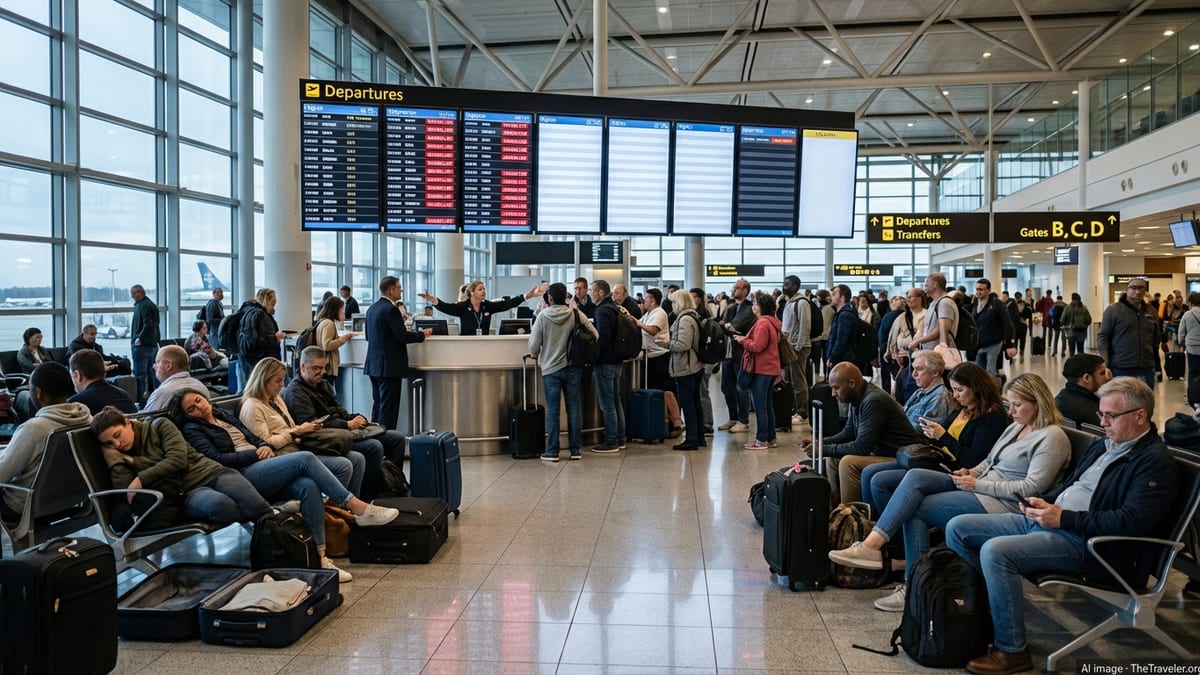
A new phase of the Gulf aviation crisis is rippling through global air travel, as expanded restrictions over Iran, Iraq and Lebanon compel airlines across Europe and Asia to redraw routes, extend suspensions and lean on a coordinated response from Qatar, Saudi Arabia, the United Arab Emirates and other regional states.
Get the latest news straight to your inbox!
Gulf States Present United Front as Safety Fears Deepen
Publicly available information shows that the current wave of disruption traces back to Iranian missile and drone attacks across the Gulf region earlier in 2026, which prompted emergency airspace closures and sweeping reroutes affecting key hubs in Qatar, Saudi Arabia, the UAE and their neighbours. Regional governments later joined forces at the International Civil Aviation Organization, where a joint paper from Qatar, Saudi Arabia, the UAE and other Arab states highlighted the threat to civil aviation and called out Iran’s actions as a direct challenge to airspace safety.
Subsequent statements and readouts from Gulf capitals indicate that Qatar, Saudi Arabia and the UAE are now coordinating closely on aviation risk management, sharing information on route availability and aligning responses to new threats, even as each state manages its own airspace. This marks a notable shift from past political rifts within the Gulf, with the crisis underscoring a shared interest in keeping critical east–west corridors functioning.
Analysts cited in regional coverage suggest that the alignment reflects both security and economic imperatives. Gulf carriers such as Emirates, Etihad Airways, flydubai, Qatar Airways and Saudia depend on the ability to funnel passengers between Europe, Asia and Africa through their hubs, meaning any prolonged fragmentation in the region’s airspace architecture quickly reverberates through global connectivity and tourism.
EU Watchdog Extends Avoidance of Iran, Iraq and Lebanon
The European Union Aviation Safety Agency has significantly hardened its stance on regional overflights, telling European carriers in early July to avoid operating within the airspace of Iran, Iraq and Lebanon because of the continued risk of military action. Updated advisories indicate that this guidance will remain in place at least through the end of August, even as some other Gulf and Levant airspaces have reopened or shifted to restricted-status operations.
The latest bulletin replaced a broader call for caution that previously covered Bahrain, Kuwait, Israel, Jordan, Qatar, Oman, the UAE and Saudi Arabia. While those states are no longer explicitly designated as no-go zones, the agency still urges airlines to treat the entire region with heightened vigilance, underscoring how fragile the operating environment remains for any carrier planning long-haul services that traditionally crossed the Gulf and northern Middle East.
Industry observers note that the hard prohibition on Iran, Iraq and Lebanon effectively removes a major band of airspace from the global network. For European and Asian airlines, this means many historic great-circle paths between Europe and South Asia, Southeast Asia and Australia are now off the table, compelling planners to design longer, more circuitous routings that skirt the conflict area and add substantial time and fuel burn to each sector.
Airlines Reroute, Extend Suspensions and Stretch Flying Times
According to recent factbox-style tallies from Reuters and other outlets, the combination of EU advisories and regional notices has triggered a patchwork of airline responses. Several European carriers have maintained suspensions on routes into the affected zone or to nearby gateways, while others have cautiously restored selected Middle East flights but continue to detour around Iranian and Iraqi airspace.
Schedules filed by major Gulf and Asian airlines show a continued preference for southern or northern bypass routes. Flights linking Europe to India and Southeast Asia are being pushed over Turkey, the Caucasus and Central Asia, or rerouted via the Arabian Sea and the Red Sea corridor. Aviation tracking data indicates that even when services to Gulf hubs are restored, routings are often elongated by hundreds of nautical miles, translating into arrivals that can run one to three hours behind pre-crisis timings.
These adaptations carry financial and environmental consequences. Longer flight paths increase fuel costs at a time of elevated oil prices, while also raising carbon emissions on routes that had previously been among the most efficient in the global system. Travel consultants quoted in regional business coverage say airlines are being forced to balance safety-driven detours with demand for summer travel, sometimes favoring route consolidation and upgauging aircraft over maintaining pre-crisis frequencies.
UAE and Qatar Hubs Rebuild Under Tight Constraints
Within the Gulf itself, publicly available aviation updates describe a gradual but uneven rebuilding of capacity. After initial closures and suspensions at the height of the crisis, Qatar’s civil aviation authorities have reported that the country’s airspace and Hamad International Airport are back under full operational control, with a phased reopening that began in March and continued as risk assessments improved.
In the UAE, business media note that Emirates, Etihad Airways and flydubai are working to restore disrupted networks ahead of the peak summer season, helped by a tentative US–Iran framework aimed at easing hostilities. Nevertheless, carriers remain bound by the broader regional picture, as eastbound and westbound flows must still avoid large swaths of northern Middle Eastern airspace and adjust to short-notice changes in the security environment.
Travel advisories summarized in government and industry documents indicate that UAE airspace is technically open but operating under restrictions, with specific corridors and altitude bands favored to minimise exposure to potential threats. Similar “restricted but open” conditions apply in Saudi Arabia and other Gulf states, fostering a corridor-style system in which hubs like Dubai, Abu Dhabi and Doha function as controlled gateways into a complex mosaic of safe and unsafe skies.
Global Networks Brace for a Long Haul Recovery
While periods of relative calm have allowed airlines to rebuild parts of their schedules, many planners now assume that elevated risk in Iran, Iraq and Lebanon will persist well beyond the current northern summer season. Guidance circulated among slot coordinators and logistics groups frames the crisis as a medium-term reality rather than a short interruption, with repeated references to restricted or intermittently closed airspace in key Gulf and Levant states.
For passengers, this translates into ongoing uncertainty. Timetables are being revised close to departure dates, point-to-point connections have replaced some traditional one-stop itineraries, and last-minute cancellations remain a possibility when military activity intensifies. Flight comparison tools and booking engines reflect these shifts through higher fares on certain city pairs, fewer nonstops, and warnings about potential schedule changes on routes that would normally pass near the restricted airspace band.
Yet the crisis has also highlighted the resilience and centrality of Gulf aviation. Analysts quoted in recent regional coverage argue that hubs in Qatar, Saudi Arabia and the UAE remain indispensable to global connectivity between Europe, Asia and Africa, even when war and airspace closures force prolonged detours. For the foreseeable future, the same Gulf states now presenting a united diplomatic and operational front will be central to steering international aviation through a turbulent and unpredictably shifting sky.