


More news on this day
A fire along a busy railway corridor in western Germany has intensified scrutiny of the country’s rail security, as investigators examine whether the late-night blaze that damaged trackside equipment was a deliberate act of sabotage against critical infrastructure.
Get the latest news straight to your inbox!
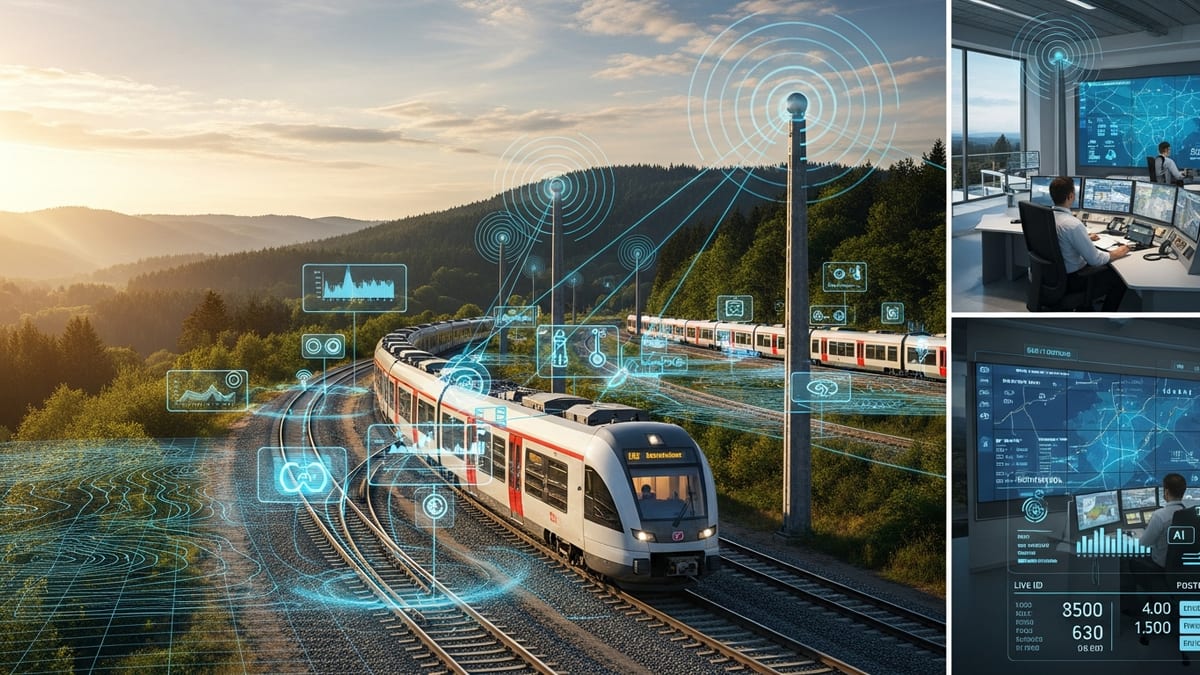
Late-night blaze disrupts services on key corridor
According to publicly available reports from German media and rail operator updates, the incident occurred late at night along a section of track in western Germany that carries both regional and long distance services. Flames were reported near cable lines and switching equipment, leading to an immediate halt of traffic in the affected sector while emergency crews secured the scene.
Initial assessments indicated that the fire caused damage to signal and switch control components, forcing trains to be diverted or cancelled. Replacement bus services were ordered where possible, but early morning commuters still faced extended delays and longer travel times as control centers attempted to reorganize traffic flows around the damaged segment.
Published coverage indicates that no injuries were reported, in part because the affected infrastructure lies beside the tracks rather than inside stations or on platforms. Nevertheless, the disruption was significant enough to affect connections across a wider section of the network, including services linking regional hubs with larger cities.
Rail operator communication referenced a “technical disruption after a fire on the line,” a formulation that has become familiar to passengers as Germany’s rail system contends with aging infrastructure, tight capacity and a growing list of security-related incidents.
Investigators focus on deliberate ignition scenario
Reports in German outlets state that specialist investigators are examining the scene under the assumption that the blaze may have been deliberately set. The pattern of damage to trackside cables and equipment, together with the location away from residential buildings, has reportedly led investigators to treat an intentional ignition scenario as plausible.
Analysts point out that cable fires along railway lines can result from overheating, construction work or accidental damage, but recent cases in which multiple ignition points were found have shifted attention toward the possibility of targeted interference. Publicly available information from previous incidents shows that investigators in Germany increasingly distinguish between ordinary vandalism and acts that appear aimed at disabling key transport links.
In the current case, experts cited in German-language coverage note that the focus of the probe includes whether incendiary material or accelerants were used and whether any pattern connects this fire to earlier attacks on infrastructure. Technical teams are also tasked with determining how quickly damaged components can be replaced or bypassed to restore full capacity.
While no group has been publicly identified in relation to the latest blaze, the fact that sabotage is being considered underscores how Germany’s railway has become a visible target in broader debates over domestic extremism, foreign interference and the resilience of critical infrastructure.
Pattern of rail-related attacks heightens concern
The suspected sabotage comes against a backdrop of previous attacks on Germany’s rail network and related infrastructure. In earlier high profile cases, fires at equipment shafts and trackside cable ducts in northern Germany led to widespread cancellations and delays, with investigators describing the incidents as intentional damage to vital systems controlling signals and power.
More recently, regional media and national broadcasters have documented separate investigations into cable fires and arson at substations and other energy and transport installations, some of which are being examined for potential political motivations. Publicly available reporting notes that in several cases, security agencies are exploring whether loosely organized extremist groups or foreign actors may be targeting infrastructure to create disruption and erode public confidence.
This broader pattern has prompted repeated calls from transport experts for a systematic strengthening of surveillance and hardening of vulnerable nodes along rail corridors. Germany’s dense network includes thousands of kilometers of open track where cables, masts and junction boxes remain relatively exposed, particularly in rural or industrial areas where routine patrols are infrequent.
Research by European rail safety bodies and academic institutions has highlighted that even small scale acts, such as severing communication lines or disabling a single relay cabinet, can produce cascading delays far beyond the original site of the incident, especially on busy intercity routes operating close to capacity.
Impact on passengers and confidence in rail travel
For travelers, the immediate effect of such incidents is felt in unexpected cancellations, missed connections and crowded replacement services. Passenger associations in Germany have repeatedly argued that, while safety standards on board trains remain high, reliability is increasingly undermined by a combination of aging assets and vulnerabilities at the network’s edges.
The latest fire adds to a series of disruptions that include track failures, signal faults and, more recently, a nationwide suspension of services after a digital radio failure. While that particular event was later attributed to a technical malfunction, its scale fed public debate about whether the rail system is adequately protected against both cyber and physical risks.
Some transport commentators note that repeated references to “technical problems” in service alerts do little to distinguish between ordinary infrastructure wear and suspected malicious acts. This, they argue, contributes to a perception of general fragility at a time when German and European climate and mobility policies are encouraging millions more people to shift from road and air travel to rail.
For international visitors relying on trains to connect major cities and tourist regions, incidents like the suspected sabotage can complicate carefully planned itineraries. Travel advisory platforms now routinely recommend that passengers build extra time into journeys, monitor real time updates from operators and consider alternative routes when key corridors are affected by fires or other security related disruptions.
Security measures and political pressure intensify
In response to the growing focus on infrastructure attacks, publicly available information from government communications and railway statements indicates a gradual tightening of security measures. These include expanded video surveillance at some critical junctions, increased coordination between transport operators and security agencies, and renewed investment in redundant communication systems intended to keep trains moving even if specific components are damaged.
Policy debates in Berlin and at state level increasingly center on how to balance open access to public transport with the need to shield vital nodes from intrusion. Proposals discussed in expert circles range from burying more cables and hardening control cabinets to deploying sensor networks that can detect abnormal heat signatures or unauthorized access along remote sections of track.
At the same time, civil liberties advocates caution that surveillance heavy solutions could affect privacy in and around stations, arguing instead for targeted, intelligence led protection of truly critical installations. Transport specialists counter that the economic and social costs of repeated large scale disruptions justify a more assertive approach to securing rail corridors.
As the latest investigation into the railway fire proceeds, the case is likely to intensify these discussions. For German authorities and rail operators, the challenge now lies in demonstrating that they can identify and mitigate potential sabotage attempts quickly enough to keep the system both safe and dependable for the millions of passengers who rely on it every week.