


More news on this day
Air travelers in 2026 are facing a new wave of safety-focused restrictions on vapes, power banks and other lithium battery devices, as regulators and airlines respond to a rising number of in-flight battery incidents.
Get the latest news straight to your inbox!
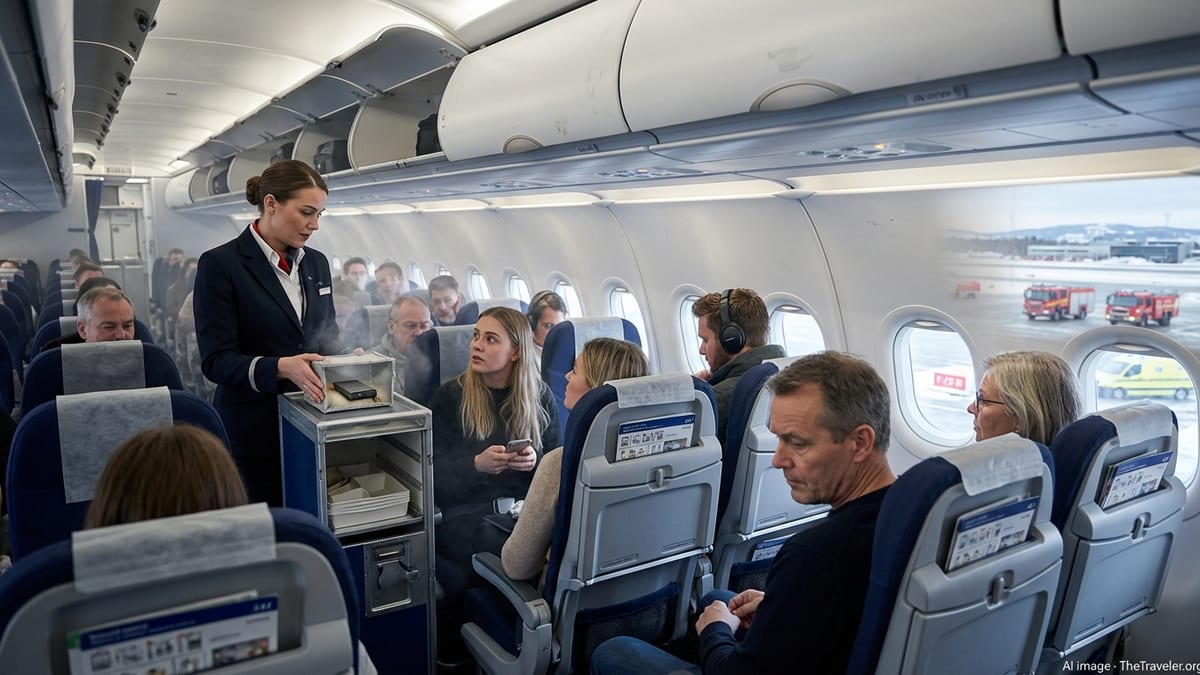
Rising concern over lithium battery fires in the cabin
Publicly available data from aviation regulators show a steady increase in smoke, fire and overheating events linked to lithium batteries over the past two decades, prompting renewed scrutiny of how passengers carry devices such as vapes, laptops and power banks. Lithium cells can enter thermal runaway if damaged, poorly manufactured or short circuited, creating intense heat that is difficult to control in confined aircraft spaces.
Flight safety material released by regulators highlights that electronic smoking devices have become a leading source of lithium battery incidents on passenger aircraft in recent years. Educational campaigns launched in 2026 stress that many of these events originate in baggage, where devices are inadvertently switched on, crushed or packed without adequate protection around exposed terminals.
Industry risk assessments published by international aviation organizations emphasize that what once was a niche concern has become a mainstream operational risk as travelers now carry multiple rechargeable devices on every trip. Operators are being urged to reassess how they manage the combined battery load in cabins and holds, and how clearly they communicate restrictions to passengers before departure.
Working papers submitted to global aviation assemblies in 2025 describe proposals for tighter international standards on the capacity and quantity of lithium batteries in the cabin, including possible limits on inflight charging and the storage of power banks in overhead bins. While these discussions are ongoing, several regulators and airlines have already moved ahead with new passenger-facing rules.
Carry on, not checked: where vapes and batteries now belong
Updated guidance published in 2026 by the United States Federal Aviation Administration reiterates that spare lithium ion and lithium metal batteries, including power banks and charging cases, must travel only in carry on baggage. The same guidance states that electronic smoking devices such as vapes and e cigarettes are permitted for personal use but must also be kept in the cabin, protected from damage and accidental activation.
Global standards bodies including the International Air Transport Association and the International Civil Aviation Organization echo this framework in their 2025 to 2026 dangerous goods and passenger baggage guidance. Their publicly available material instructs travelers to keep lithium powered devices with them, not inside checked bags, so that any overheating can be quickly detected and handled by cabin crew with fire containment equipment.
New editions of lithium battery guidance for passengers, aligned with the 2025 to 2026 technical instructions for dangerous goods by air, place particular emphasis on the distinction between installed and spare batteries. Batteries packed separately from equipment are treated as higher risk and are therefore confined to the cabin, with size limits expressed in watt hours and, for larger units, a requirement for airline approval before travel.
Passenger information campaigns stress that these rules apply not only to obvious electronics but also to smart luggage with built in batteries, cargo tracking tags and other accessories that now contain rechargeable cells. Travelers are advised to remove detachable power packs from such items before check in and to carry them in hand baggage instead.
Airlines add stricter rules on overhead bins and personal devices
While regulators define the minimum safety baseline, airlines in North America, Europe and Asia are increasingly adopting stricter internal policies for vapes and lithium powered devices. In 2026, several large carriers announced that power banks and electronic smoking devices must no longer be stored in overhead bins and instead must be kept on the passenger’s person, in a pocket, or in a small item under the seat.
Airline communications reviewed by travel industry observers explain that this shift is aimed at giving cabin crew faster access if a device overheats. Overhead bins can delay detection of smoke or heat, whereas a device near the passenger can be more easily noticed and handed to crew, who are trained to use fire resistant bags or other containment tools.
Some carriers have also begun broadcasting specific announcements about vapes during safety briefings, reminding passengers that charging these devices on aircraft power outlets is prohibited because of fire risk. Reports from frequent flyers indicate that cabin crew are increasingly attentive to cords and chargers connected to non approved devices during boarding and cruise.
Industry risk guidance encourages operators to harmonize such measures with international recommendations from aviation safety bodies. However, passengers are repeatedly reminded that individual airlines may choose more conservative limits than those required by regulators, for example by capping the number of power banks per person or narrowing the acceptable range of battery capacities.
Global standards and the 2025–2026 dangerous goods rulebook
The 67th edition of the International Air Transport Association Dangerous Goods Regulations, effective for 2026, and the aligned 2025 to 2026 technical instructions published under the auspices of the International Civil Aviation Organization, form the backbone of current lithium battery carriage rules. These documents, referenced in airline and regulator guidance, codify how different battery types and sizes must be handled when carried by passengers.
The rules distinguish between small consumer batteries typically found in phones, cameras and vapes, and larger units up to 160 watt hours that are common in high end laptops, medical devices or camera equipment. For the largest batteries permitted in passenger baggage, the framework generally requires airline approval and sets limits on the number of units a traveler may carry.
International guidance further clarifies requirements for non spillable and nickel metal hydride batteries, as well as for battery powered mobility aids and tracking devices. The latest updates seek to ensure consistent treatment of newer chemistries, while still focusing on the elevated fire risk posed by lithium based cells when packed or handled incorrectly.
Training material for operators, published by aviation bodies in 2025, urges airlines to update their risk assessments for cargo, mail and baggage containing batteries, with particular attention to passenger baggage that may not be declared as carrying dangerous goods. These documents recommend that passengers receive clear information about restrictions during booking and check in, not only at the airport security checkpoint.
What travelers should expect during the 2026 summer season
For travelers, the practical impact of these evolving rules in 2026 is a more tightly controlled environment for vapes and other battery powered items from the moment a trip is booked. Airline websites and confirmation emails increasingly highlight battery rules alongside traditional baggage allowances, and some carriers require explicit confirmation that spare batteries will be carried in hand luggage.
At airports, passengers can expect more prominent signage about lithium batteries at check in counters and security lanes, as well as reminders from ground staff to remove vapes, power banks and similar devices from checked bags. Security screening personnel may ask travelers to demonstrate that devices are switched off and properly protected against accidental activation.
Travel industry commentary notes that although rules are based on global standards, there remains variation between airlines and countries, particularly regarding the number of devices permitted and the treatment of related items such as vape liquids. Passengers are therefore encouraged to review both their airline’s policy and any national aviation guidance before packing.
As incident statistics, regulatory updates and airline policies continue to evolve, observers expect further refinements to lithium battery and vape carriage rules over the coming years. For the 2026 travel season, however, the direction of change is clear: more devices must stay in the cabin, closer to passengers and crew, and fewer will be tolerated unseen in the cargo hold or packed away in overhead bins.