


More news on this day
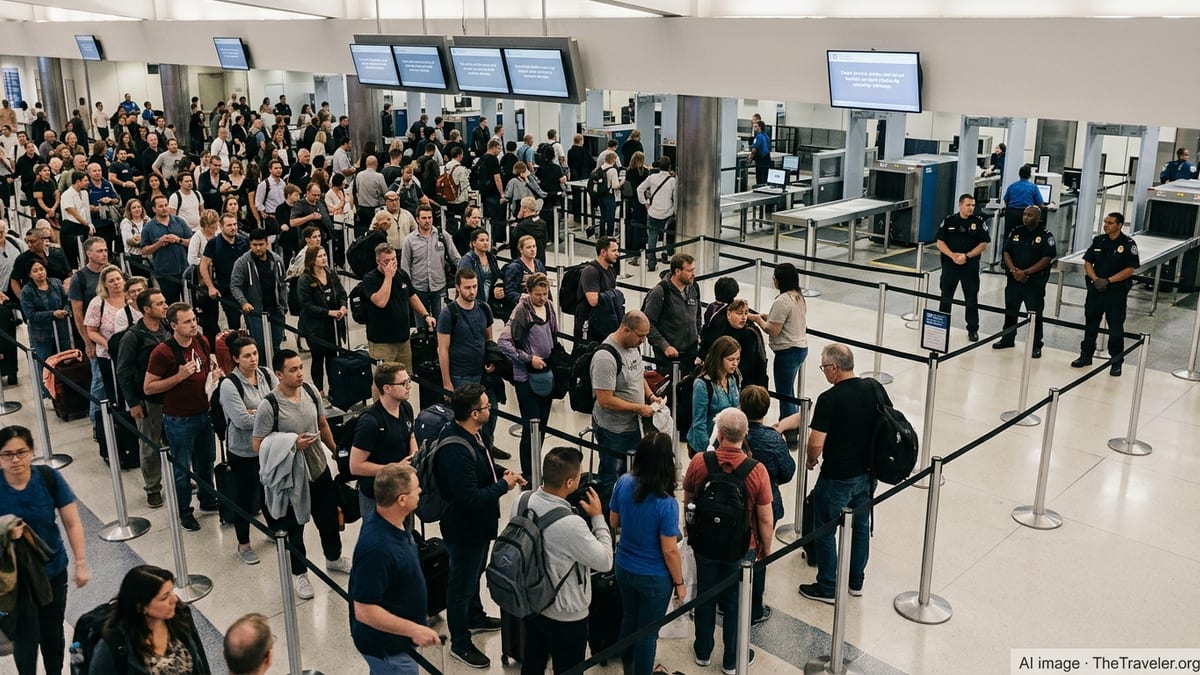
Slovakia’s main airports are facing mounting pressure in 2026 as record passenger growth at Bratislava and strong gains at regional hubs collide with finite terminal and runway capacity, raising the risk of congestion and disruption during the peak summer season.
Get the latest news straight to your inbox!
Record traffic pushes Bratislava to historic highs
Recent data from Slovakia’s largest gateway, Bratislava’s M. R. Štefánik Airport, shows that demand has surged to its highest level on record. Public information from the Ministry of Transport and the airport’s own reporting indicates that Bratislava handled about 2.44 million passengers in 2025, a jump of roughly a quarter compared with 2024 and the strongest performance in the airport’s history. The results marked the second consecutive year in which the capital’s airport significantly outpaced its pre‑pandemic performance.
Airport summaries describe a broad mix of growth drivers, including more point to point routes within Europe, an expanded offering of leisure charter flights and the rapid build out of low cost carrier operations. Budget airline schedules, led primarily by Ryanair and Wizz Air, have turned Bratislava into a competitive alternative to Vienna for price sensitive travelers in western Slovakia and neighboring regions of Austria and Hungary.
At the same time, Bratislava’s management continues to operate with a terminal footprint and airfield layout largely inherited from pre‑2019 traffic patterns. Company profiles acknowledge that while the existing terminal meets standard European operational requirements, sustained double digit growth over several years is beginning to test the practical capacity of check in, security, baggage and boarding areas during the busiest departure waves.
Industry observers note that the airport’s proximity to Vienna, once seen as a limitation, is now amplifying traffic. More airlines are marketing Bratislava as a secondary gateway for the wider region, drawing passengers who previously relied exclusively on Vienna for low fare connectivity.
Low cost expansion fuels 2026 capacity squeeze
Looking ahead to the 2026 summer and winter seasons, published schedules highlight a sharp increase in based aircraft and routes that is set to stretch infrastructure even further. Ryanair has announced what it calls a record winter 2026 program from Bratislava, including the basing of a fourth aircraft and the launch of new routes to destinations such as Paphos, Tirana, Turin and Warsaw. Airport press materials indicate that this will lift the carrier’s winter network from the Slovak capital to more than twenty routes.
Additional growth is coming from Wizz Air, which community discussions and timetable data suggest is also expanding its presence with multiple based aircraft and new links across southern and eastern Europe. Together, the two largest low cost groups are planning schedules that translate into higher aircraft movements, denser departure banks and more passengers funnelled through limited terminal space throughout the day.
Industry level analysis from organizations such as IATA and Eurocontrol shows that this local expansion is unfolding against a backdrop of robust European demand. Global and regional reports for 2025 and early 2026 describe record passenger volumes combined with lingering capacity constraints in fleets, staffing and infrastructure. In such an environment, even relatively small airports can face rapid swings from comfortable operations to frequent bottlenecks when airlines upgauge aircraft or increase rotations more quickly than terminals and air traffic systems can adapt.
For travelers using Bratislava in 2026, the practical impact is already visible in longer peak time queues at security and boarding, tighter turnaround windows for aircraft and a growing sensitivity to even minor disruptions in the wider European network that can cascade through tightly scheduled low cost operations.
Regional airports ride tourism boom in eastern Slovakia
Capacity pressures are not confined to the capital. Košice International Airport, the main gateway for eastern Slovakia, has reported a series of record breaking years as it rebuilds and surpasses its pre‑pandemic base. Airport communications describe 2023 as a historic high, followed by another step up in 2024 when Košice handled more than 700,000 passengers. A recent summary posted by the airport points to around 739,000 passengers in 2024, roughly one third higher than in 2019.
New and expanded routes have underpinned this growth. Switzerland’s SWISS began a direct Košice to Zurich service in 2024, complementing existing links to hubs such as Vienna and Prague and strengthening connectivity for both business and leisure travelers. Seasonal charter traffic to Mediterranean resorts and winter services oriented toward skiing in the Carpathians add further peaks to an already compressed pattern of demand.
With Košice’s terminal infrastructure sized for a substantially smaller throughput only a decade ago, current traffic levels are starting to approach the practical upper range of comfortable operation at peak times. While the absolute passenger numbers are modest compared with major European hubs, the concentration of departures into a few morning and afternoon waves can result in security queues, apron congestion and tight slot management in the summer period.
Smaller regional facilities, including Poprad Tatry Airport serving the High Tatras region, are also shaped by tourism driven surges. Poprad’s published statistics show relatively low annual volumes compared with Bratislava or Košice, but pronounced spikes during the ski season when charter flights and general aviation activity increase. These seasonal peaks present their own capacity management challenge, as infrastructure and staffing have to be calibrated to handle short bursts of intense activity without the economies of scale available at larger airports.
Risk of disruption grows as infrastructure lags demand
Across Slovakia, the combination of record passenger numbers, aggressive route expansion and infrastructure that has evolved more slowly than airline networks is heightening the risk of operational disruption in 2026. Public information from airport operators continues to highlight efficiency and safety, but passenger experiences shared on social platforms and in local media point to periods of congestion, longer processing times and occasional delays tied to ground handling and security bottlenecks.
The situation mirrors a broader European pattern documented in aviation trend reports. As traffic returns to or surpasses 2019 levels, many airports face structural constraints, including limited scope to expand terminals quickly, airside capacity that cannot easily accommodate additional movements and staffing pools that are still catching up with pandemic era reductions. Queue forecasting and capacity modeling studies published in 2025 and 2026 underline how even small mismatches between schedule design and processing capability can lead to pronounced peaks in waiting times.
In Slovakia’s case, the stakes are rising because low cost carriers are tightly linking their fleet and crew utilization to growing demand in Bratislava and Košice. Industry analyses of airline strategies indicate that operators are reallocating scarce aircraft to markets and airports that actively incentivize growth, which currently includes Slovakia. This brings more choice and potentially lower fares for passengers, but also embeds a level of operational intensity that leaves less margin for error when weather, technical issues or airspace restrictions occur.
Observers note that, absent significant terminal and airfield investment, Slovak airports may find themselves relying heavily on short term measures in 2026 and beyond, such as schedule smoothing, stricter slot coordination, temporary process changes and communication campaigns urging passengers to arrive earlier for flights.
Planning responses and what travelers can expect in 2026
Available planning documents and company reports suggest that Slovak airports are aware of these pressures and are exploring longer term infrastructure and technology upgrades, though many of these projects have multi year horizons. Typical options under consideration in similar European markets include incremental terminal expansions, reconfiguration of check in and security zones, investment in automated screening and baggage systems, and improvements to airfield layouts to streamline taxiing and runway usage.
At the same time, traffic forecasts prepared by European aviation bodies continue to point toward steady growth in passenger volumes at least through the end of the decade. For Slovakia, where air travel volumes are starting from a relatively low baseline compared with larger neighbors, this creates an environment in which demand can grow quickly as incomes rise, tourism broadens and airlines perceive new opportunities.
For travelers using Slovak airports in 2026, the most immediate implication is the likelihood of busier terminals and a greater chance of schedule knock on effects, particularly during summer holiday peaks and around major events. While published schedules promise more destinations and frequencies than ever before, the underlying capacity constraints mean journey times may be more vulnerable to disruption originating both within Slovakia and across the interconnected European network.
Analysts point out that how effectively Bratislava, Košice and regional airports manage this phase of rapid growth will play a significant role in shaping Slovakia’s competitiveness as a tourist and business destination. Striking a balance between welcoming rising passenger numbers and maintaining smooth, predictable operations is emerging as one of the key transport challenges for the country in 2026.