


More news on this day
For long-haul passengers chasing sleep between time zones, Asia’s big hubs present a revealing test at 2am: some airports quietly invite travellers to lie flat, while others lock terminals, dim the lights and nudge everyone toward paid beds or the last train into town.
Get the latest news straight to your inbox!
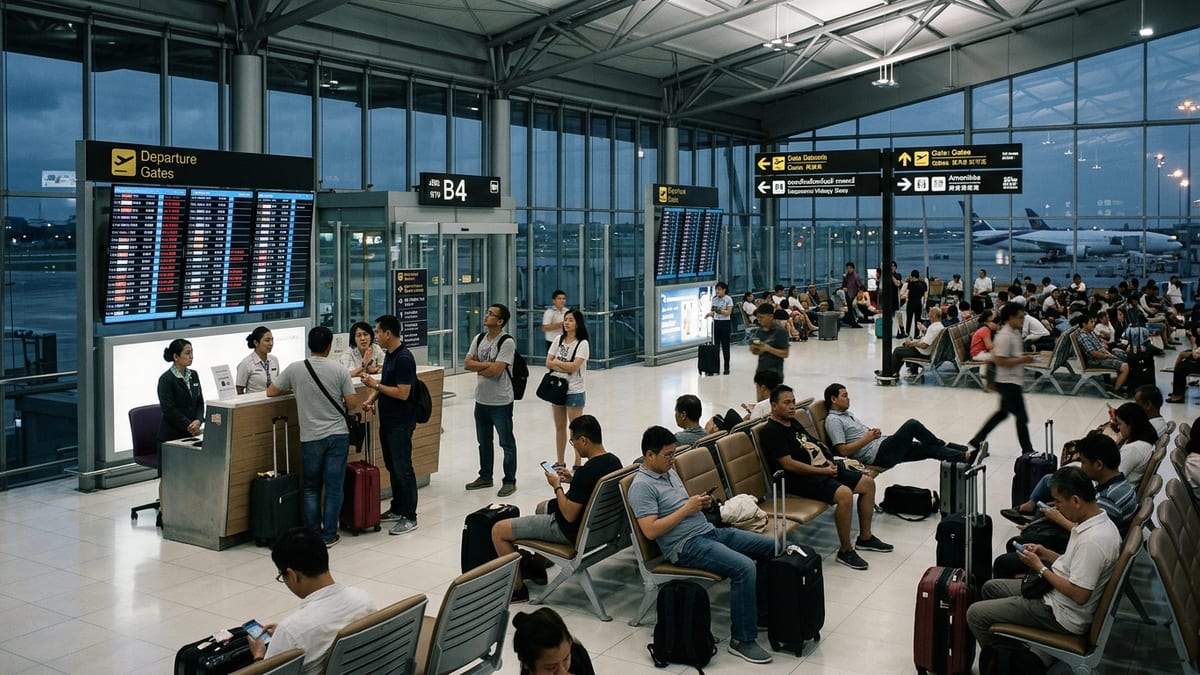
From Benches to Snooze Lounges: A New Map of Airport Sleep
Across Asia, the simple act of stretching out for a few hours of rest has become a litmus test for how seriously airports take passenger comfort. Publicly available information shows that major hubs such as Singapore Changi and Seoul Incheon now market sleep as a core part of the transfer experience, with free nap zones, rest areas and 24-hour facilities promoted alongside shopping and dining.
Recent airport and travel guides highlight that Changi, repeatedly cited in rankings of the world’s best airports, has built an ecosystem of free-to-use snooze lounges, quieter rest corners and paid sleep pods that make an overnight stay entirely practical without leaving the terminal. Official maps and sensory guides signpost “snooze lounges” in multiple terminals, signalling that lying back in a recliner for a few hours is not just tolerated but expected.
Seoul Incheon has followed a similar path. Airport information pages and independent sleeping guides describe airside Nap Zones and Relax Zones on upper levels of Terminals 1 and 2 where padded loungers are available around the clock at no charge. Reviews compiled in 2026 note that these areas can fill up quickly during peak overnight banks, but they confirm that both terminals operate 24 hours and that overnight rest in public areas is broadly accepted.
This new landscape creates a clear divide between hubs that plan for sleeping travellers and those that still see the terminal as a place to pass through, not to bed down. For passengers with tight budgets or long itineraries, the difference can define whether an overnight connection feels like a manageable pause or an exhausting endurance test.
Changi and Incheon: Where Free Sleep is Part of the Product
Singapore Changi is often cited by transit guides as one of the easiest airports in Asia for a no-cost overnight rest. Airport directories list free snooze lounges scattered across terminals, equipped with reclining chairs, dimmed lighting and nearby power outlets. A Changi feature on rest areas updated in late August 2026 presents these zones as part of a broader promise to let travellers “get some shut-eye” between flights, framed as a normal, planned use of the space rather than a fringe activity.
Supplementing these areas is a tiered system of paid options. Changi’s transit hotels and airside cabins, including YOTELAIR in Jewel and other 24-hour transit properties, sell blocks of rest time to passengers who want a full bed and shower without clearing immigration. Airport hotel pages indicate that rooms are bookable for short daytime blocks or overnight, and that operations run continuously through the night.
Seoul Incheon presents a comparable mix. Official facility lists for Incheon highlight designated Nap Zones and Relax Zones in duty-free areas on upper levels, open 24 hours and free for any passenger inside the secure area. These rest spaces are complemented by two airside transit hotels and Darakhyu-branded capsule hotels on the landside, as well as a 24-hour bathhouse under Terminal 1 that offers inexpensive sleeping mats. A 2026 sleeping guide notes that many travellers choose a free nap zone for a short reset, then pay for a capsule or spa stay when layovers stretch toward the 10-hour mark.
For airports like Changi and Incheon, sleep is no longer incidental. Public-facing material groups sleep with showers, Wi-Fi and even attractions such as gardens or pools, sending a clear message that comfortable overnight rest is part of the selling point to airlines and connecting passengers.
Tokyo’s Curfews: When the Terminal Itself Goes to Sleep
Tokyo’s airports underline the other side of Asia’s overnight equation: not every hub leaves terminals open around the clock. At Haneda, which handles a mix of domestic and international traffic, published FAQs for the passenger terminals state that domestic areas in Terminals 1 and 2 close around midnight, once the last departures and arrivals have cleared. After closing, remaining in the lobby is described as “generally not possible,” which effectively limits where and how passengers can rest airside.
International zones at Haneda operate longer hours, and on-airport hotels provide beds for those willing to pay. Yet the curfew on key domestic sections means that a traveller misjudging a late arrival, or hoping to camp out airside between an evening arrival and a morning departure, may find only a small number of landside options open and little clarity about where rest is permitted.
Narita, Tokyo’s older international gateway, adds an additional layer of complexity. Independent overnight guides compiled in 2026 emphasize that Narita’s terminals have fixed opening and closing times aligned with flight schedules, with parts of the building shut overnight. Those guides warn that there is no 24-hour city-bound bus from Narita and that passengers cannot assume they will be allowed to remain airside all night on a bench or in a corner.
The contrast with Changi and Incheon is stark. Where Singapore and Seoul design around overnight dwell time, Tokyo’s hubs lean more heavily on scheduled ground transport, airport hotels and city stays. For travellers, that means the “2am test” in Tokyo is less about finding a quiet corner to lie down and more about whether the last train, capsule hotel or taxi was booked in advance.
Unwritten Rules: When Sleeping is Tolerated but Not Encouraged
Between the fully sleep-friendly hubs and those that close overnight lies a broader category of Asian airports where the rules are less explicit. Travel forums and crowd-sourced guides for multiple regional airports suggest that, in practice, many terminals tolerate overnight sleepers in certain corners or near quieter gates, even when there are no official nap zones or publicly promoted snooze lounges.
At these airports, the experience can hinge on timing and luck. Passengers report that padded benches or recliners near outlying gates may be available late at night, but that cleaning schedules, lighting and announcements often make truly restorative sleep difficult. In some cases, seating is purposefully designed with armrests that prevent lying flat, nudging travellers toward pay-per-use lounges or nearby hotels.
Security and housekeeping routines also shape the overnight reality. Even where 24-hour operation is advertised, staff may ask sleepers to move for cleaning, to clear restricted areas or to consolidate into specific zones. This creates a grey area where overnight rest feels technically allowed but not actively supported, leaving travellers to guess whether they will be left undisturbed for more than an hour or two.
For budget-conscious passengers, this middle ground can be the most challenging. The airport is open, but predictable sleep is not guaranteed. With no official nap zones to point to, it becomes harder to plan a long connection around getting meaningful rest rather than merely staying awake and indoors.
The Emerging Checklist for an Overnight-Friendly Hub
As more routes in and out of Asia push departures and arrivals into the small hours, a pattern is emerging in how airports respond. Hubs that pass the 2am sleep test tend to share a core set of features: clearly signed free rest areas, 24-hour showers, at least one transit hotel or capsule option inside security, and public communications that treat overnight stays as normal.
Changi and Incheon currently sit near the top of that spectrum, with airport materials and third-party guides describing a mix of free snooze lounges, quiet corners and tiered hotel options that can be matched to almost any budget or layover length. Travellers can reasonably expect to lie flat somewhere inside the terminal without needing to navigate immigration or late-night city transport.
Airports that score lower on the overnight scale often do so not because they lack hotels or lounges, but because their rules, closing times and terminal designs do not align with how people actually move through modern route networks. Where lobbies close at midnight, seating discourages lying down, or signage stays silent on overnight stays, the burden falls on passengers to improvise.
For now, Asia’s overnight airports offer a fragmented picture. Some have turned sleep into an amenity and a selling point; others still treat it as an edge case to be managed. As flight schedules stretch ever deeper into the night, the question of where travellers can really sleep at 2am is likely to become a sharper competitive line between the region’s busiest hubs.
Changi Airport free snooze lounges and rest areas
Incheon Airport nap zones, showers and capsule hotel information