


Athens in late December and early January is a city of contrasts: fairy lights wrapped around orange trees, Christmas music echoing between neoclassical facades, and cafe terraces filled with locals in light jackets rather than heavy parkas. As searches for “Athens Christmas” and “Athens New Year’s Eve” climb on Google, the Greek capital is emerging as a trending winter city break that combines European festivities with milder Mediterranean weather and year-round antiquities. Here is what visitors can realistically expect in Christmas and New Year 2026 in terms of climate, events, prices and easy day trips.
Get the latest updates straight to your inbox!
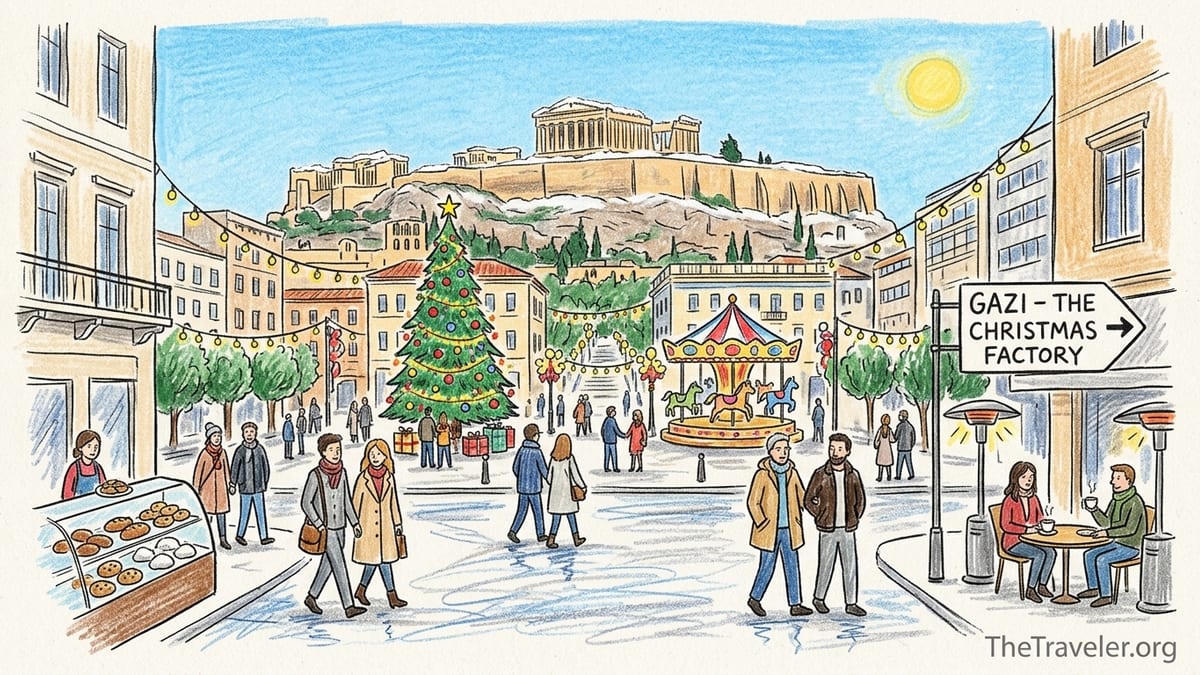
Winter weather in Athens around Christmas and New Year
Visitors planning a holiday in Athens often picture northern European winter conditions, but December and early January in the Greek capital are much milder. Long‑term climate data for central Athens indicates average daytime highs in December of about 13 to 15 degrees Celsius, with nighttime lows around 7 to 9 degrees. January is slightly cooler, with average highs close to 12 or 13 degrees and lows near 6 or 7 degrees. Rain is possible, especially in short showers, but prolonged downpours are less common than in many other European capitals at this time of year.
In practical terms, that means you are more likely to be wearing a light wool coat and scarf than a heavy down jacket. Locals often sit outside under patio heaters in neighborhoods such as Psyrri and Koukaki, and you will see Athenians drinking coffee outdoors throughout the season. It can, however, feel colder than the thermometer suggests when the north wind blows through the city or up on the Acropolis hill, where the exposed marble amplifies the chill. Packing layers, a windproof jacket and comfortable closed shoes is more important than bringing heavy snow gear.
Daylight is relatively short around the holidays. In late December the sun typically rises just after 7:30 in the morning and sets shortly after 5 in the afternoon. Many visitors use the cooler, brighter hours between roughly 10 and 3 for archaeological sites, then shift to museums, shopping and bar‑hopping as the lights come on. Air pollution can occasionally trap a haze over the city on still days, particularly if many households are burning wood for heating, but on clear afternoons the view from Filopappou Hill or Lycabettus can stretch across the Saronic Gulf.
Snow in central Athens during the holidays is rare, though not impossible in an era of more volatile weather. When it does occur it tends to be light and short‑lived, sometimes dusting the Parthenon for a few hours. More often, holiday photos show locals wearing sweaters and leather jackets, streets wet from a passing shower, and the illuminated Acropolis standing out clearly against a crisp winter sky.
How festive Athens really feels at Christmas
Christmas in Athens has a different rhythm from northern Europe. The city decorates widely, with a large Christmas tree and illuminated decorations on Syntagma Square, lights along central avenues like Ermou and Panepistimiou, and smaller trees and stars strung above side streets in Plaka and Monastiraki. According to the City of Athens holiday programme for recent years, the municipality has invested in citywide lights, live music, and street happenings across December, turning squares and markets into informal gathering spots as soon as dusk falls.
The heart of the organised festivities is Syntagma, where a tall tree, light installations, and a carousel or children’s rides have anchored what local tourism bodies describe as a “Christmas hub.” Close by, the pedestrianised section of Ermou fills with buskers and shoppers, and department stores on Stadiou and Aiolou streets dress their windows for the season. Around the National Garden and Zappeion you may encounter brass bands and municipal ensembles performing carols in the afternoons during the main pre‑Christmas week.
For a concentrated festive atmosphere, many families and visitors gravitate to The Christmas Factory at Technopolis in the Gazi district. This privately operated theme park, which recent programmes list running roughly from late November to early January, turns the old gasworks into a small Christmas village with rides, games, Santa’s house, and numerous food stalls serving churros, waffles, hot chocolate, and Greek street food. Separate from Technopolis, the city has in recent seasons hosted a Christmas market with wooden chalets in Kotzia Square, a short walk from Omonia, selling sweets, toys and small gifts.
Compared with cities such as Vienna or Prague, Athens’ Christmas markets are more compact and the religious holiday itself is quieter. Greeks traditionally spend Christmas Day at home with family, and some central streets feel surprisingly calm on 25 December. Many international visitors report that the most atmospheric moments are actually the evenings of 23 and 24 December, when young people gather in bars, choirs sing carols outside churches, and bakeries display “melomakarona” honey cookies and “kourabiedes” almond biscuits in their windows.
New Year’s Eve and New Year 2026 celebrations
New Year’s Eve is when Athens feels most like a classic European capital in party mode. In recent years the flagship public celebration organised by the City of Athens has taken place at Syntagma Square on 31 December, with a free concert, countdown and fireworks or drone show. The Official Athens Guide describes how the square fills from around 10 in the evening with live bands, presenters and a municipal orchestra, building up to a midnight display above central Athens as the mayor leads the countdown to the new year.
Alongside Syntagma, the Stavros Niarchos Foundation Cultural Center to the south has developed its own strong New Year’s reputation. In recent seasons, its canal and park have hosted a “Christmas World” with ice rink, light installations and outdoor shows through early January. Video coverage of New Year 2026 shows fireworks and choreographed light displays over the SNFCC complex, with visitors skating and walking among large‑scale art installations before and after midnight. Access to the park and many of the light events has been free, while ice‑skating and some performances required advance online reservations.
For visitors, the key decision is whether to join the crowd in Syntagma, watch the celebrations from a rooftop terrace, or choose a ticketed gala at a hotel or restaurant. Local travel forums in Athens note that major hotels around Syntagma and Monastiraki often sell New Year’s Eve packages that combine an elevated view of the fireworks with a multi‑course dinner, with 2025 prices for central five‑star properties reported in the broad range of 180 to 300 euros per person including wine. Trendy cocktail bars in areas like Thissio, Koukaki, Gazi and Exarchia may host themed parties with a modest cover charge, while neighbourhood tavernas focus on live music and shared platters rather than formal countdowns.
New Year’s Day itself is quieter but by no means shut down. On 1 January many Athenians gather for lunch rather than late dinners, often sharing “vasilopita,” a sweet New Year cake with a hidden coin that brings luck to whoever finds it in their slice. Larger archaeological sites, such as the Acropolis, and several museums close on both 1 January and 25 December, so visitors should plan sightseeing for 24, 26, 30 and 31 December, as well as the first days of January after the holiday. Most cafes and many restaurants in central areas remain open even on the holidays, though travellers should check hours locally a few days in advance.
Prices, seasonal surcharges and booking realities
Athens is not as expensive at Christmas and New Year as some northern capitals, but visitors should expect holiday pricing in several areas. Hotel data for recent winters shows that centrally located three‑star properties near Omonia or Metaxourgio may still offer double rooms under 100 euros per night during late December if booked early, while four‑star and five‑star hotels in Syntagma, Plaka and along Dionysiou Areopagitou often climb above 200 euros per night around 29 December to 1 January. Rooftop hotels with Acropolis views are particularly sought after and frequently impose minimum stays of two or three nights across New Year’s.
Short‑term rental apartments provide an alternative, especially for families. A scan of mainstream rental platforms for Christmas week 2026 shows one‑bedroom apartments in Koukaki and Pangrati in the approximate range of 80 to 140 euros per night depending on size and amenities, with two‑bedroom flats for four people typically starting around 120 to 150 euros per night. It is common for hosts to offer small discounts for bookings of a week or more over the holidays, while very short stays that include 24, 25 or 31 December may incur slightly higher cleaning or service fees.
Food and drink pricing remain aligned with regular Athens levels rather than inflating dramatically for the season, except for special menus. A sit‑down dinner of grilled meats and salads at a neighbourhood taverna away from the most touristy streets can still fall around 18 to 25 euros per person including house wine. In more upscale restaurants in Kolonaki or along the Riviera tram line, a three‑course meal with cocktails is more likely to land between 40 and 60 euros per person. Fixed New Year’s Eve menus in central hotels and fine‑dining restaurants can exceed 120 euros per head, so travellers on a budget may wish to eat earlier at a taverna, then join the public festivities outside at midnight.
One new cost winter visitors must factor in is Greece’s climate resilience fee, introduced recently for accommodation. Official tourism guidance cites a tiered nightly charge applied per room, higher from April to October and reduced during the November to March low season. In practical terms, guests in a mid‑range city hotel in December might expect a single‑digit euro fee per room per night, payable directly to the property on check‑out. Although the exact amount depends on the hotel’s star rating, it is a predictable line item that makes a modest difference to a week‑long stay.
Holiday opening hours, transport and practical tips
Holiday opening hours in Athens are more generous than many first‑time visitors expect but require some planning. In the two weeks before Christmas, central shopping areas often switch to extended hours, with large clothing chains and department stores in the historic centre open into the evening on weekdays and several Sundays. On Christmas Eve, 31 December and 5 January, most shops close earlier in the late afternoon, and on 25 December and 1 January the majority of retail outlets shut completely. Cafes and restaurants in tourist areas like Plaka, Monastiraki, Syntagma and the area around the Acropolis Museum generally stay open, though some may reduce their hours or focus on reservations.
Public transport continues to operate through the festive period, with minor schedule adjustments. The Athens metro and tram lines typically run until just after midnight on regular days, with extended closing times on New Year’s Eve to accommodate crowds returning from Syntagma and the SNFCC. Buses and trolley buses may run reduced frequencies on 25 December and 1 January, particularly on routes serving residential districts. The airport express buses and the metro connection to Athens International Airport continue every day, which makes arriving on Christmas Day or New Year’s Day perfectly feasible, but visitors with early or late flights should confirm the timetable closer to travel.
Taxi and ride‑hailing services are widespread, but traffic conditions can vary. On the evenings of 23, 24 and 31 December, central arteries like Vasilissis Amalias Avenue, Syntagma and the roads around Omonia often experience heavy congestion, and it can be difficult to hail a cab immediately after midnight on New Year’s Eve. Booking a taxi by phone or app before the countdown, or choosing to walk part of the way to a quieter pickup point, is often faster than waiting directly on Syntagma Square once the concert ends.
Travel insurance and flexible bookings are sensible given winter’s potential for flight disruptions across Europe. While Athens airport itself is rarely affected by snow, knock‑on delays from northern hubs can impact arrivals and departures. Having at least one fully flexible day in your itinerary between long‑haul flights and onward ferries or domestic connections helps reduce stress, particularly if you are combining Athens with islands or mainland road trips.
Popular day trips from Athens over the holidays
One of Athens’ strengths as a holiday base is the number of easy day trips that remain attractive even in cooler weather. Delphi, roughly two and a half hours by road to the northwest, is a classic winter excursion. Tour operators continue to run coach trips in late December and early January, with small‑group prices often in the 80 to 120 euro range per person including transport and guiding, but not lunch. The ancient sanctuary’s position on the slopes of Mount Parnassus means temperatures can be noticeably lower than in Athens, and snow is quite plausible on the surrounding peaks, creating a dramatic backdrop for the ruins.
Meteora, with its rock‑top monasteries, is more demanding as a day trip but can be experienced on long organised tours by rail and coach or, more comfortably, as an overnight. Winter photographs show the sandstone pinnacles often shrouded in mist, and visitor numbers are significantly lower than during spring and summer. Combined train and bus excursions sold through local agencies often start around 110 to 140 euros per person for long‑day itineraries from Athens, with higher prices for small groups or overnight packages that include a guesthouse in nearby Kalambaka or Kastraki.
For travellers who prefer the sea, the Saronic Gulf islands offer gentler alternatives. Year‑round ferries from Piraeus serve Aegina, where pistachio groves, neoclassical mansions and the hilltop Temple of Aphaia can all be visited even in winter. Hydrofoil tickets to Aegina in the holiday period have recently been available for around 15 to 20 euros each way, while the slower conventional ferries cost less but take twice as long. Hydra and Poros also receive winter ferries, though with less frequent services than in high season. On these islands many beach bars close for the season, but harbourfront tavernas and bakeries remain open, making them attractive for a quiet, brisk seaside walk and seafood lunch.
Within the wider Attica region, it is easy to combine Athens with a short visit to the Temple of Poseidon at Cape Sounion, which sits dramatically above the sea at the tip of the peninsula. Organised half‑day bus tours that include sunset at Sounion are commonly offered over the holidays and are often priced between 40 and 70 euros per person depending on group size and inclusions. Independent travellers can reach Sounion by regional bus from central Athens, though service is less frequent on Sundays and holidays. Even in winter the exposed clifftop can feel windy, so a warm layer is recommended for any late afternoon visit.
Why Athens is trending as a winter city break
The growing visibility of Athens in Google holiday searches reflects several converging trends. First, travellers who have already experienced classic Christmas capitals in central Europe are looking for new destinations that combine culture, food and winter atmosphere without severe cold. Athens offers an Acropolis backdrop to its Christmas tree, year‑round access to major museums, and winter‑sun brightness that often allows for alfresco coffees in late December. Second, airlines continue to operate robust winter schedules to Athens International Airport, helped by the city’s role as a hub for onward connections, which keeps flight options and prices competitive compared with some island destinations that effectively shut down in winter.
Another factor is Greece’s repositioning of itself as a twelve‑month tourism destination. The Official Athens Guide and local tourism bodies increasingly promote winter events calendars, from the Syntagma New Year concert to light festivals at the SNFCC, as part of a broader “Athens all year” message. Cultural institutions use the quieter months to host special exhibitions and classical music performances, and some hotels now market specific “Festive in Athens” packages that include museum tickets, Christmas dinners or rooftop events. Social media, particularly short videos of the Acropolis lit up on New Year’s Eve and of children skating at the SNFCC ice rink, further amplifies the city’s seasonal appeal.
For many visitors, the biggest surprise is how local life continues largely unaltered alongside the festivities. Office workers still crowd pavement cafes on weekday afternoons, students pack small bars in Exarchia and Neos Kosmos, and food markets like Varvakios Agora operate on their usual schedule except for the main holidays. This everyday backdrop keeps prices and experiences more grounded than in cities where the centre becomes dominated by temporary Christmas infrastructure. It also allows travellers to combine festive experiences with a more authentic sense of contemporary Greek urban life.
That said, Athens is not a storybook Christmas destination in the northern European mould. Snow‑globe scenes are unusual, markets are modest, and the main religious celebrations unfold more privately than in some Catholic countries. Travellers choosing Athens for Christmas and New Year are typically drawn by the blend of archaeological sites, walkable neighbourhoods, food culture, and moderate weather rather than an expectation of large‑scale Christmas spectacle. Framing expectations in this way helps ensure that the illuminated Acropolis, the sound of carols in Greek, and the sight of locals cutting the New Year cake feel distinctive rather than understated.
Planning your festive stay and final thoughts
The most comfortable Athens Christmas and New Year itineraries balance sightseeing, local neighbourhood exploration and a few key festive events. Many visitors choose to arrive around 22 or 23 December, spend 24 December focused on the historic centre, then use 25 December itself for relaxed walks through Plaka, Philopappou Hill and the National Garden, when traffic is light and the city feels unusually peaceful. Between 26 and 30 December, you can fit in a day trip to Delphi or a Saronic island, an afternoon at The Christmas Factory or the Kotzia market if running, and one or two evenings in lively dinner‑and‑bar districts such as Psyrri and Gazi.
For New Year’s Eve, it pays to decide early how you want to experience midnight. Travellers who enjoy crowds and live music can aim for Syntagma or the SNFCC, arriving at least an hour before the countdown to secure a comfortable vantage point. Those who prefer a more contained environment might book a restaurant with Acropolis views in Thissio or Plaka, or a hotel rooftop package, accepting the higher cost in exchange for warmth, seating and table service. Whatever you choose, it is wise to reserve by early December, as popular venues fill quickly once domestic travellers finalise their plans.
In terms of budget, a mid‑range couple staying six or seven nights in central Athens over Christmas and New Year 2026 can reasonably plan for a mix of accommodation types, everyday meals around 20 to 30 euros per person, a handful of higher‑end dinners, and one or two organised day trips. Adding the modest winter climate fee per night and local transport, that places the city break in a competitive range compared with other European capitals, especially considering the inclusion of world‑class archaeological sites that would be more congested and hotter at other times of year.
Athens at Christmas and New Year is less about ticking off traditional market boxes and more about experiencing a major Mediterranean city at a softer, reflective tempo. Expect lights on orange trees instead of snow on rooftops, carols in Greek outside churches rather than giant choirs, and fireworks or drones illuminating the Acropolis instead of a central cathedral. For travellers seeking culture, cuisine and atmosphere rather than guaranteed snow, the Greek capital’s emerging role as a Google‑trending holiday destination makes increasing sense, and 2026 looks set to continue that pattern.