


More news on this day
Hartsfield-Jackson Atlanta International Airport experienced a fresh wave of disruption today, with publicly available tracking data indicating 13 flight cancellations and 226 delays affecting major U.S. and international carriers and rippling across routes to the United States, Canada, the United Kingdom, Germany, France, the United Arab Emirates, Mexico and South America.
Get the latest news straight to your inbox!
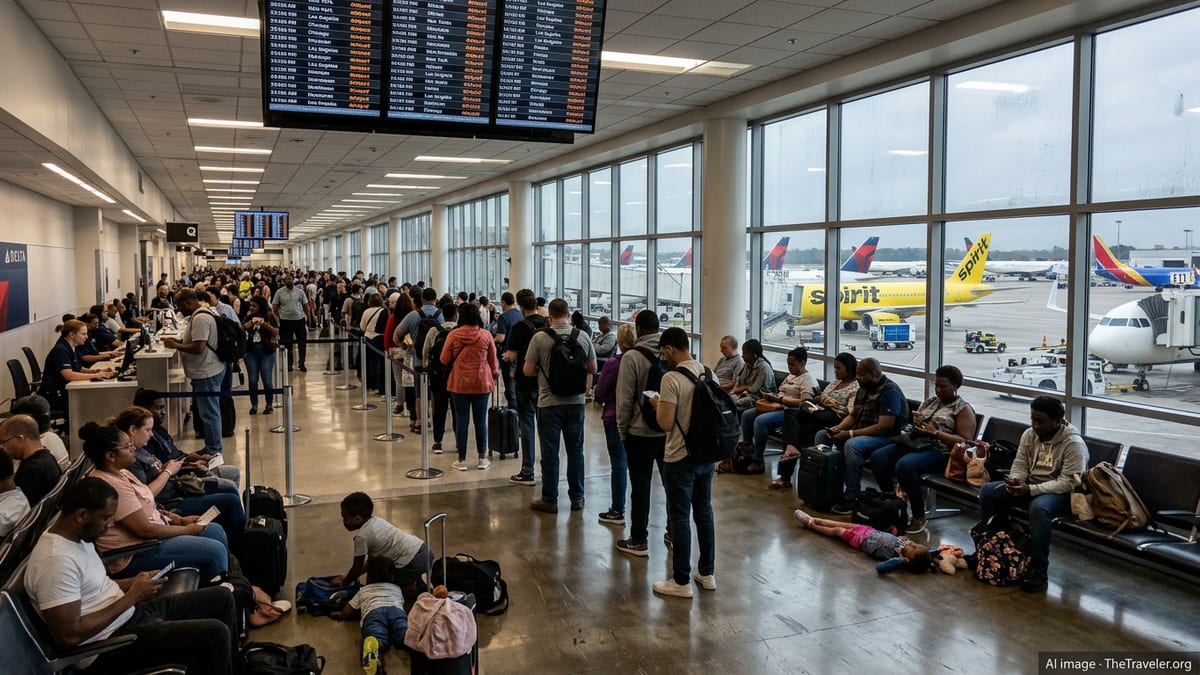
Hub Disruption at the World’s Busiest Airport
The latest operational snarl at Atlanta’s primary airport underscores how quickly issues at a single hub can spread across airline networks. Data from flight-tracking and disruption-monitoring platforms on June 16 suggest that a combined 239 movements at Hartsfield-Jackson were either canceled outright or departed and arrived late, affecting departures and arrivals throughout the day.
Reports indicate that the impact was distributed across a broad mix of carriers. Among those affected were Delta Air Lines, Frontier Airlines, Southwest Airlines, American Airlines, United Airlines, Lufthansa, Air France and Etihad Airways, all of which operate key domestic and international services through Atlanta. Several regional and codeshare partners were also caught in the ripple effect as aircraft and crews fell out of position.
Hartsfield-Jackson serves as the principal hub for Delta Air Lines and a significant base for low cost operators including Frontier and Southwest. As a result, relatively modest disruption in terms of raw numbers can still have an outsized impact, particularly on connecting traffic. With many itineraries built around tight connections through Atlanta, even short delays can cause missed onward flights and force extensive rebooking.
Operational data published in recent months show that Atlanta regularly appears near the top of U.S. rankings for overall volume of delays and cancellations during periods of severe weather or system strain. Today’s figures, while smaller than during major storm or ground stop events, still represent a notable interruption in what is promoted by the airport as one of the most efficient hub operations in the world.
Major Airlines and Global Alliances Affected
Network carriers bore much of the burden as the day progressed. Delta, as the dominant operator at Atlanta, experienced a series of delayed departures on core domestic routes to cities such as Denver, Phoenix and Salt Lake City, based on live schedule boards and tracking feeds. Additional delays were reported on transcontinental and Latin American services, where aircraft arriving late into the hub forced subsequent knock-on schedule changes.
American Airlines and United Airlines, which use Atlanta primarily as a spoke rather than a hub, nonetheless registered delayed departures and arrivals on routes into their own connecting centers, including Dallas Fort Worth, Charlotte, Chicago and Washington. These disruptions risked propagating beyond Atlanta as late aircraft continued onto secondary legs across the United States and Canada.
Low cost rivals were not spared. Frontier and Southwest, both of which operate dense point to point schedules from Atlanta, saw late departures on popular leisure and visiting friends and relatives routes. Disruption on these services can be particularly challenging to recover from, as aircraft may be scheduled to touch multiple cities in quick succession, leaving minimal buffer time.
International operations also showed strain. Publicly available timetable and historical tarmac delay data confirm that major transatlantic carriers such as Lufthansa and Air France maintain regular services between their European hubs and Atlanta, connecting passengers from the United Kingdom, Germany and France into the broader U.S. South and Midwest. More recently introduced long haul links, such as Etihad Airways flights between Atlanta and Abu Dhabi, serve as important gateways between the southeastern United States and the United Arab Emirates, as well as onward connections to South Asia and Africa.
Global Reach of Today’s Delays
Because Atlanta is deeply integrated into transcontinental and intercontinental networks, the disruption was felt far beyond Georgia. Passengers traveling between Canadian cities and southern U.S. destinations, as well as those connecting from the United Kingdom, Germany and France into Mexico and South American countries via Atlanta, faced missed connections, extended layovers and unplanned overnight stays.
Travel industry analysis notes that Atlanta’s role as a super hub multiplies the effect of each schedule change. A single delayed inbound flight from Europe can connect to dozens of U.S., Caribbean and Latin American departures, meaning that a delay measured in minutes at the gate can cascade into hours of inconvenience across multiple continents. The 226 delays recorded today therefore likely translated into a far larger number of individual itinerary disruptions.
The United Arab Emirates and wider Gulf region were also indirectly impacted. With Etihad linking Atlanta to Abu Dhabi and several U.S. and European carriers offering onward options to the Middle East, delays on either side of the Atlantic can narrow connecting windows and require passengers to be rerouted through alternative hubs such as New York, Chicago or Dallas. Published travel advisories in recent weeks have highlighted similar patterns when U.S. hubs experience localized operational stress.
For travelers heading to Mexico and South American destinations, Atlanta serves as a key staging point, especially for Delta and its international partners. When departure banks from Atlanta slip behind schedule, aircraft can arrive late into airports where night curfews or limited ground handling capacity further restrict options, occasionally forcing reroutes or next day departures.
Recent Strains Highlight System Vulnerabilities
The latest disruption follows a series of challenging months for Hartsfield-Jackson and its resident airlines. Earlier in the year, winter weather and government shutdown related pressure contributed to extended security lines and ground delays at the airport, prompting public criticism of screening bottlenecks and calls for more robust contingency planning. While today’s event appears more contained, it adds to a broader picture of a system operating with limited slack.
Historical consumer protection reports and airport traffic statistics show that Atlanta’s combination of heavy volume, complex runway utilization and dense connecting banks leaves little margin whenever weather, staffing or technical issues arise. During past incidents, such as major storm systems and electrical failures, the airport has recorded hundreds of cancellations and widespread delays in a single day, with long tarmac holds for some international flights.
Industry observers note that while airlines and the airport have invested in additional technology and operational coordination since those events, the continuing appearance of Atlanta at or near the top of national delay rankings during peak stress periods suggests that systemic vulnerabilities remain. Tight scheduling, heavy reliance on banked connections and the concentration of traffic at a few mega hubs all increase the risk that relatively small disruptions can quickly escalate.
For carriers like Delta, which rely on Atlanta as a cornerstone of their global networks, maintaining resilience at the hub is critical not only for local travelers but for customers connecting between regions as distant as Canada and the Middle East, or the United Kingdom and South America. Any reduction in performance at Atlanta can have immediate commercial and reputational consequences in these interconnected markets.
What Travelers Can Expect in the Coming Days
Travel experts recommend that passengers using Atlanta in the near term plan for continued knock on effects, even if the raw number of cancellations subsides. Aircraft and crews disrupted by today’s irregular operations can take several rotations to return to normal positions, particularly on long haul routes linking Atlanta with Europe and the Middle East.
Publicly accessible airline advisories in recent incidents indicate that carriers typically respond to such events by offering flexible rebooking options, encouraging travelers to move to less congested departure times or alternate routings. Some airlines have also periodically issued travel waivers for Atlanta customers facing unusually long security or connection times, allowing itinerary changes without additional fees.
Passengers with itineraries involving tight connections through Atlanta, especially those linking domestic U.S. segments with transatlantic or transcontinental flights, may wish to consider building in extra time or selecting earlier departures where possible. Travel insurers and consumer advocates also advise keeping documentation of delays and disruptions, since international conventions and local regulations may provide avenues for compensation or reimbursement in cases of severe delay, missed connections or overnight stays.
While operations at Hartsfield-Jackson typically recover more quickly than at smaller airports due to its extensive infrastructure and large airline presence, the scale of its network means even a day with 13 cancellations and more than 200 delays can have lingering consequences for travelers across North America, Europe, the Middle East and Latin America.