


More news on this day
Middle Eastern air travel is facing renewed disruption as a fresh wave of cancellations and delays ripples across Bahrain, Saudi Arabia, Türkiye and the United Arab Emirates, with at least six flights cancelled and nine delayed on Tuesday, affecting services by Saudia, Kam Air, Pakistan International Airlines and several regional carriers.
Get the latest news straight to your inbox!
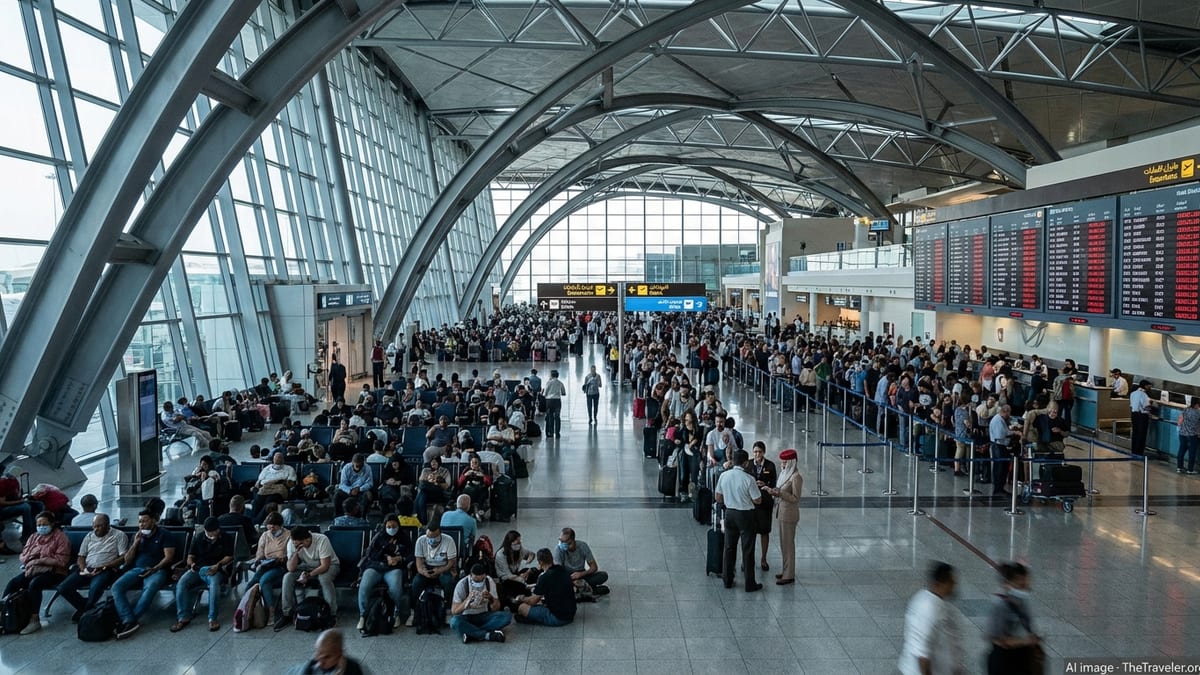
Patchwork Disruptions Across Key Gulf Hubs
Published schedules and airport data for June 16 point to a patchwork of disruption rather than a single, centralized shutdown, but the effect for travelers is no less severe. Flight-tracking and airport information platforms show cancellations and rolling delays touching Bahrain’s Manama hub, Riyadh in Saudi Arabia, Istanbul in Türkiye and Abu Dhabi in the UAE, underlining how sensitive regional air corridors remain.
In Bahrain, publicly available timetables show a reduced and frequently adjusted operation, with several services either rerouted through Saudi Arabia’s Dammam or removed from schedules following earlier airspace closures linked to regional tensions. While Bahrain International Airport is formally open, a number of Gulf Air and partner flights have yet to be restored, and fresh cancellations on June 16 added to the uncertainty for passengers connecting between Asia and Europe.
Riyadh and other Saudi gateways are still handling substantial traffic, but delays involving airlines such as Saudia and Pakistan International Airlines reflect congestion and the need to steer around sensitive airspace. Industry trackers indicate that some flights are being held on the ground while revised routings are evaluated, contributing to late departures and missed onward connections for travelers heading to or from the kingdom.
Abu Dhabi, a major transfer point for South and Southeast Asian travelers, remains under particular scrutiny after months of intermittent disruption related to security concerns and airspace restrictions. While most scheduled services are operating, isolated cancellations and extended delays on select regional routes continue to ripple through the network, especially for passengers booked on multi-leg itineraries involving Gulf stopovers.
Saudia, Kam Air and PIA Among Carriers Affected
The latest round of disruption is hitting a diverse group of airlines, underscoring the interlinked nature of Middle Eastern and South Asian air travel. Saudia, Saudi Arabia’s flag carrier, has been contending with delayed departures and periodic route adjustments as it navigates changing overflight permissions and congested corridors into and out of Riyadh, Jeddah and Dammam.
Afghan carrier Kam Air, which uses Gulf hubs as vital transit points for passengers traveling between Afghanistan, South Asia and Europe, has seen flights repeatedly reshuffled in recent months. Today’s cancellations and delays affecting Kam Air itineraries through the Gulf highlight how even carriers without their own large hub infrastructure in the region are exposed when key nodes such as Manama and Abu Dhabi encounter operational strain.
Pakistan International Airlines, already operating under financial and restructuring pressure, is also among those affected. Public reports from travelers and tracking platforms indicate that PIA services linking Pakistan with the Gulf continue to experience last-minute schedule changes, with some journeys extended by diversions or missed connections when flights out of hubs such as Riyadh or Bahrain depart late.
Other regional and international airlines, including low-cost operators based in the UAE and Türkiye, are similarly grappling with irregular operations. Earlier episodes of mass cancellations in the UAE this spring, which saw dozens of flights grounded in Dubai and Abu Dhabi, illustrate how quickly conditions can deteriorate once a combination of weather, security procedures and airspace limits converge.
Regional Tensions and Airspace Restrictions Keep Networks Fragile
The latest wave of flight disruption unfolds against the backdrop of persistent geopolitical tensions affecting Middle Eastern airspace. In recent months, a series of incidents has prompted temporary closures or tighter controls in parts of the region, forcing airlines and air navigation authorities to design longer, more complex routings between the Gulf, Europe and South Asia.
Earlier this year, Bahrain’s airspace faced partial closure, triggering repeated cancellations for carriers that rely on Manama as a connecting point between Asia and Europe. Travelers reported multiple last-minute cancellations and rebookings, particularly on Gulf Air itineraries, as airlines struggled to secure viable alternative paths around restricted zones.
The UAE has also experienced extended periods of disruption. In mid-April, more than 30 flights were cancelled across several Emirati airports, and subsequent weeks brought further isolated cancellations as airlines adjusted capacity and routings. Although many of those large-scale suspensions have since eased, today’s smaller cluster of six cancellations and nine delays shows that recovery remains incomplete.
Türkiye’s position as a bridge between Europe and the Middle East leaves Istanbul particularly exposed. When airlines modify routings around the Gulf, Istanbul’s airports often see knock-on effects in the form of altered departure slots, tighter turnarounds and occasional delays, especially for flights feeding into congested Gulf hubs or operating as part of complex multi-leg itineraries.
Passengers Face Missed Connections and Uncertain Itineraries
For travelers, even a modest number of cancellations and delays can translate into a day of uncertainty. The cluster of six cancelled and nine delayed flights reported across Manama, Riyadh, Istanbul and Abu Dhabi on June 16 is enough to strand passengers at intermediate points, particularly those flying on separate tickets or via smaller regional carriers with limited rebooking options.
Passenger accounts shared on public forums in recent weeks describe a familiar pattern: flights initially delayed by several hours before being cancelled outright, limited same-day alternatives once regional hubs are congested, and long waits for rebooking or refunds. Those experiences underline how vulnerable point-to-point and connecting passengers remain when regional networks come under stress.
Industry guidance generally urges passengers transiting the Middle East to monitor their flight status closely in the 24 to 48 hours before departure and to allow generous connection times, especially when traveling through hubs that have experienced recent airspace-related disruptions. Travelers relying on separate tickets or budget carriers are particularly at risk of missed onward flights if an earlier leg is delayed.
Airlines operating in the region continue to emphasize updated schedule information through their digital channels and airport displays, but abrupt changes driven by security or routing decisions can still occur close to departure. Travel advisers suggest that passengers build flexibility into itineraries, including the possibility of overnight stops or alternative routings via less congested hubs, when planning trips through the Gulf and surrounding areas.
Outlook: Gradual Stabilization, Persistent Volatility
While there is no indication of a broad shutdown of Middle Eastern airspace on June 16, the new wave of cancellations and delays underscores how fragile regional connectivity remains. Network planners at airlines such as Saudia, Kam Air and Pakistan International Airlines continue to adjust their schedules in response to evolving operational and security conditions, which can change with limited notice.
Air cargo and passenger demand for routes linking South Asia, the Gulf and Europe remains strong, encouraging carriers to restore and expand services wherever feasible. However, ongoing uncertainty around overflight permissions and the possibility of renewed tensions keep contingency planning at the forefront for both airlines and airports.
For now, the picture for Middle Eastern travel is one of gradual stabilization punctuated by episodes of volatility, such as the six cancellations and nine delays recorded today across Bahrain, Saudi Arabia, Türkiye and the UAE. For passengers, that translates into a need for vigilance, flexibility and a clear understanding of their rights when journeys do not go according to plan.