


More news on this day
Train services across central Auckland have largely returned to normal after a city-centre fire triggered major disruption on Friday, halting services through key stations and leaving thousands of commuters scrambling for alternative transport.
Get the latest news straight to your inbox!
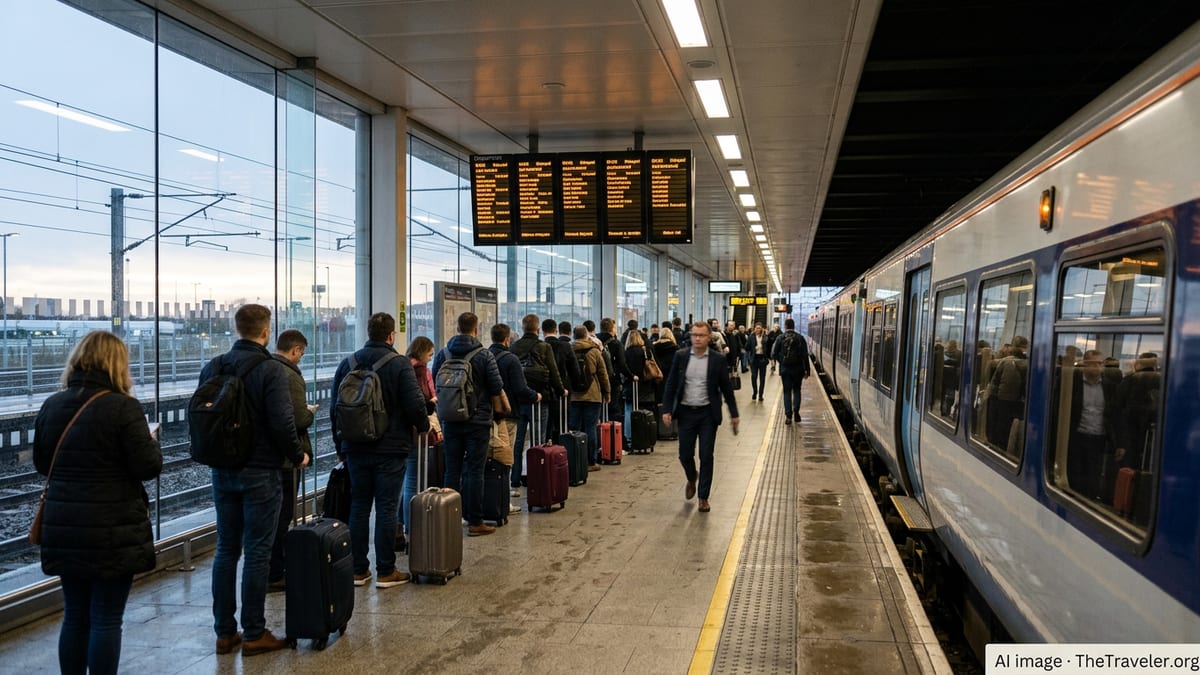
Fire near central hub triggers sudden shutdown
Reports indicate that a fire in Auckland’s central business district, close to the core of the metropolitan rail network, led to the rapid shutdown of services on Friday. Rail operations through key inner-city stations were suspended while emergency crews attended the blaze and safety checks were carried out on nearby rail infrastructure.
Publicly available information shows that the disruption focused on the section of the network serving the downtown area, where lines converge to connect southern, western and eastern suburbs with the city centre. Trains already in the system were held outside affected stations, while others were terminated short of the central city to create a buffer around the incident.
The stoppage came at a busy time for travel, compounding pressure on a network that has already been under strain from long-running maintenance and City Rail Link preparations. Social media updates and local coverage described packed platforms, crowded buses and lengthy delays as passengers were advised to avoid non-essential travel into the central city.
Initial assessments suggested that the fire itself was not directly on the tracks, but close enough to trigger rail safety precautions. Under national rail safety protocols, any incident involving fire near tunnels, signalling equipment or overhead lines typically results in an automatic halt to services until specialist inspections confirm it is safe to run trains.
Network recovery and services back on timetable
By Saturday, most lines were reported to be operating to normal timetables, with only minor residual delays on some services as operators worked trains and crews back into position. According to published coverage and transport agency updates, regular patterns on the Southern, Eastern and Western lines have been restored, with trains once again running through the central core of the network.
Rail operators progressively reopened the affected section once emergency responses wound down and technical staff cleared the infrastructure. Signals, power supply systems and station facilities underwent checks before each section was handed back for passenger use. This staged process meant that some services resumed earlier on the outskirts, while central-city services followed after additional verification.
For most passengers, the return to a standard weekday-style service has brought immediate relief. Commuters on Monday morning are expected to see trains operating at typical frequencies through central Auckland, although transport agencies are recommending that passengers allow extra time and check for any short-notice alterations as the network beds back into its regular rhythm.
Observers note that the relatively swift return to normal operations reflects procedures that have been refined over several years of frequent disruption, including storm damage, infrastructure faults and previous fire-related incidents near rail facilities in the city centre.
Replacement buses, diversions and commuter frustration
During the height of the disruption, replacement buses and alternative routes were deployed to keep people moving. Public updates outlined a mix of scheduled bus routes and hastily arranged shuttle services linking major suburban hubs with the edge of the closed rail section.
Despite these measures, passengers reported long waits and crowded vehicles as the sudden loss of rail capacity rippled across the wider transport network. Social media posts from central Auckland on Friday and into the evening highlighted queues at bus stops, heavy traffic on key approach roads and limited information on estimated journey times.
Reports indicate that some travellers chose to walk between inner-city destinations rather than wait for replacement services, particularly in and around the central business district where distances between hubs are relatively short. Ride share demand spiked, contributing to congestion on streets already busy with diverted buses and private vehicles.
Travel patterns on Friday evening and early Saturday showed how dependent the region remains on its rail spine for moving large numbers of people in and out of the city centre. Even a temporary halt, lasting only several hours, translated into delayed shift changes, missed connections and rearranged weekend plans across the metropolitan area.
Safety protocols and lessons for a growing rail network
The incident has again focused attention on how Auckland’s rail system manages external shocks as it prepares for a step-change in capacity with the opening of the City Rail Link. Network operators are required to apply conservative safety margins when events such as fires occur near tracks, tunnels and control systems, and this latest disruption followed that pattern.
Publicly available information on recent City Rail Link testing indicates that emergency scenarios, including fire alarms and evacuations, have been a key part of dress rehearsals for the new underground section. These exercises are designed to ensure that signalling, communications and evacuation procedures can cope with unexpected events without compromising passenger safety.
Transport analysts observing the latest disruption point to the balancing act between strict safety protocols and the need to maintain reliability on a network that already faces capacity constraints. While some passengers expressed frustration at the scale of the stoppage, rail specialists note that an overly cautious approach is typically favoured where there is any uncertainty about potential damage to signalling gear, overhead wiring or tunnel systems.
The fire-related shutdown also serves as an informal test of coordination between rail operators, emergency services and the wider urban transport system. Responses to earlier incidents in Auckland have highlighted the importance of clear, frequent communication to passengers and the rapid deployment of bus bridges and diversions when tracks suddenly close.
Ongoing scrutiny of reliability as Auckland grows
The latest disruption arrives at a time when the reliability of Auckland’s public transport, particularly its rail services, is under intense scrutiny. Recent official reviews of the metro rail network have documented the impact of infrastructure faults, track wear and extreme weather on day-to-day operations, and have called for long-term investment to improve resilience.
As trains resume normal operations following the fire, community debate is likely to continue over how quickly the system can bounce back from unexpected shocks. Public commentary in recent months has frequently highlighted experiences of rolling cancellations and delays, with many users calling for more robust contingency planning and better real-time information when things go wrong.
Urban planners and transport researchers often describe events like the latest fire disruption as stress tests for complex transport “networks of networks,” where bus, rail and road systems are tightly interlinked. The speed with which Auckland’s trains have returned to regular timetables will be studied alongside passenger feedback to refine response plans for future incidents.
For now, rail users are being advised to expect trains to operate normally through central Auckland, while remaining alert to any short-notice changes as crews complete post-incident checks and the network settles back into its usual patterns.