


More news on this day
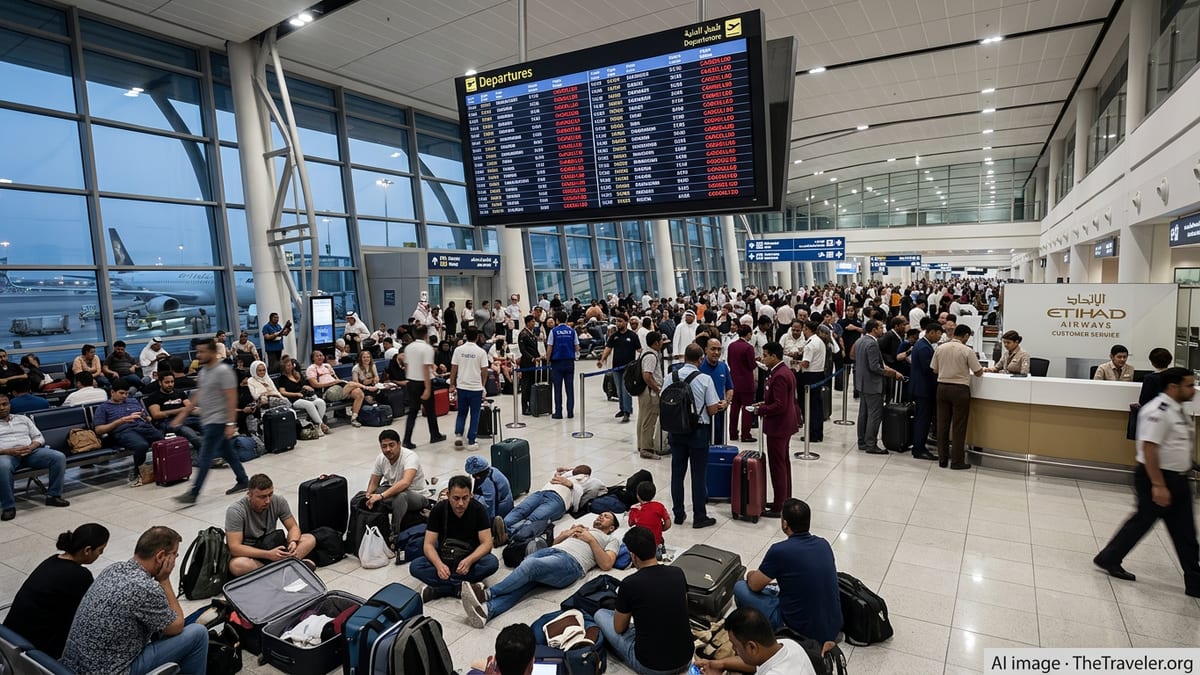
Hundreds of travellers have been left in limbo across the United Arab Emirates as widespread disruptions at Dubai, Sharjah and Abu Dhabi airports delay 633 flights and cancel 38 more, snarling operations at Emirates, Etihad Airways, FlyDubai, Air Arabia and other carriers at the height of the summer rush.
Get the latest news straight to your inbox!
Major UAE Hubs Grapple With Rolling Disruptions
Dubai International, Abu Dhabi’s Zayed International and Sharjah International have each reported significant schedule upheaval over the past 48 hours, with publicly available data showing delays affecting hundreds of departures and arrivals. The combined impact across the three hubs amounts to 633 delayed services and 38 outright cancellations, stretching airline and airport resources and leaving passengers facing extended waits and missed connections.
Reports indicate that Dubai International, the region’s largest hub, has borne the brunt of the disruption, with knock-on delays across its extensive long haul and regional networks. Abu Dhabi and Sharjah, though smaller in scale, have also seen their tightly timed schedules pushed off course, particularly on busy regional routes that rely on short ground turnaround times.
Operational updates from airlines suggest the picture remains fluid, with schedules being adjusted on short notice as carriers respond to congestion, crew rotation challenges and slot restrictions. Travellers have been urged in multiple public advisories to monitor flight status up to the moment of departure rather than relying solely on original itineraries.
Flag Carriers Emirates And Etihad Under Pressure
Emirates and Etihad Airways, which anchor operations at Dubai and Abu Dhabi respectively, have seen parts of their global networks disrupted, according to recent coverage of UAE aviation conditions. Emirates has already been operating with revised schedules on some routes in response to wider regional airspace issues this year, and the latest wave of delays has compounded pressure on connecting banks of flights through Dubai.
In Abu Dhabi, data compiled from flight tracking services and local media reports shows that Zayed International has registered well over 190 delays alongside a smaller number of cancellations, with Etihad bearing much of the impact on long haul and high demand regional routes. Prolonged ground holds on inbound sectors have cascaded through outbound departures, in some cases pushing flights into next day operations.
Both carriers have been using a combination of rebooking onto alternative services, rerouting passengers through other hubs where possible and operating supplementary flights on selected sectors to clear backlogs. Public information from airline help pages emphasizes that disrupted passengers may be offered travel vouchers, refunds or re-routing options depending on the specific circumstances and fare rules.
FlyDubai, Air Arabia And Regional Networks Hit Hard
The disruption has been particularly acute for short haul and budget operations centered on Dubai and Sharjah, where FlyDubai and Air Arabia handle dense schedules serving the Gulf, wider Middle East, South Asia and parts of Europe. Published coverage of current operations highlights repeated cancellations and rollover delays on routes to Saudi Arabia and other regional destinations, compounding uncertainty for travellers who rely on these carriers for point to point and feeder services.
FlyDubai has recently issued operational updates advising customers of continuing schedule changes and urging them to check online tools before heading to the airport. Air Arabia, which operates from both Sharjah and Abu Dhabi in addition to other UAE points, has also adjusted frequencies and, in some cases, suspended services on routes affected by airspace restrictions and airport level disruptions.
Because many itineraries on these carriers involve tight connections or onward travel on separate tickets, even modest delays can cause major itinerary failures. Reports from passengers on social platforms describe missed regional connections, overnight stays near airports and difficulty securing alternative seats on already full peak season services.
Passengers Face Long Waits, Missed Connections And Limited Options
The immediate impact for travellers has been seen in crowded departure halls, extended waits at check in and customer service desks, and long lines at transfer counters as passengers attempt to salvage disrupted journeys. Anecdotal reports from UAE travel forums and social channels describe families sleeping in terminal seating, business travellers racing to rebook last minute and visitors worried about overstaying visas as itineraries unravel.
Information from consumer guidance articles on UAE aviation notes that under local civil aviation standards, airlines are generally expected to offer either re-routing at the earliest available opportunity or refunds when flights are cancelled, although compensation rules can vary depending on the cause and the jurisdiction governing the ticket. In cases of severe, networkwide disruption, accommodation and meal support may be prioritized for the most vulnerable travellers and those facing the longest delays.
Travel experts quoted in recent public analysis of the region’s aviation situation stress the importance of maintaining direct contact with airlines via official apps and call centers, as airport desks can quickly become overwhelmed. Passengers holding tickets through third party agents may experience additional hurdles because rebooking sometimes must be initiated through the original point of sale.
Why Operations Are So Fragile This Summer
The latest wave of delays and cancellations in the UAE comes against a backdrop of already stressed regional aviation networks. Recent months have seen multiple carriers across the Gulf adjust routes, extend suspensions and reroute flights around sensitive airspace, often adding flight time and consuming spare aircraft and crew capacity. Coverage from regional business outlets notes that airlines have entered the peak summer season with little operational slack.
As a result, relatively small disruptions at a single airport can rapidly ripple into hundreds of delayed flights across interconnected schedules in Dubai, Abu Dhabi and Sharjah. Aircraft arriving late into a hub miss their departure slots, crews run up against regulated duty time limits, and the resulting rescheduling creates congestion both in the air and on the ground. This dynamic is particularly pronounced for hub carriers that rely on tightly sequenced waves of arrivals and departures.
Analysts point out that while UAE airports and airlines have considerable experience managing disruption, a combination of regional geopolitical tension, high demand, and constrained capacity has left operations more fragile than in previous years. The current episode, with more than 600 delays and dozens of cancellations across three major hubs, underlines how quickly that fragility can be exposed when conditions deteriorate, and why travellers transiting the UAE this summer may need to plan for extra time and backup options.