


More news on this day
Australian travellers heading to Europe are being urged to brace for potential queues of up to six hours at passport control as the European Union’s new digital border regime struggles under peak-season pressure.
Get the latest news straight to your inbox!
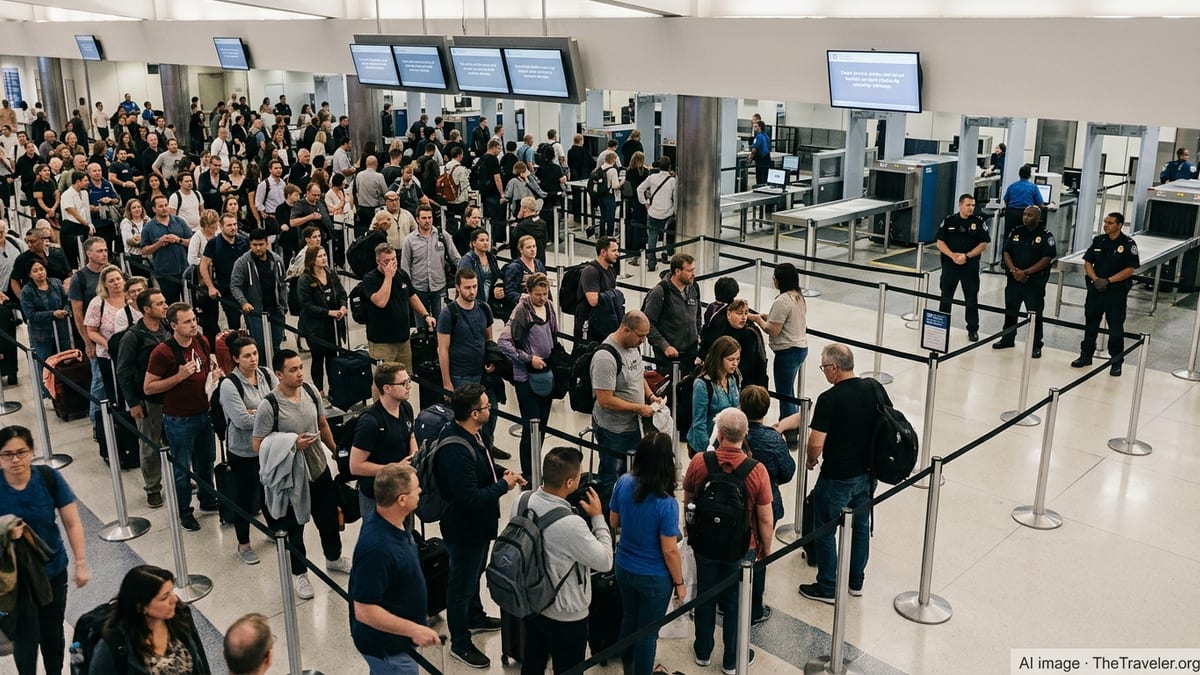
New border system driving long waits
The warnings stem from the rollout of the European Union’s Entry/Exit System, or EES, which replaces manual passport stamping with biometric registration for non-EU nationals entering the Schengen area. The system is designed to strengthen security and automate the recording of entries and exits, but its introduction has coincided with reports of lengthy queues at major European gateways.
Industry groups representing airports and airlines in Europe have repeatedly highlighted “significant delays” since the first phase of EES went live in late 2025 and expanded through early 2026. Publicly available information from these organisations points to processing times that have increased by as much as 70 per cent at some border posts, with waits stretching to several hours during busy periods.
While initial disruption was expected as systems bedded in, recent surveys and travel-sector briefings suggest that bottlenecks remain a concern ahead of the northern summer peak, particularly for passengers arriving from visa-exempt countries such as Australia.
Six-hour queues no longer a distant scenario
In recent weeks, consumer travel coverage in Europe has carried repeated cautions that queues at some airports could reach six hours as the summer holiday rush collides with full-scale biometric checks. The International Air Transport Association has been cited warning that waits of around four hours have already been recorded during peak surges and that, without corrective measures, some hubs could see delays doubling.
Reports from European newspapers and specialist travel outlets describe congested arrival halls at major Schengen gateways, including in Spain, France, Belgium and the Netherlands, where non-EU visitors must enroll or verify fingerprints and facial images at dedicated kiosks before proceeding to a border officer. At times, airport operators have resorted to temporarily suspending or throttling the use of EES in order to prevent passengers missing onward connections.
For Australians, who typically arrive after journeys of 20 hours or more, the prospect of multi-hour waits at immigration is fuelling concern within the travel trade. Published commentary on aviation and tourism forums shows some long-haul travellers already reconsidering itineraries involving tight connections within Europe, particularly at airports that have reported the heaviest congestion.
How the new checks work for Australians
Under the new regime, Australians travelling as short-stay visitors to the Schengen zone remain visa-exempt for now, but are required to register their entry and exit details electronically. On a first trip after EES implementation, non-EU nationals must provide biometric data, including fingerprints and a facial image, which are stored in a central EU database alongside passport information and the dates and places of border crossings.
Once this initial enrolment is complete, subsequent trips should, in theory, be faster, as border authorities retrieve existing records rather than capture data from scratch. However, travel reports indicate that technical glitches and inconsistent procedures have sometimes forced passengers to repeat the process, contributing to renewed queues even for returning visitors.
For Australians, the system applies when entering or exiting the external borders of the Schengen area, whether flying directly from Australia into a hub such as Rome, Frankfurt or Amsterdam, or connecting via a non-Schengen point such as London before continuing to continental Europe. Travellers transiting entirely within the Schengen zone after their first entry are not reprocessed at internal borders, but delays on that first arrival can ripple through to missed trains, lost hotel nights and rearranged tours.
Industry pushes for urgent fixes before peak season
Alarmed by the prospect of sustained congestion through July and August, major airport and airline associations have jointly called for an immediate review of how EES is being managed at the border. Their publicly released statements urge European institutions to allow member states greater flexibility to suspend or scale back the use of biometric registration temporarily when queues become excessive.
One coalition representing European airports, airlines and carriers notes that some border posts are still operating with limited staffing, insufficient kiosks and infrastructure not fully adapted to the extra steps required for non-EU travellers. The group argues that, without swift adjustments, EES risks creating what it describes as “systemic disruptions” for passengers and harming Europe’s reputation as an accessible destination.
Individual airports have also issued their own warnings, with operators at several major hubs acknowledging that waits of two to three hours have already occurred during test phases and initial rollout. Some have publicly argued for extended transition periods, phased implementation by nationality group, or a more generous use of contingency powers that allow them to revert to traditional stamp-and-check procedures during crunch periods.
What Australian travellers can do now
Although Australians cannot avoid the new checks altogether, travel experts and consumer advisories suggest several practical steps to reduce the risk of getting caught in the longest queues. First, travellers are being encouraged to build in additional buffer time when booking itineraries that involve a same-day connection within Europe, particularly if the first point of arrival into the Schengen area is a large, busy hub.
Australian government travel advice and airline guidance both recommend that passengers monitor airport and carrier communications in the weeks before departure, as some gateways may publish specific instructions on where to go for EES registration and how early to arrive. Using official channels and reputable travel agents to stay up to date is being emphasised as a safeguard against misinformation about changing rules.
At the airport, arriving as early as check-in allows, having passports easily accessible and following signage to the correct EES kiosks can help streamline the process. Families and groups are being advised to stay together in queues to avoid duplicating checks. For those connecting onward within Europe, travel planners are increasingly suggesting a minimum layover of three hours and, where possible, an overnight stop to absorb potential disruption.
With the EU also preparing to introduce its separate travel authorisation scheme, known as ETIAS, in the coming year, analysts say the current strains are a critical test of how Europe manages the broader shift to digital border control. For Australians eager to return to their favourite European destinations, awareness of the changing landscape and a willingness to plan around it may make the difference between a smooth arrival and a holiday that starts in a queue.