


More news on this day
Air travel across Brazil faced fresh disruption as major hubs in Brasília, Rio de Janeiro, São Paulo, Campinas, Porto Alegre, Recife and other cities collectively registered 53 flight cancellations and 203 delays, disrupting operations for leading carriers including LATAM, Azul, Aerolineas Argentinas and Iberia and stranding thousands of passengers at the start of the busy mid year travel period.
Get the latest news straight to your inbox!
Widespread Disruptions Across Brazil’s Main Air Network
Publicly available flight tracking data and industry coverage indicate that the latest wave of disruptions has affected a broad swath of Brazil’s domestic and international air network. Airports in São Paulo, Rio de Janeiro, Brasília, Campinas, Porto Alegre, Recife, Cuiabá and Goiânia have all reported a mix of cancellations and late operations, with a combined total of 53 cancelled departures and arrivals and 203 delayed flights in a single day.
The disruptions are concentrated at the country’s main hubs, including São Paulo Guarulhos and Congonhas, Rio de Janeiro’s Galeão and Santos Dumont, Brasília International and Campinas Viracopos. These airports function as key connecting points for domestic routes and regional links to neighboring countries, magnifying the impact of any schedule irregularities as missed connections ripple through the network.
Reports indicate that LATAM Brasil has borne the brunt of the latest operational pressures, with dozens of its flights delayed or cancelled as it works to reposition aircraft and crew around the country. Azul, Aerolineas Argentinas, Iberia and other international and regional carriers have also seen their operations disrupted, especially on flights touching São Paulo and Rio de Janeiro.
The cancellations and delays come as Brazilian aviation continues to operate close to capacity on popular business and leisure corridors, leaving limited flexibility when single aircraft rotations are disrupted. Travelers on multi leg itineraries are particularly exposed, facing missed connections and extended waits for rebooking options.
LATAM, Azul and International Carriers Scramble to Recover
LATAM Brasil has emerged as the airline most heavily affected in the current round of disruption, according to aggregated daily performance figures. Across its network, the carrier has logged more than 80 delayed flights and over 20 cancellations in the latest reporting period, with irregular operations touching almost every major Brazilian hub where the airline maintains a presence.
Azul, which operates a dense domestic network linking secondary and regional airports to major cities, has also experienced knock on effects. Schedule data show late departures and arrivals on several Azul services connecting Campinas, Recife and Porto Alegre with other parts of the country, prompting reactive changes to aircraft rotations and passenger reallocation.
International operators have not been spared. Aerolineas Argentinas flights between Brazil and Argentina, as well as Iberia’s services linking Brazilian gateways with Europe, have faced delays and schedule adjustments as arrival and departure slots shifted. These carriers rely heavily on precise connectivity windows to feed long haul and regional networks, making any extended ground time particularly disruptive for onward passengers.
Airlines have responded by offering rebooking options on later services, placing affected travelers on alternative routings via different hubs and, in some cases, arranging overnight accommodation where mandatory. Passenger advocates note, however, that high load factors across Brazilian routes limit the availability of open seats, which can extend recovery times for those whose flights have been cancelled outright.
Operational Strains Follow Earlier Technical Issues in São Paulo
The latest irregular operations follow a period in which Brazil’s busiest airspace has already been under scrutiny for reliability. Earlier in June, a technical failure affecting air traffic communications in the São Paulo region temporarily suspended departures at key airports and led to a wave of cascading delays and cancellations, with knock on effects reported as far away as Fortaleza, Brasília and Porto Alegre.
In addition, previous months saw operational challenges related to an earlier disruption of the airspace structure over São Paulo, which resulted in additional cancellations and late arrivals at Guarulhos, Congonhas and Viracopos. Those episodes highlighted how sensitive Brazil’s air transport system is to interruptions in one of its primary control sectors and how quickly localized issues can spread nationwide.
While the current pattern of 53 cancellations and 203 delays appears driven primarily by day to day operational constraints rather than a single acute incident, analysts point out that repeated shocks can erode passenger confidence and strain airline finances. Every cancellation can translate into compensation, duty of care obligations and lost revenue, while long delays increase fuel burn through extended taxi times and additional handling costs.
Industry observers have called attention to the need for added resilience in Brazil’s aviation infrastructure, urging closer coordination between air navigation services, airport operators and airlines to ensure smoother recovery when irregular operations occur. Investments in systems redundancy, staffing and contingency planning are seen as essential to absorb future disruptions, especially as traffic volumes grow.
Passengers Face Long Queues, Missed Connections and Rebooking Challenges
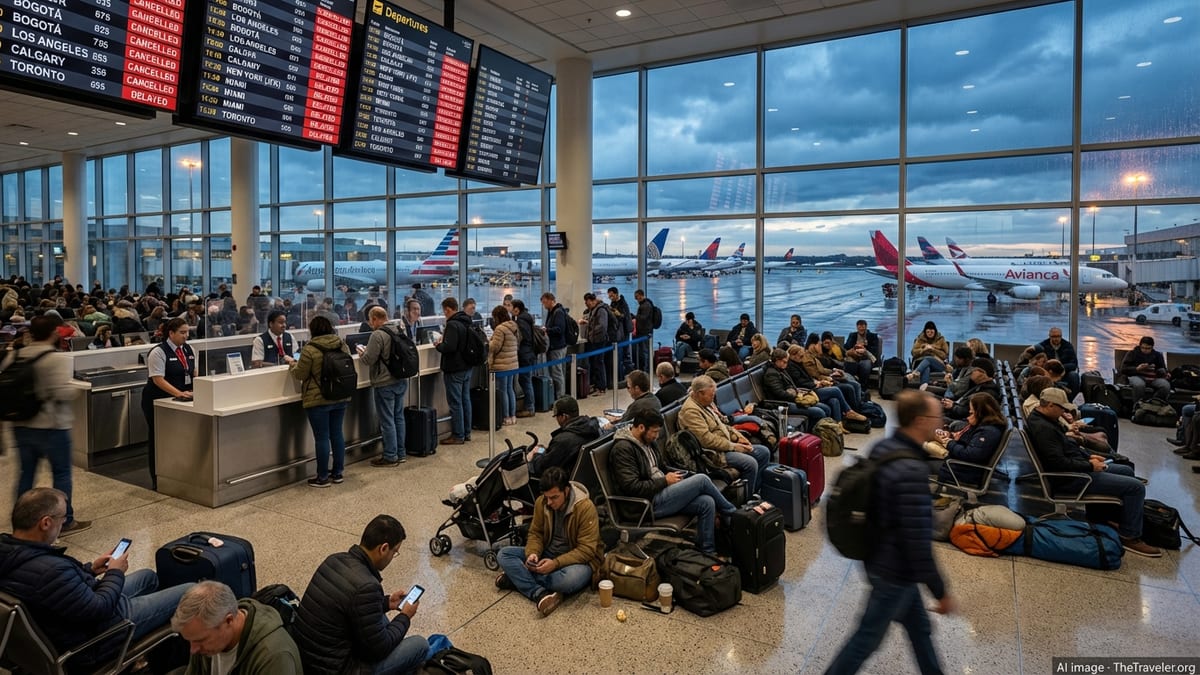
For travelers, the figures on cancellations and delays translate into long queues at check in counters and customer service desks, missed connections and uncertainty about when they will reach their destinations. Reports from Brazilian media and passenger accounts on social platforms describe crowded terminal halls in São Paulo, Brasília and Rio de Janeiro, where travelers waited for reassignment onto later flights.
With LATAM, Azul and other carriers operating many routes at or near full capacity, same day rebooking has proven difficult in some markets, especially for families and groups who prefer or require to travel together. In several cases, passengers have been split across multiple flights or rerouted through alternative hubs, such as connecting via Brasília or Campinas instead of São Paulo or Rio de Janeiro.
Travel advisories published by local outlets and airport information services recommend that passengers flying into or out of the affected airports check their flight status frequently, arrive early at the terminal and maintain flexible plans in case of schedule changes. Travelers with tight onward connections, including international departures, are being encouraged to allow extra buffer time at the airport or consider earlier feeder flights where possible.
Consumer organizations in Brazil also reiterate that passengers have rights in the event of long delays and cancellations, although the type and level of assistance can depend on the circumstances that caused the disruption. Information posted by regulatory and advocacy bodies advises travelers to keep receipts for meals, transportation and lodging in case reimbursement or compensation is later available.
Outlook for Brazil’s Busy Mid Year Travel Season
The current wave of cancellations and delays arrives just as Brazil moves through one of its busiest travel periods of the year, with school holidays and religious holidays contributing to a spike in demand. Forecasts from airport operators and government linked agencies earlier in June projected strong passenger flows through major terminals, supported by a steady recovery in both leisure and business travel.
Despite the disruptions, Brazilian aviation has largely maintained a robust rebound from the downturn experienced in earlier years, with airlines adding new routes and frequencies to meet demand. São Paulo Guarulhos continues to expand its international network, while regional hubs in the Northeast and South are seeing increased connectivity to both domestic and neighboring markets.
Analysts caution, however, that sustained growth must be matched by reliable operations to preserve the sector’s momentum. Recurring episodes of widespread delays and cancellations, even when spread across different carriers and airports, risk undermining traveler confidence and could push some passengers toward alternative modes of transport on shorter routes.
For now, Brazil’s main airlines and airports are focused on restoring normal schedules following the latest day of heavy disruption. As operations stabilize over the coming days, performance metrics at hubs such as Brasília, Rio de Janeiro, São Paulo, Campinas, Porto Alegre and Recife will be closely watched for signs that the system is regaining reliability ahead of the peak weeks of the mid year travel season.