


More news on this day
Italy is allocating a further 4 billion euro to modernise and expand its national rail network, strengthening a multi year investment drive aimed at improving reliability, speed and climate resilience across the country’s main passenger and freight corridors.
Get the latest news straight to your inbox!
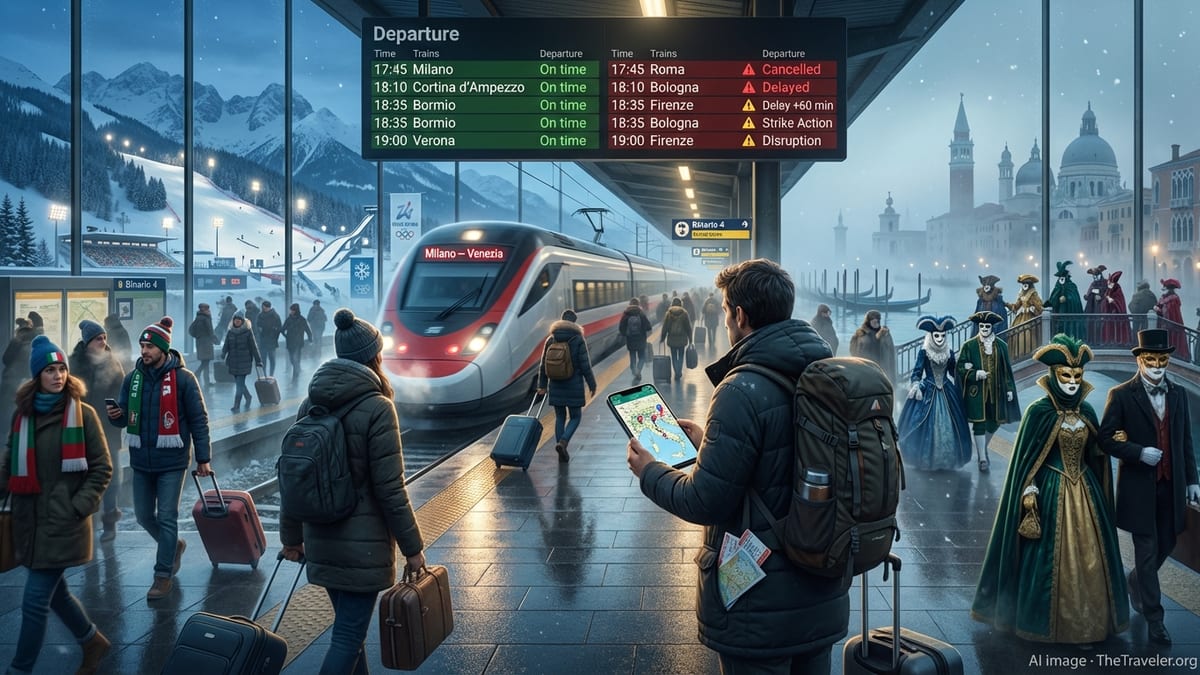
New funds extend 2022–2026 rail investment contract
According to publicly available information from Ferrovie dello Stato Italiane, the additional 4 billion euro is contained in the 2025 update to the investment section of the 2022–2026 programme contract between the Ministry of Infrastructure and Transport and infrastructure manager Rete Ferroviaria Italiana. The update confirms a shared commitment to continue a broad plan of development, technological upgrading and modernisation of the national rail infrastructure.
The package builds on a contract that already mobilises tens of billions of euro for new lines, capacity upgrades and digital signalling across the Italian network. The latest top up is intended to accelerate works that are already under way, close remaining funding gaps and ensure continuity for projects scheduled to carry on into the next planning period.
Public documents indicate that the contract structure allows for periodic revisions as new national budget resources, European funds and financial market instruments become available. The 4 billion euro allocation therefore functions as an incremental boost inside a longer pipeline of investments running well beyond 2026.
Focus on high speed corridors, southern links and digital signalling
The new resources are expected to reinforce priority corridors that form part of the European Union’s Trans European Transport Network, including high speed axes that connect northern Italian cities to each other and to neighbouring countries. Existing plans identify works such as further upgrades along the Milan to Venice corridor, capacity improvements around major junctions and progress on links serving ports and logistics hubs.
Another strategic focus remains the reduction of the long standing infrastructure gap between northern and southern Italy. Italy’s national recovery and resilience plan, financed through the Next Generation EU programme, already earmarks significant resources to modernise railways in the south. Additional national funds through the updated programme contract are seen in public analyses as a way to keep momentum on projects that extend high speed and high capacity standards further south and into internal regional routes.
The modernisation drive is closely linked to the deployment of the European Rail Traffic Management System on conventional and regional lines. Information from the European Commission and Rete Ferroviaria Italiana shows that Italy is preparing a gradual removal of legacy national train control systems, replacing them with interoperable digital signalling that should improve safety, allow more trains to run on existing tracks and facilitate cross border operations.
Integration with wider European rail policy and funding
The latest Italian allocation comes as the European Union advances new rules on the use of railway infrastructure capacity and launches fresh calls for proposals under its Connecting Europe Facility transport programme. Recent communications from European institutions describe a push to optimise network capacity, support cross border services and accelerate high speed rail as part of climate and competitiveness objectives.
Italy is already one of the largest beneficiaries of EU transport funds, particularly for high speed corridors and major tunnels linking the peninsula with neighbouring states. Analysts note that additional national co financing, such as the 4 billion euro top up, can help unlock further European contributions by ensuring that domestic match funding and planning frameworks are in place.
The alignment between national contracts and EU level regulations is also relevant for freight. Policy documents underline that more efficient use of rail infrastructure, better integrated freight terminals and upgraded signalling are necessary to shift more goods from road to rail along key European corridors that pass through Italy.
Implications for passengers, freight and climate targets
Publicly available transport strategies in Italy set out ambitions to make rail the backbone of medium and long distance travel and to raise the share of freight moved by rail. The extra 4 billion euro is framed within this broader policy shift, which aims to improve punctuality, cut journey times and offer more frequent services on both high speed and conventional lines.
For passengers, the combined effect of new infrastructure and digital systems is expected over time to support additional trains on busy routes, more direct connections between regional centres and national hubs, and more resilient operations in the face of disruptions. The investments also coincide with separate rolling stock programmes by operators, which are renewing fleets for both long distance and regional services.
For freight operators and logistics companies, network upgrades can translate into longer passing loops, higher axle loads and better access to intermodal terminals. These changes are viewed in sector analyses as essential to make rail a more attractive option for domestic and international supply chains, especially along routes linking industrial districts with ports and European land corridors.
Climate policy is another driver. Italy’s commitments under EU climate law envisage substantial cuts to transport emissions over the next decade, and modal shift from road and air to rail is cited in planning documents as one of the lowest cost options. The reinforcement of rail investment budgets is therefore being watched as an indicator of how transport decarbonisation strategies are being implemented in practice.
Long term challenges in delivering complex rail projects
While the additional 4 billion euro signals continued political and financial support, sector observers point to persistent challenges in delivering large rail projects on time and on budget. Recent years have highlighted issues such as complex permitting procedures, the technical difficulty of building in mountainous terrain and the need to coordinate multiple agencies and contractors.
Public discussions in Italy also touch on the balance between flagship high speed lines and the modernisation of conventional and regional routes that serve smaller cities and rural areas. Some experts argue that investment in signalling, stations and resilience on these lines can generate significant social benefits and help address regional inequalities, even if they attract less visibility than new high speed sections.
There is also growing attention to the security and robustness of the rail network, following incidents that exposed vulnerabilities in critical infrastructure. Modernisation programmes now increasingly incorporate measures for cyber security, redundancy and faster recovery after disruptions, alongside the traditional focus on capacity and speed.
Against this backdrop, the latest funding decision is seen by analysts as one step in a longer process. The effectiveness of the 4 billion euro allocation will depend on how quickly projects move from planning to construction, how well they integrate with European corridors and how far they improve day to day travel and freight experiences for users across Italy.